JP: Frail but formidable — Jayaprakash Narayan's resistance during Emergency
Synopsis
Fifty years after Emergency was imposed on 25 June 1975, Jayaprakash Narayan's story reads less like history and more like a stress test for democracy. Frail, imprisoned, and gravely ill, JP still managed to unite India's fractured opposition, inspire a generation of activists, and ultimately engineer the first electoral defeat of an incumbent government in independent India — all from a prison cell.
Key Takeaways
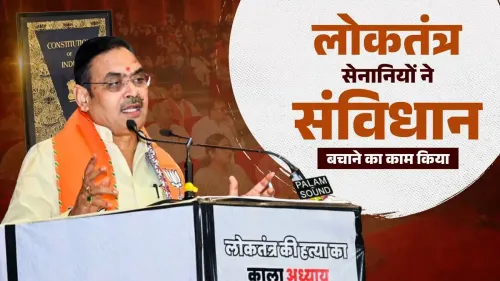
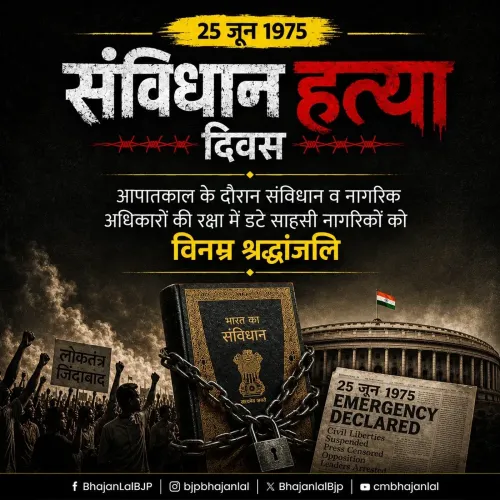
Emergency was declared on 25–26 June 1975 , suspending fundamental rights; the day is now observed as Samvidhan Hatya Diwas .
Jayaprakash Narayan was arrested under MISA hours after the proclamation and taken to Chandigarh .
JP's concept of 'Sampoorna Kranti' (Total Revolution) was first announced at Gandhi Maidan, Patna in 1974 during the Bihar student movement.
His moral authority united the Jana Sangh , Congress (O) , and socialist parties into the Janata Party , which defeated Indira Gandhi in the 1977 elections .
JP died on 8 October 1979 in Patna , aged 76 ; he was posthumously awarded the Bharat Ratna in 1999 .
His Prison Diary , written during incarceration, described India as 'a prison-house of silence' and became an enduring document of democratic resistance.
Jayaprakash Narayan, the man India came to revere as Lok Nayak, stood at the epicentre of the most consequential democratic crisis in independent India's history — the Emergency of 1975–77. On the 50th anniversary of its imposition on 25 June 1975, his legacy endures as a benchmark for moral courage against authoritarian rule.
The House on Jagat Narayan Road
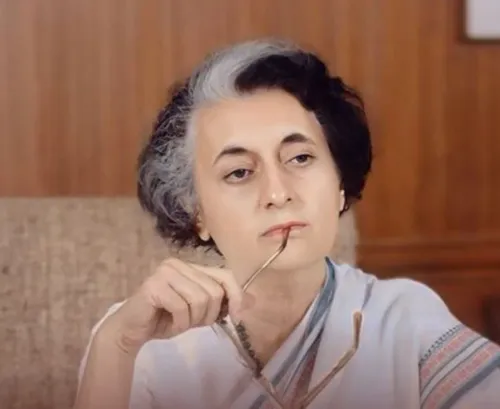
In the turbulent mid-1970s, a modest residence on Patna's Jagat Narayan Road became the nerve centre of dissent. Political leaders from across ideological divides — united only in their opposition to Prime Minister Indira Gandhi's increasingly autocratic governance — converged there. Youth activists filled its premises at all hours.
At the heart of it all sat Jayaprakash Narayan, receiving visitors, holding strategy sessions, and refining what he had articulated as 'Sampoorna Kranti' — Total Revolution. It was not merely a call to change governments; it was a vision to restructure India's political, social, economic, and cultural foundations, rooted in Gandhian ethics, socialist ideals, and democratic decentralisation.
The Road to Emergency
JP's Total Revolution had been formally announced in 1974 at Gandhi Maidan in Patna, during the Bihar student movement, when spiralling inflation, unemployment, and pervasive corruption had eroded public trust in governance. His entry into that movement gave it a moral weight that transcended student politics — and alarmed the establishment.
Reportedly, the Indira Gandhi government was particularly shaken by JP's public appeal to the armed forces and police to refuse 'illegal orders' — a call that is said to have been among the principal triggers for the declaration of Emergency. Simultaneously, a nationwide railway strike led by socialist leader George Fernandes had paralysed transport and threatened power and steel production, which the government viewed as a national security threat.
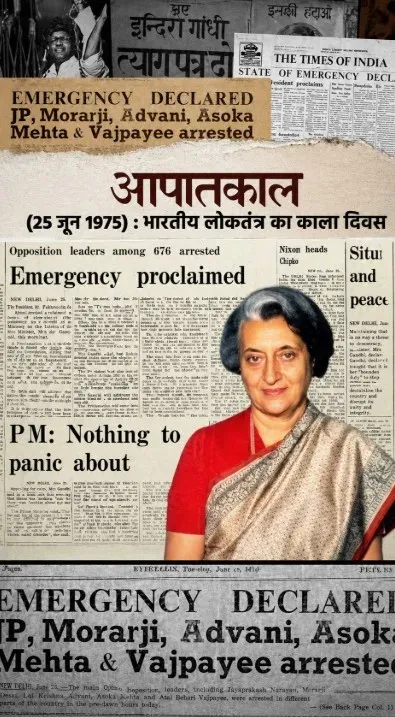
On the intervening night of 25–26 June 1975, Emergency was declared. Fundamental rights were suspended, civil liberty organisations suppressed, and dissenting voices silenced — a period that would later come to be called 'Samvidhan Hatya Diwas' (Constitution Murder Day).
Arrest, Imprisonment, and Deteriorating Health
Hours after Emergency was proclaimed, JP was arrested under the Maintenance of Internal Security Act (MISA) and taken to Chandigarh. He was later shifted to a hospital owing to his fragile physical condition. Other prominent Opposition leaders — including Morarji Desai, Atal Bihari Vajpayee, and Lal Krishna Advani — were also imprisoned.
JP suffered from chronic kidney disease and multiple ailments. Incarceration worsened his condition significantly, and he was released in 1976 on medical grounds. Yet even from behind bars, he continued to inspire. His handwritten notes from prison became his 'Prison Diary', in which he described India as 'a prison-house of silence' and framed the struggle as one for the 'soul of the nation'.
The Moral Authority That United the Opposition
JP's stature cut across party lines in a way few leaders have managed in Indian political history. Leaders from the Jana Sangh, Congress (O), socialist formations, and even sections of the Left rallied under his moral authority. His insistence on unity over ideology led to the merger of disparate opposition groups into the Janata Party, which went on to defeat Indira Gandhi in the 1977 general elections — the first democratic reversal of an incumbent government in independent India.
His thunderous invocation of Rashtrakavi Dinkar's verse — 'Sinhasan khali karo, ki janta aati hai' (Vacate the throne, the people are coming) — became the defining rallying cry of the anti-Emergency resistance, and, according to many observers, it retains its resonance to this day.
Death, Legacy, and Posthumous Honours
JP died on 8 October 1979 in Patna, aged 76. His death was reportedly withheld from the public for several hours — a detail that reflected the deep political sensitivities of the era. Many continue to question the circumstances, with critics arguing that the health damage inflicted during his incarceration hastened his end. Reports suggest that many Indians first learned of his passing through an international shortwave radio broadcast.
In 1999, he was posthumously awarded the Bharat Ratna, India's highest civilian honour. His words — 'Every nail driven deeper into Indian democracy is like a nail driven into my heart' — remain among the most quoted in India's democratic memory. Half a century after Emergency, JP's life stands as a testament to the proposition that moral authority, even in a frail body, can outlast the machinery of state repression.
Point of View
Press, and parliament simultaneously exposes how thin the guardrails of Indian democracy were in 1975 — and how dependent they were on individual moral courage rather than structural safeguards. JP's genius was not ideological; it was coalitional — he persuaded parties that despised each other to subordinate identity to survival. That the Janata experiment then collapsed in three years suggests the unity was personal, not institutional. The deeper question on this anniversary is whether India has built the structural resilience that JP's generation had to substitute with personal heroism.
NationPress
25 Jun 2026
Frequently Asked Questions
What was Jayaprakash Narayan's role during India's Emergency of 1975?
Jayaprakash Narayan was the most prominent symbol of resistance against the Emergency declared by Prime Minister Indira Gandhi on 25 June 1975. Arrested under MISA on the night of the proclamation, he continued to inspire the opposition from prison through his writings and moral authority, ultimately helping unite disparate parties into the Janata Party that defeated Gandhi in 1977.
What was JP's 'Sampoorna Kranti' or Total Revolution?
Sampoorna Kranti, or Total Revolution, was a call announced by Jayaprakash Narayan at Gandhi Maidan in Patna in 1974, envisioning a holistic transformation of India's political, social, economic, and cultural life. Rooted in Gandhian ethics and democratic decentralisation, it went beyond changing governments and became the ideological backbone of the anti-Emergency movement.
Why was the Emergency declared in 1975 and what role did JP play in triggering it?
Emergency was declared on 25–26 June 1975 by the Indira Gandhi government, suspending fundamental rights and silencing dissent. JP's public appeal to the armed forces and police to disobey 'illegal orders,' combined with a nationwide railway strike led by George Fernandes, reportedly alarmed the establishment and is considered among the principal triggers for the proclamation.
What happened to Jayaprakash Narayan after Emergency ended?
JP was released in 1976 on medical grounds after his health deteriorated sharply during imprisonment. He died on 8 October 1979 in Patna, aged 76. Many have questioned whether the health damage sustained during incarceration hastened his death. He was posthumously awarded the Bharat Ratna, India's highest civilian honour, in 1999.
What is Samvidhan Hatya Diwas and why is 25 June significant?
Samvidhan Hatya Diwas, or Constitution Murder Day, marks the anniversary of the Emergency imposed on 25 June 1975, when fundamental rights were suspended and democratic institutions were curtailed. The day commemorates the assault on constitutional safeguards and the resistance led by figures like Jayaprakash Narayan.