JTET language dispute: No consensus in ministers' meet, CM Hemant Soren to decide
Synopsis
Two ministerial meetings, zero consensus. Jharkhand's JTET language row — centred on whether Bhojpuri, Magahi, Maithili, and Angika belong on the regional language list — has now landed squarely on CM Hemant Soren's desk, with divisions inside his own cabinet and missing departmental data complicating any quick fix.
Key Takeaways
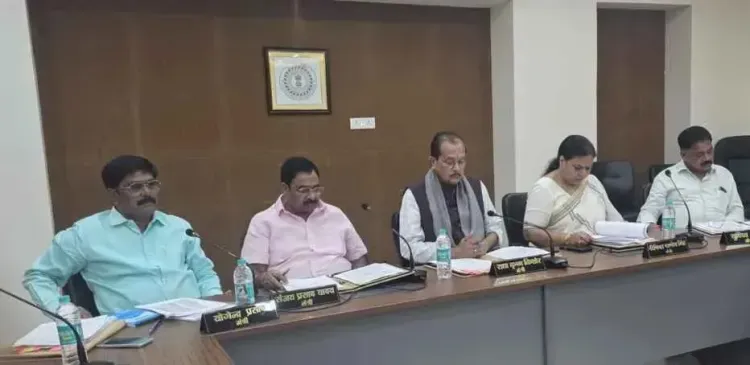
A five-member ministerial committee met in Ranchi on 22 May but failed to reach consensus on the JTET language policy for the second time.
Bhojpuri , Magahi , Maithili , and Angika were excluded from the JTET regional language list under the recently approved rules, triggering the controversy.
Ministers Sanjay Prasad Yadav and Deepika Pandey Singh backed inclusion, citing lakhs of candidates in border districts who use these languages.
Concerns were raised that a mandatory tribal language requirement disadvantages candidates in districts like Palamu , Garhwa , and Chatra .
Personnel and Education departments failed to provide historical language-choice data, drawing criticism from the committee.
A report will be submitted to Chief Minister Hemant Soren within days; the final decision rests with him.
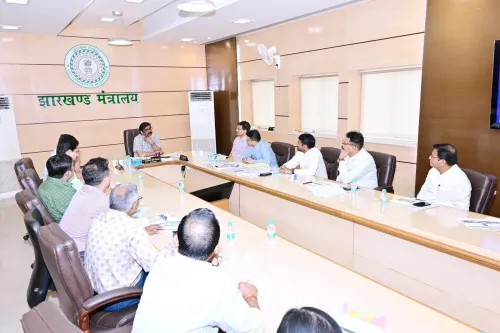
A high-level ministerial committee convened in Ranchi on Friday, 22 May failed to reach consensus on the contentious language policy for the Jharkhand Teacher Eligibility Test (JTET), leaving the final call to Chief Minister Hemant Soren. The second meeting of the five-member committee ended with unresolved differences, particularly over the exclusion of Bhojpuri, Magahi, Maithili, and Angika from the list of recognised regional languages for the examination.
Background: What Triggered the Dispute
The controversy erupted after the Jharkhand government approved new JTET language rules that dropped the four languages — widely spoken in border districts — from the regional language list. Chief Minister Soren had constituted the ministerial committee in response to the backlash, tasking it with reviewing the policy and recommending a resolution. Friday's meeting was the second such attempt.
Key Divisions Among Ministers
Finance Minister Radha Krishna Kishore chaired the meeting, but sharp differences surfaced almost immediately. Minister Sanjay Prasad Yadav and Rural Development Minister Deepika Pandey Singh backed the inclusion of the four languages, arguing that lakhs of aspirants in border districts rely on them and that their exclusion from the examination process would be impractical and discriminatory.
Separate concerns were raised over a rule requiring all candidates to choose one of 15 tribal languages. Several committee members pointed out that these languages are rarely spoken or taught in districts such as Palamu, Garhwa, and Chatra, warning that the mandate could structurally disadvantage candidates from those regions.
Representation and Data Gaps
Minister Sudivya Kumar Sonu questioned the committee's very composition, arguing that a matter as sensitive as language and cultural identity warranted representation from Scheduled Tribes and minority communities — groups currently absent from the panel.
The committee had earlier directed the Personnel and Education departments to furnish data on the languages chosen by candidates in previous JTET examinations. Neither department presented clear figures at Friday's meeting, drawing sharp criticism from multiple ministers over the lack of preparedness.
What Happens Next
After the meeting, Finance Minister Radha Krishna Kishore said that all suggestions and points of disagreement are being compiled into a detailed report, which will be submitted to Chief Minister Hemant Soren within the next couple of days. The final decision on the JTET language policy now rests entirely with the Chief Minister. This is the second consecutive meeting to end without resolution, underscoring the political sensitivity of language-based identity in a state where tribal and regional linguistic communities have historically contested representation in public employment.
Point of View
Magahi, Maithili, and Angika affects a substantial candidate pool, and the government's failure to even produce historical language-choice data at a second meeting suggests the bureaucracy is not equipped to resolve this quickly. Pushing the decision to the Chief Minister may buy time, but it also raises the political stakes: whichever way Soren rules, he risks alienating a constituency. The absence of Scheduled Tribe and minority representation on the committee, flagged by a minister from within, is a process failure that could undermine the legitimacy of whatever decision follows.
NationPress
7 Oct 2026
Frequently Asked Questions
What is the JTET language policy dispute in Jharkhand?
The dispute centres on the exclusion of Bhojpuri, Magahi, Maithili, and Angika from the list of recognised regional languages for the Jharkhand Teacher Eligibility Test (JTET) under newly approved rules. Critics argue the exclusion disadvantages lakhs of candidates in Jharkhand's border districts who use these languages.
Why did the ministerial committee fail to reach a consensus?
Ministers were divided on whether to include the four excluded languages, and separate objections were raised over a rule mandating candidates choose a tribal language — seen as impractical in several districts. The departments responsible for providing supporting data also failed to present clear figures, stalling deliberations.
Who will take the final decision on the JTET language policy?
Chief Minister Hemant Soren will take the final call. Finance Minister Radha Krishna Kishore said a compiled report of suggestions and disagreements will be submitted to the Chief Minister within a couple of days of the 22 May meeting.
Which districts are most affected by the JTET language rules?
Candidates in border districts — where Bhojpuri, Magahi, Maithili, and Angika are widely spoken — are most directly affected by the exclusion. Additionally, districts like Palamu, Garhwa, and Chatra have been flagged as areas where the mandatory tribal language requirement could put local candidates at a disadvantage.
What is the composition concern raised about the ministerial committee?
Minister Sudivya Kumar Sonu argued that a panel deciding on language and cultural identity should include representatives from Scheduled Tribes and minority communities. As constituted, the five-member committee lacked such representation, which he said undermined its credibility on the issue.