CM Hemant Soren Seeks NCERT Regional Centre for Jharkhand
Synopsis
Jharkhand CM Hemant Soren has called for an NCERT regional centre in the state to serve its 32 tribal and regional languages, while also demanding greater flexibility in BOCW welfare and national regulatory bodies, and highlighting state skill and overseas scholarship schemes for youth.
Key Takeaways
Hemant Soren urged the Centre to establish an NCERT regional centre in Jharkhand to support localised curriculum and teacher training for 32 tribal and regional languages .
He called for flexibility in national bodies — AICTE, NCERT, UGC, and the National Medical Council — to accommodate states' geographic and social conditions.
The CM sought greater state-level operational latitude under the BOCW scheme to improve welfare reach for migrant and construction workers.
State skill programmes — Mukhyamantri Sarathi Yojana, Gurukul Training Model, and BIRSA Skill Centres — are training youth in AI, EV, and robotics .
The Marang Gomke Jaipal Singh Munda Overseas Scholarship and CM Fellowship Scheme for Academic Excellence are channelling Jharkhand students to top domestic and international institutions.
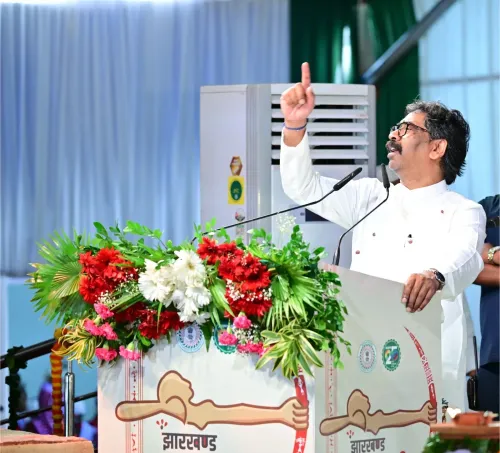
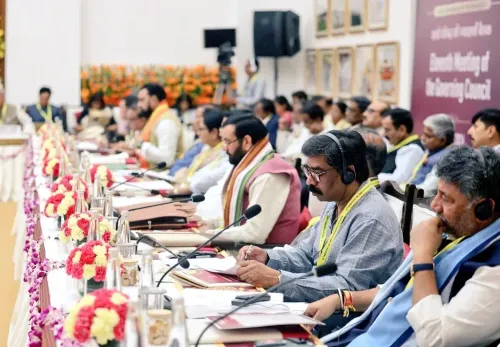
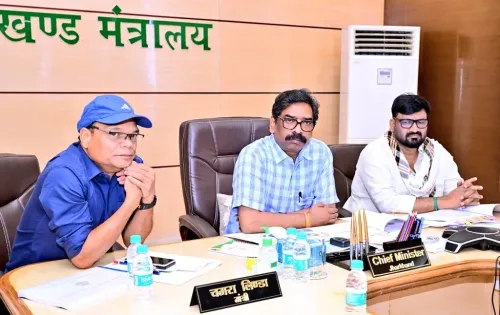
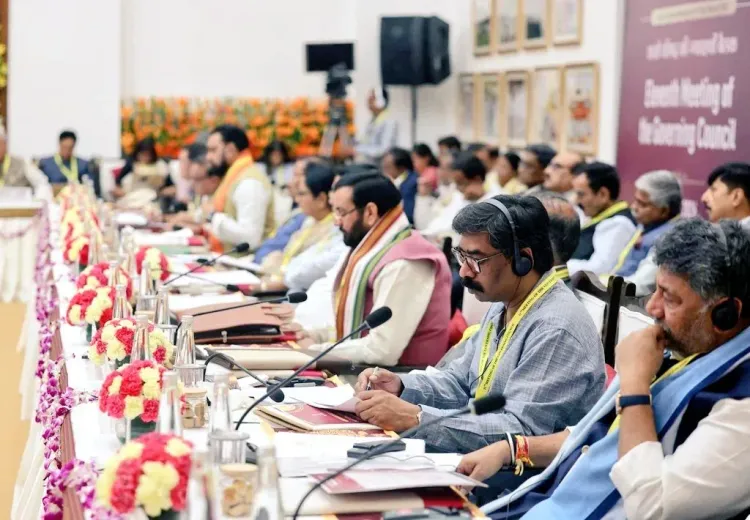
Jharkhand Chief Minister Hemant Soren on Thursday, 11 June 2026, publicly urged the Centre to establish a regional centre of the National Council of Educational Research and Training (NCERT) in Jharkhand, arguing that the state's 32 tribal and regional languages demand localised academic support. The appeal was made during a meeting, details of which Soren shared on X, alongside a broader pitch for flexibility in national education and labour welfare frameworks.
Context
Posting in Hindi, Soren stated: 'Jharkhand ki 32 janjatiya evam kshetriya bhashayen hamari sanskritik dharohar hain' — 'Jharkhand's 32 tribal and regional languages are our cultural heritage.' He argued that a dedicated NCERT regional centre would enable curriculum and teacher-training support aligned with local linguistic realities. The demand reflects a longstanding gap: no NCERT regional institute currently operates in Jharkhand, leaving the state dependent on distant centres for curriculum guidance.
Policy Backdrop
The push aligns with the National Education Policy 2020, which mandates mother-tongue and regional-language instruction in early grades — a provision that requires localised textbook and teacher-training infrastructure to be meaningful. Soren also called on bodies including AICTE, NCERT, UGC, and the National Medical Council to incorporate flexibility for states' geographical and social conditions when setting national standards. On labour welfare, he urged the Centre to grant states greater operational latitude under the Building and Other Construction Workers (BOCW) scheme so that migrant and construction workers can access benefits more effectively.
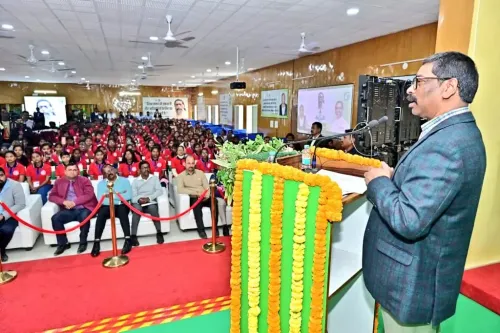
The Chief Minister highlighted three state-run skill initiatives — Mukhyamantri Sarathi Yojana, the Gurukul Training Model, and BIRSA Skill Centres — as vehicles for employment-oriented training in sectors including AI, electric vehicles (EV), and robotics. On higher education, he pointed to the CM Fellowship Scheme for Academic Excellence and the Marang Gomke Jaipal Singh Munda Overseas Scholarship as programmes designed to place Jharkhand's youth in 'prestigious institutions across India and the world.'
Stakeholders and Impact
The demands touch three distinct groups. Tribal and regional-language students stand to gain most directly from an NCERT regional centre, which could produce mother-tongue textbooks and train teachers in languages such as Santali, Ho, Mundari, and Kurukh. Migrant and construction workers — a large and historically under-served constituency in Jharkhand — would benefit from a more flexible BOCW implementation framework. Youth entering skill-training pipelines are the third group, with the state positioning them for future-economy roles even as the scale of current enrolments under the cited schemes remains unverified from public records.
Soren framed the scholarship and fellowship programmes in explicitly aspirational terms: 'Our objective is not merely to provide scholarships to our youth, but to give them a global platform.' The Marang Gomke Jaipal Singh Munda Overseas Scholarship is named after the iconic tribal statesman and first captain of the Indian hockey team, lending the programme cultural weight within Jharkhand's tribal community.
What's Next
The immediate watch-point is the response from the Ministry of Education and NCERT leadership on the proposed regional centre — a decision that would require central approval and resource allocation. Separately, any revision to BOCW operational guidelines to allow state-level flexibility would need to move through the Ministry of Labour and Employment. Broader centre-state negotiations at forums such as NITI Aayog will determine how much of Soren's agenda translates from advocacy into policy. For Jharkhand, which has one of India's largest Scheduled Tribe populations, the outcome of these demands will shape educational access and labour welfare for millions.
Point of View
Regulatory flexibility, and labour welfare is a textbook instance of a tribal-majority state using a central meeting as a pressure point to shift the terms of cooperative federalism. By anchoring the NCERT demand in the NEP 2020's own mother-tongue mandate, he turns a Centre-framed policy into an argument for Centre-funded decentralisation — a politically difficult position for New Delhi to refuse outright. The BOCW ask is equally pointed: it signals that Jharkhand views central scheme rigidity, not funding shortfalls, as the primary barrier to welfare delivery. Taken together, the demands reflect a broader pattern among opposition-governed states seeking operational autonomy within — rather than against — the national policy architecture.
NationPress
26 Oct 2026
Frequently Asked Questions
Why is Hemant Soren asking for an NCERT regional centre in Jharkhand?
Soren argues that Jharkhand's 32 tribal and regional languages require localised curriculum development and teacher training that distant NCERT centres cannot adequately provide. A regional centre would allow academic support tailored to the state's linguistic and cultural context.
What is the Marang Gomke Jaipal Singh Munda Overseas Scholarship?
It is a Jharkhand government scholarship programme that funds students from the state to pursue higher education at prestigious institutions abroad. It is named after Jaipal Singh Munda, a tribal statesman and the first captain of India's Olympic hockey team.
What are BIRSA Skill Centres?
BIRSA Skill Centres are state-run skill development facilities in Jharkhand named after tribal icon Birsa Munda. They provide employment-oriented training, including in emerging sectors such as AI, electric vehicles, and robotics.
What is the BOCW scheme and why does Soren want more flexibility in it?
The Building and Other Construction Workers (BOCW) scheme provides welfare benefits to construction and migrant labourers using a cess collected from construction projects. Soren has argued that rigid central guidelines prevent states from tailoring delivery to local conditions, limiting effective outreach to workers.
What did Hemant Soren say about national regulatory bodies like UGC and AICTE?
Soren urged bodies including AICTE, NCERT, UGC, and the National Medical Council to build in flexibility for states' geographical and social circumstances when setting national standards, rather than applying uniform rules that may not suit diverse regional contexts.