Will AI Enhance Efficiency and Replace Humans? Insights from Karan Adani
Synopsis
Karan Adani, the Managing Director of Adani Ports, asserts that AI will enhance efficiency without fully displacing workers. He emphasizes the role of major organizations in retraining employees while sharing insights from his own journey and his passion for Formula 1.
Key Takeaways
AI enhances efficiency, not a direct replacement for humans.
Organizations must prioritize employee retraining.
Temporary job displacement is a possibility during technology adoption.
Karan Adani's early experiences shaped his professional journey.
India has potential to host global events like Formula 1 .
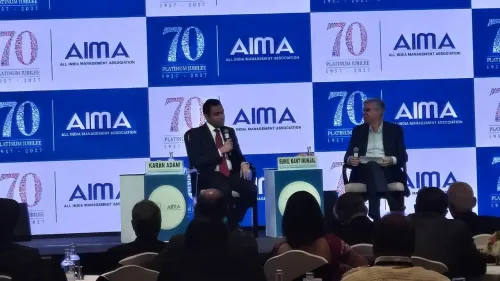
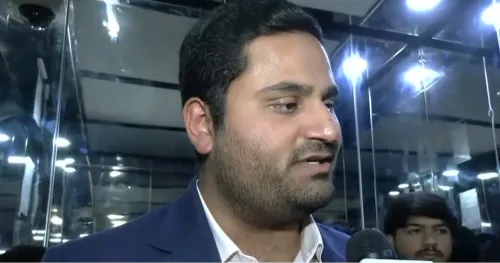
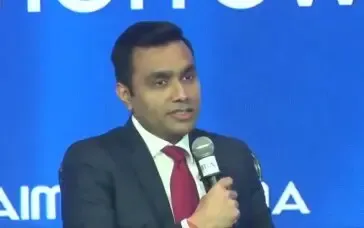
New Delhi, Feb 21 (NationPress) Artificial intelligence is set to enhance human efficiency rather than entirely replace it, allowing a smaller workforce to achieve greater results, stated Karan Adani, Managing Director of Adani Ports and SEZ Limited, during a speech on Saturday. At the Platinum Jubilee (70th) Foundation Day and 20th National Management Day event hosted by the All India Management Association in the capital, Adani emphasized that AI should be viewed as a robust tool that boosts productivity and facilitates quicker organizational growth.
He also recognized that the widespread integration of technology could lead to temporary job loss before adequate reskilling measures are fully implemented.
“Major corporations bear the duty of retraining and enhancing their workers as part of a well-structured change management approach,” he noted.
Reflecting on his formative years, Adani shared that his three years at a missionary school taught him discipline, independence, and the importance of engaging with peers from varied backgrounds.
He expressed his enthusiasm for Formula 1, a passion ignited by friends in Singapore. He remarked on the critical nature of every millisecond in the sport, especially during the era dominated by Michael Schumacher, adding with a grin that his father views it as a costly hobby.
Discussing the potential return of Formula 1 to India, he stated that hosting such prestigious global events offers significant international exposure.
“Currently, this exposure is limited to a few, prompting many Indians to travel to places like Doha, Saudi Arabia, and Singapore to experience races,” he noted.
“India possesses immense potential to host F1 events again, and if successful, it should exhibit Indian heritage to a global audience,” Adani elaborated.
Reflecting on his career journey, he recounted how, after completing college, he expressed interest in the ports sector to his father. That very night, he was dispatched to Mundra Port, where he spent his initial year working on-site without an office or desk.
He explored various operational sectors, gaining firsthand insights into challenges, describing it as an incredibly educational and grounded experience.
Point of View
It is vital to recognize that technological advancements like AI are reshaping industries. Karan Adani's perspective highlights the importance of adaptation and growth, urging organizations to prepare their workforce adequately. The conversation around AI is not merely about replacement but about enhancement and efficiency, which is crucial for a progressive economy.
NationPress
3 Oct 2026
Frequently Asked Questions
Will AI completely replace human jobs?
No, according to Karan Adani, AI will enhance efficiency and allow fewer people to deliver higher output rather than fully replacing human jobs.
What should companies do regarding AI and employment?
Companies should invest in retraining and upskilling their employees as part of a structured change management strategy.
What challenges might arise with AI adoption?
The large-scale adoption of AI may lead to temporary job displacement until reskilling systems are fully developed.
What does Karan Adani think about Formula 1 in India?
He believes that India has strong potential to host Formula 1 events again, which would showcase Indian heritage to the world.
How did Karan Adani start his career?
After college, he expressed interest in the ports business and was sent to Mundra Port, where he learned about operations on the ground.