Karnataka bus fare hike under review, says CM Shivakumar after Cabinet meet
Synopsis
Karnataka's KSRTC is bleeding ₹40 crore every day due to fuel price hikes, and CM Shivakumar has confirmed a bus fare revision is on the table — but hasn't pulled the trigger yet. With a structural ₹40-per-litre diesel cost disadvantage over private operators, the state faces a stark choice between fiscal survival of its transport network and public affordability.
Key Takeaways
Shivakumar confirmed on 20 June that a KSRTC bus fare hike is under review.
A diesel price gap of nearly ₹40 per litre exists between private operators and state transport corporations.
Recent fuel hikes have added an estimated ₹40 crore in additional daily costs for Karnataka's transport bodies.
The Cabinet approved ₹80 crore for Karnataka Bhavan-IV in New Delhi , with 50% seats reserved for SC/ST students.
Land acquisition deadline for a 1,777-acre development project in Devanahalli taluk extended to 31 October 2026 .
A dedicated officer team will be formed to identify Central government schemes for Karnataka, drawing on models from Tamil Nadu , Andhra Pradesh , and Gujarat .
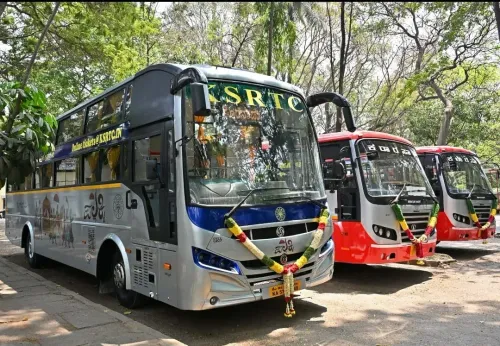
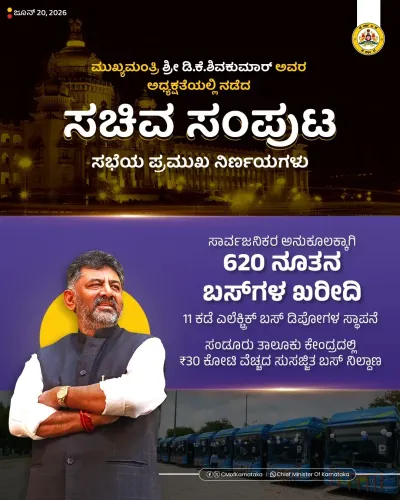
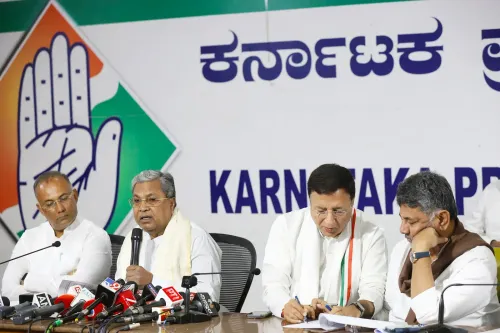
Karnataka Chief Minister D.K. Shivakumar on Saturday, 20 June said that a possible revision in Karnataka State Road Transport Corporation (KSRTC) bus fares is currently under review, as the state government weighs the financial sustainability of public transport against passenger welfare. The announcement came after a Cabinet meeting held at Vidhana Soudha, Bengaluru.
The Fuel Price Gap Behind the Review
Speaking to reporters, Shivakumar pointed to a price disparity of nearly ₹40 per litre between diesel procured by private operators and industrial bulk buyers versus the retail rates that state-owned transport corporations such as KSRTC and BMTC are required to pay at regular fuel outlets. This structural disadvantage, he noted, has significantly strained the finances of the transport bodies.
Recent fuel price increases across Karnataka have added an estimated ₹40 crore in additional daily expenditure for the transport corporations, compounding their losses. While past fare revisions have been tied to fuel price movements, the government is now proceeding with greater caution. 'KSRTC must survive, but the interests of passengers must also be protected,' Shivakumar said, adding that any decision would be taken with public welfare as the guiding principle.
Strengthening Karnataka's Legal Presence in Delhi
The Chief Minister also announced plans to bolster Karnataka's legal division in New Delhi to better handle cases pending before the Supreme Court. He expressed dissatisfaction with the current functioning of the Resident Commissioner's office and said steps are being taken to reorganise and improve its operational efficiency.
Additionally, the government will constitute a dedicated team of officers tasked with identifying and securing more Central government projects and schemes for the state. The team will study models implemented in Tamil Nadu, Andhra Pradesh, and Gujarat, and explore opportunities for Karnataka to access Central funding. Retired senior IAS and IPS officers will also be brought in as advisers, following Shivakumar's recent consultations with Karnataka-cadre officers posted in Delhi.
Key Cabinet Decisions
The Cabinet approved an extension until 31 October 2026 for farmers voluntarily offering land under a major development initiative covering 1,777 acres across 13 villages in Channarayapatna Hobli of Devanahalli taluk, Bengaluru Rural district.
In a significant move for competitive exam aspirants, the Cabinet also cleared ₹80 crore for the construction of Karnataka Bhavan-IV in New Delhi through the Karnataka Bhavan Welfare Board. The facility will offer accommodation and amenities under one roof, with 50% of seats reserved for Scheduled Castes and Scheduled Tribes and the remaining half open to students from other communities.
What Comes Next
A final decision on bus fare revision is yet to be announced, with the government signalling it will balance fiscal pressures on KSRTC against the affordability concerns of millions of daily commuters. The outcome will be closely watched given that Karnataka's transport corporations serve as a critical mobility lifeline, particularly for low-income and rural passengers.
Point of View
Not the political hedging around a fare revision. KSRTC and BMTC have long operated under a structural disadvantage — paying retail diesel prices while private competitors access cheaper bulk rates — and no fare revision alone will fix that asymmetry. The real question is whether Karnataka will push for policy parity on fuel procurement, or simply pass costs to commuters and call it reform. The Cabinet's ₹80 crore spend on Karnataka Bhavan-IV, while worthwhile for UPSC aspirants, underscores a government comfortable with capital outlays; the harder test is whether it has the political will to restructure public transport financing before the losses become unmanageable.
NationPress
19 Sept 2026
Frequently Asked Questions
Why is Karnataka considering a bus fare hike?
Karnataka is reviewing KSRTC bus fares because recent fuel price increases have added approximately ₹40 crore in additional daily costs for state transport corporations. A structural diesel price gap of nearly ₹40 per litre between private operators and state-run transport bodies has worsened the financial position of KSRTC and BMTC.
Has the Karnataka government decided to increase bus fares?
No final decision has been made. Chief Minister D.K. Shivakumar said on 20 June that the matter is under review, with the government seeking to balance KSRTC's financial sustainability against passenger affordability. A decision will be taken with public welfare in mind, he said.
What is the Karnataka Bhavan-IV approved by the Cabinet?
Karnataka Bhavan-IV is a new facility to be constructed in New Delhi at a cost of ₹80 crore, approved by the Karnataka Cabinet on 20 June. It will provide accommodation and amenities for students preparing for UPSC and other competitive examinations, with 50% of seats reserved for Scheduled Castes and Scheduled Tribes.
What is the land acquisition decision taken at the Karnataka Cabinet meeting?
The Cabinet extended the deadline to 31 October 2026 for farmers to voluntarily offer land under a development project covering 1,777 acres across 13 villages in Channarayapatna Hobli, Devanahalli taluk, Bengaluru Rural district.
Why is KSRTC at a disadvantage compared to private bus operators on fuel costs?
KSRTC and BMTC are required to purchase diesel at retail prices from regular fuel outlets, while private operators and industrial bulk buyers procure diesel at significantly lower rates. This gap, currently estimated at nearly ₹40 per litre, gives private operators a structural cost advantage over state-run transport corporations.