CM Shivakumar Approves 620 New Buses for Karnataka
Synopsis
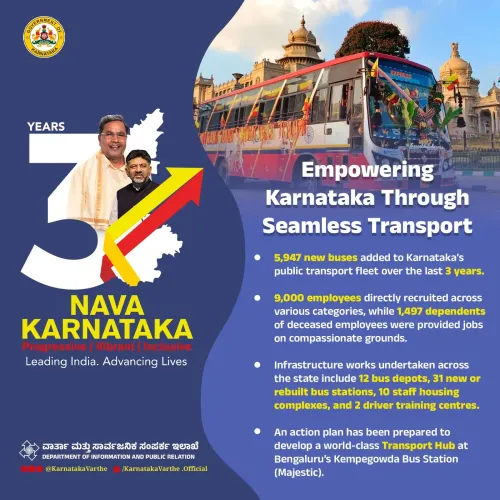
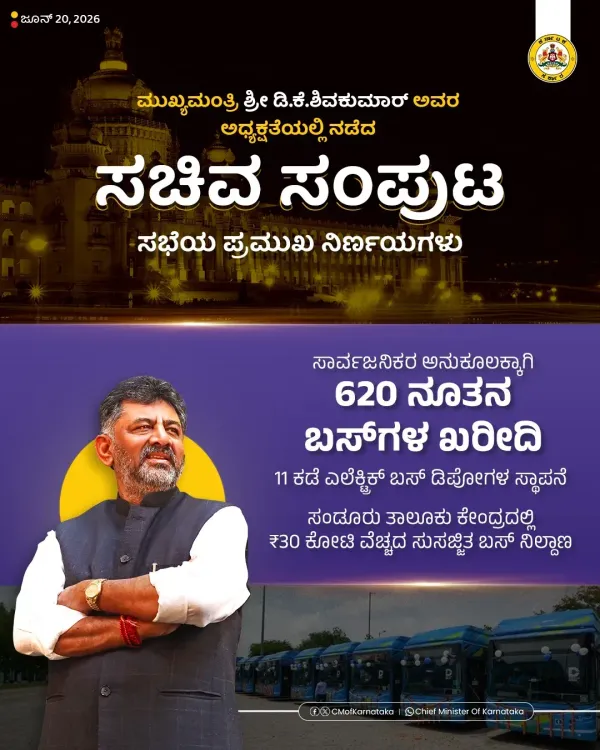
The Karnataka cabinet, chaired by CM D.K. Shivakumar, approved procurement of 620 new buses — 400 for rural areas and 220 for NWKRTC — along with 11 electric bus depots across all transport corporations and a ₹30 crore bus station at Sandur taluk headquarters.
Key Takeaways
620 new buses approved for procurement across Karnataka's state transport corporations.
400 buses earmarked specifically for rural areas; 220 buses allocated to the North Western Karnataka Road Transport Corporation (NWKRTC).
11 electric bus depots to be opened under all state transport corporations to support fleet electrification.
A new bus station at Sandur taluk headquarters , Ballari district, to be built at a cost of ₹30 crore .
Decisions were taken at a cabinet meeting chaired by CM D.K.
Shivakumar on 20 June 2026 .
The move aligns with Karnataka's EV Policy 2017 and the central government's FAME-II scheme for electric bus adoption.
The Chief Minister's Office of Karnataka announced on Saturday, 20 June 2026 that the state cabinet, chaired by Chief Minister D.K. Shivakumar, has approved the procurement of 620 new buses to strengthen public transport across the state, along with a decision to open 11 electric bus depots under all transport corporations.
What Was Announced
The cabinet cleared the purchase of 620 buses, of which 400 will be deployed in rural areas and 220 allocated to the North Western Karnataka Road Transport Corporation (NWKRTC). Alongside the bus procurement, the government decided to establish 11 electric bus depots spread across all state transport corporations, signalling a push toward fleet electrification. CM Shivakumar briefed the media after the cabinet session, detailing the decisions taken.
A separate infrastructure commitment was also announced: a fully equipped bus station at Sandur taluk headquarters in Ballari district will be constructed at a cost of ₹30 crore. Sandur, a taluk centre, has historically lacked modern transit infrastructure despite being a significant mineral-belt hub.
Policy Backdrop
Karnataka's move builds on a layered policy foundation. The state's EV Policy of 2017 set fleet electrification targets for state transport undertakings, and the central government's FAME-II scheme (2019) provided financial support for electric bus procurement by state road transport corporations. The 11-depot decision directly expands the charging and maintenance infrastructure needed to sustain an electric fleet at scale.
The Karnataka State Road Transport Corporation (KSRTC) has been the lead body overseeing multi-corporation coordination on electric mobility. The current approval consolidates procurement across all corporations under a single cabinet resolution, streamlining what has previously been a fragmented process.
Stakeholders and Impact
Rural commuters stand to benefit most immediately: the allocation of 400 of the 620 buses to rural routes directly addresses last-mile connectivity gaps in Karnataka's hinterland. For the NWKRTC, which serves districts in the northern and northwestern regions of the state, the addition of 220 buses represents a meaningful capacity boost for an underserved geography.
The ₹30 crore Sandur bus station is particularly notable as it targets a taluk-level town, signalling that the government's infrastructure push is not limited to tier-1 cities. Residents of Ballari district and surrounding areas are likely to see improved inter-district connectivity once the facility is commissioned.
What's Next
The immediate steps will involve tendering for the 620 buses and identifying precise locations for the 11 electric depots across the state's transport corporation network. Route rationalisation orders for rural services and any follow-up budget provisions will determine how quickly the fleet expansion translates into on-ground service improvements. Progress on the Sandur bus station construction timeline will also be closely watched by local stakeholders and district administration.
Frequently Asked Questions
How many new buses has Karnataka approved and where will they go?
Karnataka has approved the procurement of 620 new buses. Of these, 400 will be deployed on rural routes and 220 will go to the North Western Karnataka Road Transport Corporation (NWKRTC).
What is the Sandur bus station project announced by Karnataka?
The Karnataka cabinet approved construction of a fully equipped bus station at Sandur taluk headquarters in Ballari district at a cost of ₹30 crore, aimed at improving transit infrastructure in the region.
How many electric bus depots will Karnataka open?
Karnataka has decided to open 11 electric bus depots across all state transport corporations to support the expansion of its electric bus fleet.
Who chaired the Karnataka cabinet meeting that approved the bus procurement?
Chief Minister D.K. Shivakumar chaired the cabinet meeting on 20 June 2026, after which he briefed the media on the decisions taken.
What central scheme supports Karnataka's electric bus expansion?
The central government's FAME-II scheme (Faster Adoption and Manufacturing of Electric Vehicles, Phase II, launched in 2019) has provided financial support for electric bus procurement by state transport corporations including those in Karnataka.