Karnataka gets 1,243 EV chargers under PM E-DRIVE, ₹123 crore outlay
Synopsis
Karnataka is set to receive 1,243 new EV chargers with a ₹123.26 crore outlay under the PM E-DRIVE scheme — part of a broader ₹503.86 crore national push covering 4,874 chargers across multiple states. With a unified charging app, UPI-like ambitions, and over ₹50,000 crore committed across PLI and allied schemes, India's EV infrastructure push is moving from policy to pavement.
Key Takeaways
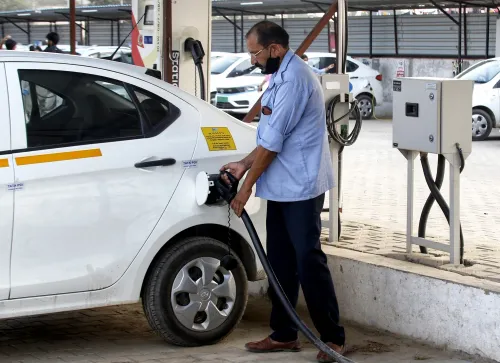
Karnataka approved for 1,243 EV chargers under the PM E-DRIVE scheme with an outlay of ₹123.26 crore .
Nationally, proposals worth ₹503.86 crore have been approved for 4,874 EV chargers across states and PSUs.
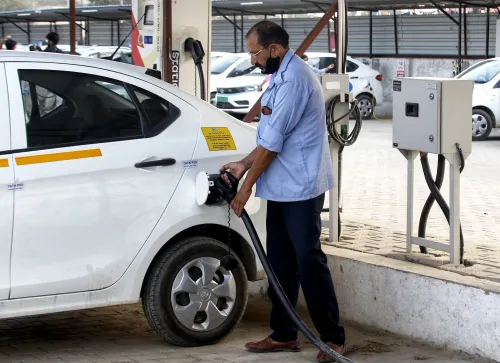
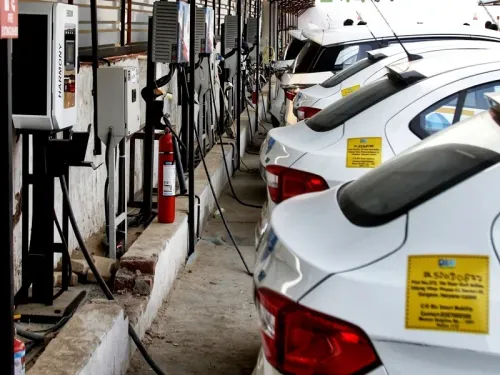
Under FAME-II , oil companies installed 8,932 EV chargers nationwide, including 721 in Karnataka , with ₹873.5 crore in subsidies.
The ₹10,900 crore PM E-DRIVE scheme has earmarked ₹2,000 crore specifically for public EV charging infrastructure.
A new Unified Bharat e-Charge (UBC) app is under development to unify discovery, access, and payment across all EV charging networks.
Allied schemes including PLI ACC (₹18,100 crore) , PLI Auto (₹25,938 crore) , and REPM (₹7,280 crore) back India's broader clean mobility push.
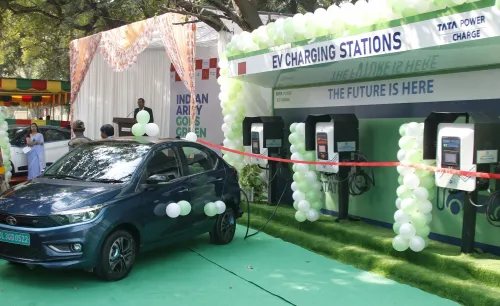
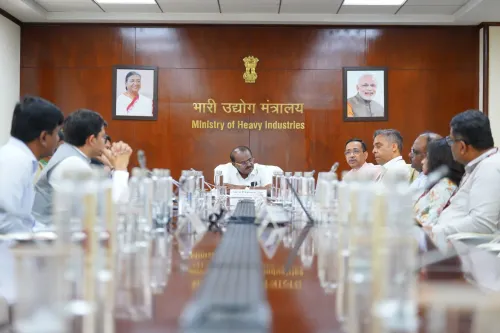
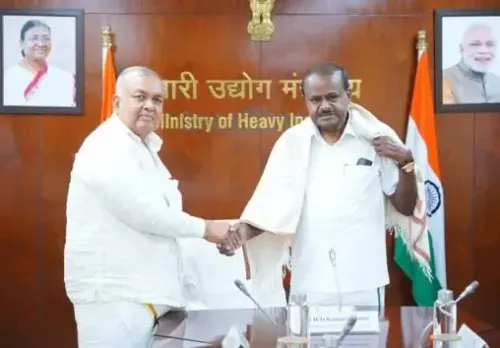
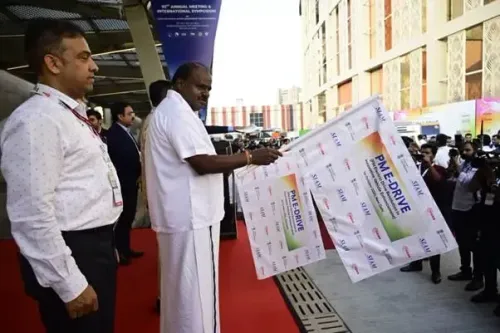
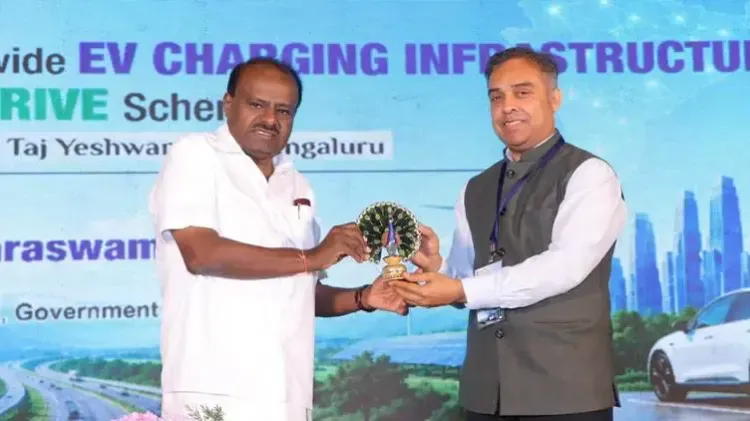
Union Minister for Heavy Industries H.D. Kumaraswamy on Tuesday announced the approval of proposals for the installation of 1,243 EV chargers across Karnataka, with a financial outlay of ₹123.26 crore under the PM E-DRIVE scheme. The announcement was made at a conference on Enabling Nationwide EV Charging Infrastructure held in Bengaluru, where the minister described the city as one of India's leading EV charging hubs.
National Approvals Under PM E-DRIVE
Kumaraswamy said proposals worth ₹503.86 crore have been approved so far for the installation of 4,874 EV chargers across various states and Central Public Sector Enterprises. The approved proposals cover public sector oil companies — HPCL, IOCL, and BPCL — along with states including Rajasthan, Andhra Pradesh, Uttar Pradesh, Gujarat, Kerala, Telangana, Karnataka, and Tamil Nadu.
The minister noted that ₹2,000 crore has specifically been earmarked within the ₹10,900 crore PM E-DRIVE scheme for public EV charging infrastructure deployment nationwide. The scheme also supports the adoption of electric two-wheelers, three-wheelers, buses, and trucks.
Oil Companies and FAME-II Legacy
Kumaraswamy acknowledged the contribution of public sector oil marketing companies in scaling charging infrastructure. Under the earlier FAME-II scheme, BPCL, IOCL, and HPCL collectively installed 8,932 EV chargers across India with subsidy support of ₹873.5 crore from the Ministry of Heavy Industries. Of these, 721 chargers have been installed in Karnataka alone, underlining the state's early momentum in EV infrastructure.
The minister also recognised the role of Charge Point Operators and private players such as Tata Power, ChargeZone, and Mahindra & Mahindra in strengthening India's EV ecosystem through innovation and execution.
Unified Bharat e-Charge App on the Horizon
Highlighting the Ministry's next major initiative, Kumaraswamy said work is underway on a National Unified EV Charging App — to be called Unified Bharat e-Charge (UBC). The platform aims to allow EV users to discover, access, and pay across multiple charging networks through a single interface. Drawing a parallel with digital payments, he said the app could do for EV charging what UPI did for financial transactions.
Broader Industrial Push for Clean Mobility
The minister outlined several large-scale schemes supporting India's clean mobility ambitions. These include the ₹18,100 crore PLI ACC Scheme for battery cell manufacturing, the ₹25,938 crore PLI Auto Scheme promoting cleaner vehicles including EVs and hydrogen-powered vehicles, and the recently launched ₹7,280 crore REPM Scheme for self-reliance in rare earth magnet manufacturing.
Kumaraswamy reaffirmed India's commitment to achieving Net Zero emissions by 2070 and the vision of Viksit Bharat 2047, noting that India's automotive sector contributes over 7% to GDP, accounts for nearly half of manufacturing GDP, and supports close to 30 million livelihoods. The Ministry of Heavy Industries, in coordination with the Ministry of Power, state governments, and industry stakeholders, is working on grid readiness, standardisation, and digital integration to support the sector's rapid growth.
Point of View
243-charger approval is a meaningful step, but the real story is systemic: India is attempting to build EV infrastructure at scale before demand fully materialises — a deliberate supply-side bet. The FAME-II track record, where 8,932 chargers were installed over several years with nearly ₹874 crore in subsidies, suggests execution is possible but slow. The UBC app is a smart integration play, but its success will depend on whether private operators — who have competitive incentives to keep networks siloed — genuinely interoperate. The deeper challenge remains grid readiness in Tier-2 and Tier-3 cities, which the minister acknowledged but did not quantify.
NationPress
23 Sept 2026
Frequently Asked Questions
What is the PM E-DRIVE scheme and how many EV chargers has it approved so far?
The PM E-DRIVE scheme is a ₹10,900 crore government initiative to accelerate EV adoption and build nationwide charging infrastructure. So far, proposals worth ₹503.86 crore have been approved for 4,874 EV chargers across multiple states and Central Public Sector Enterprises.
How many EV chargers will Karnataka get under the PM E-DRIVE scheme?
Karnataka has been approved for 1,243 EV chargers with a financial outlay of ₹123.26 crore under the PM E-DRIVE scheme. The announcement was made by Union Minister H.D. Kumaraswamy at a conference in Bengaluru on Tuesday.
What is the Unified Bharat e-Charge (UBC) app?
The Unified Bharat e-Charge (UBC) is a national EV charging app under development by the Ministry of Heavy Industries. It aims to let EV users discover, access, and pay across multiple charging networks through a single interface, similar to how UPI unified digital payments.
Which oil companies have contributed to India's EV charging rollout?
BPCL, IOCL, and HPCL have collectively installed 8,932 EV chargers across India under the FAME-II scheme, supported by ₹873.5 crore in subsidies from the Ministry of Heavy Industries. Of these, 721 chargers are located in Karnataka.
What other schemes support India's clean mobility goals alongside PM E-DRIVE?
The Ministry of Heavy Industries has launched several allied schemes including the ₹18,100 crore PLI ACC Scheme for battery cell manufacturing, the ₹25,938 crore PLI Auto Scheme for cleaner vehicles, and the ₹7,280 crore REPM Scheme for rare earth magnet manufacturing.