Kerala CM Satheesan launches Mission Samudra, a ₹400 crore maritime growth plan
Synopsis
Kerala CM Satheesan is betting ₹400 crore and a sweeping Blue Economy vision on Mission Samudra — a plan that reframes Kerala's coastline not as geography but as economic infrastructure. With Vizhinjam rising as a transshipment hub, the real question is whether the state can move from a generation of potential to a decade of delivery.
Key Takeaways
Satheesan unveiled the Mission Samudra maritime growth strategy on 23 September 2026 , ahead of World Maritime Day .
Mission Samudra was announced in the 2026-27 Budget with an allocation of ₹400 crore .
The mission integrates Kerala's coastline, ports, and waterways with logistics, industries, and emerging economic centres across multiple sectors.
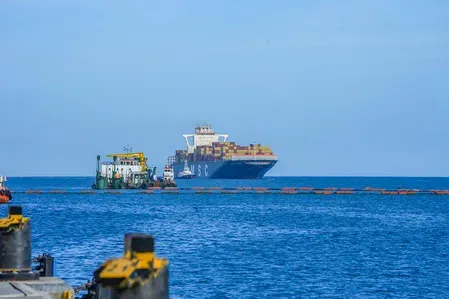
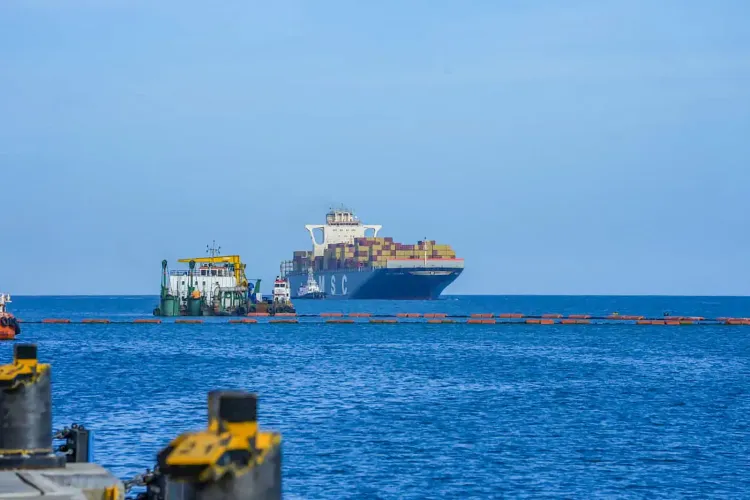
Vizhinjam International Seaport serves as the centrepiece of the state's renewed maritime focus.
Satheesan said success should be measured by opportunities for people — including MSMEs , fishermen, coastal communities, and youth — not just port traffic volumes.
The vision includes green shipping, maritime tourism, marine insurance, arbitration, ocean science, and maritime education.
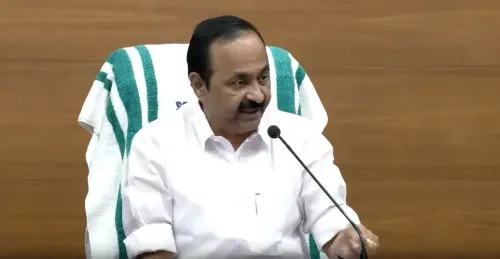
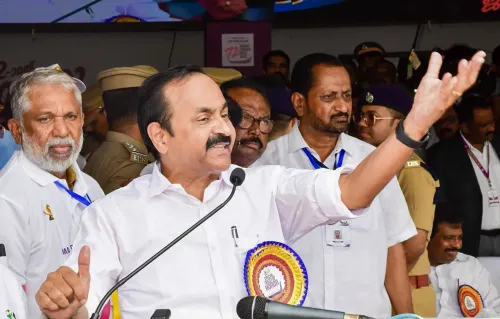
Kerala Chief Minister V.D. Satheesan on Wednesday, 23 September 2026, laid out a sweeping maritime-led economic vision for the state, positioning Mission Samudra as a multi-sector development strategy that stretches well beyond ports and cargo handling. The push comes ahead of World Maritime Day on Thursday and signals a concerted effort to translate Kerala's long-debated coastal potential into measurable economic outcomes.
What Mission Samudra Covers
Mission Samudra, announced in Kerala's 2026-27 Budget with an allocation of ₹400 crore, is designed to integrate the state's coastline, ports, and water resources with road, rail, and inland waterways, alongside industries, logistics networks, and emerging economic centres. Satheesan described the mission's scope expansively: it encompasses fisheries, tourism, shipbuilding and repair, maritime law, marine insurance, technology, renewable energy, ocean science, education, and skills development.
'Mission Samudra is not merely a programme for developing ports. It is a programme for developing Kerala through the sea,' Satheesan said in his message ahead of World Maritime Day.
Vizhinjam as the Centrepiece
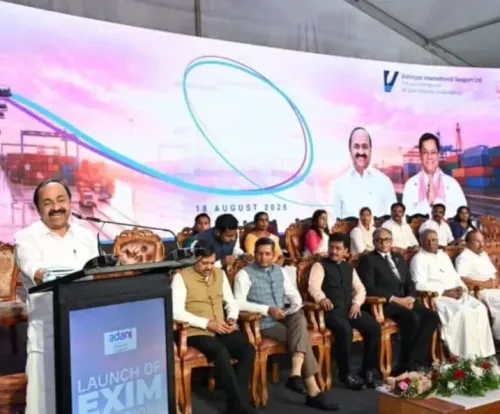
The Chief Minister's maritime push coincides with the rise of Vizhinjam International Seaport as the anchor of Kerala's renewed focus on the maritime economy. Officials and industry observers see Vizhinjam's transshipment potential as a critical enabler of the Mission Samudra framework, given Kerala's location at the junction of key global shipping lanes. The state's combination of a long coastline, inland waterways, international airports, and a skilled workforce, according to Satheesan, places it at a rare strategic intersection of global trade and logistics networks.
Jobs, MSMEs, and Coastal Communities
Satheesan was emphatic that the initiative's success must be measured in human outcomes rather than port traffic alone. 'Its real success must be measured by the opportunities reaching our people,' he said. He called for farmers and MSMEs to leverage improved logistics to access global markets, and for young people to find careers in shipping, logistics, maritime law, technology, ocean science, and port management without leaving Kerala.
He also stressed greater inclusion of fishermen and coastal communities in the emerging Blue Economy, pointing to opportunities in warehousing, cold chains, marine products, food processing, and export-oriented industries.
The Professional Ecosystem Vision
Beyond infrastructure, Satheesan outlined a knowledge-economy dimension to the mission: developing the professional services that orbit global trade, including customs, marine insurance, arbitration, maritime law, finance, research, and consultancy. The Chief Minister linked this vision to this year's World Maritime Day theme, 'From Policy to Practice: Powering Maritime Excellence', noting that Kerala had debated the possibilities of its coastline for generations and must now convert that potential into economic activity.
'The sea before us is not Kerala's boundary. It is Kerala's gateway to the world,' Satheesan said, calling on the state to aspire to become a globally connected maritime, logistics, and knowledge platform serving both India and international markets.
What Comes Next
With the ₹400 crore budgetary allocation already in place, attention will now shift to implementation timelines, specific project announcements under the Mission Samudra umbrella, and how effectively the state draws private investment and central support for the Vizhinjam corridor. The breadth of the vision — spanning green shipping, bunkering, maritime tourism, education, and legal studies — means execution clarity will be the next critical test for the initiative.
Point of View
And Mission Samudra's ₹400 crore allocation is a meaningful signal — but it is modest against the scale of the ambition. The real test is sequencing: Vizhinjam's transshipment operations need complementary logistics corridors, skilled-labour pipelines, and regulatory ease to generate the jobs Satheesan envisions. Without those, the mission risks becoming another well-framed policy document that stalls in execution. The inclusion of maritime law, marine insurance, and ocean science as explicit pillars is the most underreported dimension — and potentially the most durable, since knowledge services can scale without proportional capital spend.
NationPress
23 Sept 2026
Frequently Asked Questions
What is Mission Samudra in Kerala?
Mission Samudra is a Kerala government initiative announced in the 2026-27 Budget with a ₹400 crore allocation, aimed at developing the state's maritime economy across sectors including ports, logistics, fisheries, tourism, shipbuilding, maritime law, and ocean science. Chief Minister V.D. Satheesan described it as a programme for developing Kerala through the sea, not merely for developing ports.
How much funding has been allocated to Mission Samudra?
The Kerala government has allocated ₹400 crore to Mission Samudra in the 2026-27 Budget. The funds are intended to integrate the state's coastline, ports, and water resources with road, rail, inland waterways, industries, and logistics networks.
What role does Vizhinjam International Seaport play in Mission Samudra?
Vizhinjam International Seaport is described as the centrepiece of Kerala's renewed maritime focus. Its emergence as a transshipment hub underpins the broader Mission Samudra framework, given Kerala's location along key global shipping routes.
Who benefits from Mission Samudra?
CM Satheesan said the mission is designed to benefit a wide range of groups — farmers and MSMEs seeking better access to global markets, youth looking for careers in shipping, logistics, and maritime law, and fishermen and coastal communities seeking inclusion in the Blue Economy through warehousing, cold chains, and export-oriented industries.
Why was Mission Samudra announced ahead of World Maritime Day?
CM Satheesan released his vision statement ahead of World Maritime Day on 24 September, aligning with this year's theme 'From Policy to Practice: Powering Maritime Excellence'. He used the occasion to argue that Kerala had discussed the potential of its coastline for generations and must now convert that potential into tangible economic activity.