Karnataka caste census report submitted to Siddaramaiah; Muslims largest community at 14%
Synopsis
Karnataka's long-awaited caste census has landed on Chief Minister Siddaramaiah's desk — and its headline finding is already politically charged: Muslims are reportedly the state's largest community at 14%, ahead of Lingayats and Vokkaligas. With exit speculation swirling around Siddaramaiah, how the government handles this 300-page report could define the Congress government's next political chapter.
Key Takeaways
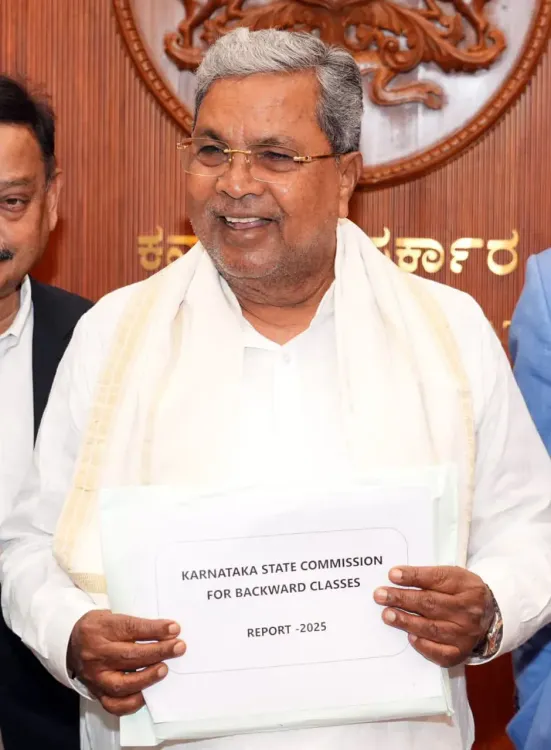
CM Siddaramaiah received the Social and Educational Survey Report (caste census) at Vidhana Soudha, Bengaluru on 27 May 2025 .
According to sources, Muslims are Karnataka's largest community at nearly 14% of the population — estimated at 75.25 lakh to 80 lakh people.
Veerashaiva-Lingayats are second at 11% (60–65 lakh), Vokkaligas third at 10% (55–60 lakh), and Kurubas fourth at 8% (40–45 lakh).
The report runs to nearly 300 pages and was prepared by the Karnataka State Backward Classes Commission .
Commission Chairman Madhusudhan R.
Naik confirmed the report is complete but declined to publicly release details at this stage.
The report is expected to influence OBC reservation policy and socio-economic representation frameworks in Karnataka.
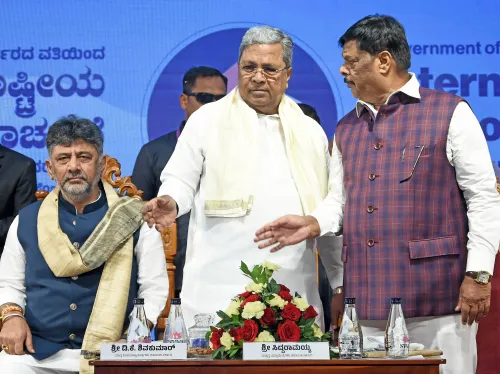
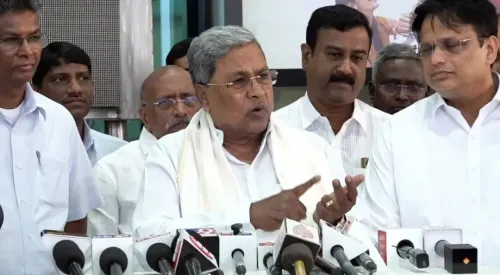
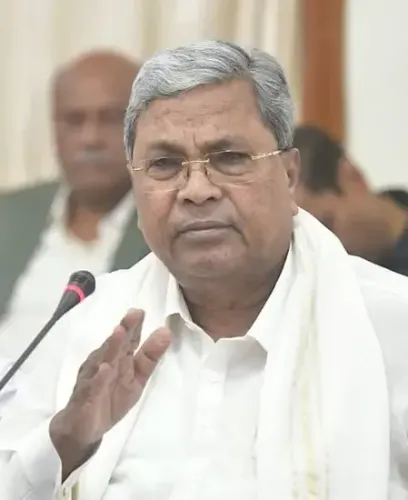
Karnataka Chief Minister Siddaramaiah on Wednesday, 27 May received the Social and Educational Survey Report — the state's long-awaited caste census — at his office in Vidhana Soudha, Bengaluru. The report, prepared by the Karnataka State Backward Classes Commission, is expected to reshape debates on reservation policy and socio-economic representation in the state.
Key Findings: Community-wise Population Breakdown
According to sources, the report identifies Muslims as the largest community in Karnataka, accounting for nearly 14 per cent of the state's population — an estimated 75.25 lakh to 80 lakh people. Veerashaiva-Lingayats are the second-largest community at approximately 11 per cent, with a population estimated between 60 lakh and 65 lakh. Vokkaligas rank third at around 10 per cent, with an estimated 55 lakh to 60 lakh people, while the Kuruba community constitutes nearly 8 per cent of the population, estimated at 40 lakh to 45 lakh, making it the fourth-largest group in the state.
These figures are drawn from sources familiar with the report's contents; the government has not yet officially released the data.
Formal Submission at Vidhana Soudha
The report was formally handed over in the presence of senior ministers and officials. Those present included Minister for Kannada, Culture and Backward Classes Welfare Shivaraj Tangadagi, Minister for Social Welfare H.C. Mahadevappa, Minister for Higher Education M.C. Sudhakar, Minister for PWD Satish Jarkiholi, and Minister for Agriculture N. Cheluvarayaswamy. Congress MLAs N.H. Konareddy and P.M. Narendra Swamy also attended. Chief Minister's Legal Advisor A.S. Ponnanna and Backward Classes Commission Chairman Madhusudhan R. Naik were also present, along with commission members and senior officials.
What the Commission Chairman Said
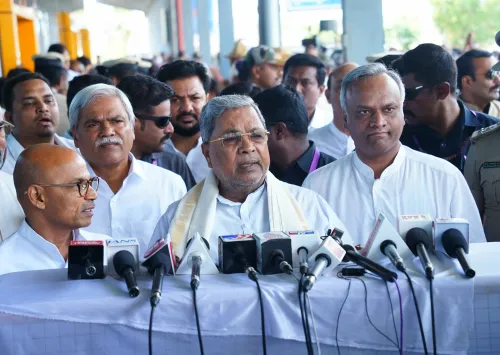
Backward Classes Commission Chairman Madhusudhan R. Naik, speaking to reporters after the submission, confirmed the report was complete but declined to share detailed findings at this stage. 'The report related to OBCs has been fully completed. There is no connection between speculation and the actual report. Translation of the report took time. We had initially planned to submit the report on May 30, but since May 29 is a holiday, it was submitted today itself,' he said.
Naik added that the report runs to nearly 300 pages and that the survey was conducted comprehensively. 'We cannot do anything about those who did not participate in the survey. Because of this, some figures may be lower than expected. We have submitted the report honestly and sincerely. We hope the government accepts the report at the earliest,' he stated.
Political Context and What Comes Next
The submission comes amid active speculation about Chief Minister Siddaramaiah's political future, with persistent exit rumours circulating within the ruling Indian National Congress (INC) in Karnataka. The caste census report is widely seen as a potential lever in internal party negotiations, given its implications for OBC and minority reservation frameworks. This is the first such comprehensive survey in Karnataka in decades, and its findings are expected to inform reservation policy discussions at both the state and national level. The government is yet to announce a timeline for formally tabling or acting on the report's recommendations.
Point of View
And its controlled release can shift factional equations within the Congress. The finding that Muslims are Karnataka's largest community will draw immediate contestation from Lingayat and Vokkaliga political formations, both of which anchor major electoral coalitions. What matters now is not the report itself but what the government chooses to do with it: a swift, transparent release signals confidence; a prolonged delay signals calculation. Either way, the caste arithmetic it surfaces will redefine reservation debates in Karnataka for years.
NationPress
10 Oct 2026
Frequently Asked Questions
What is the Karnataka Social and Educational Survey Report?
It is the state's comprehensive caste census, prepared by the Karnataka State Backward Classes Commission, covering population data for OBC and other communities. The report runs to nearly 300 pages and is intended to inform reservation policy and socio-economic representation decisions in Karnataka.
Which is the largest community in Karnataka according to the caste census?
According to sources familiar with the report, Muslims are the largest community in Karnataka, constituting nearly 14% of the state's population — estimated at 75.25 lakh to 80 lakh people. The government has not yet officially released the full data.
What is the population breakdown of major communities in Karnataka?
According to sources, Muslims account for around 14% (75–80 lakh), Veerashaiva-Lingayats around 11% (60–65 lakh), Vokkaligas around 10% (55–60 lakh), and Kurubas around 8% (40–45 lakh) of Karnataka's population.
Why was the report submitted earlier than planned?
Commission Chairman Madhusudhan R. Naik explained that the report was originally scheduled for submission on 30 May, but was advanced to 27 May because 29 May is a public holiday. Translation of the report had also caused earlier delays.
What happens next after the caste census report is submitted?
The government is yet to announce a timeline for formally releasing or acting on the report's recommendations. The findings are expected to shape discussions on OBC reservation policy and backward-class welfare in Karnataka, with political and legal scrutiny anticipated from multiple communities.