Karnataka CM meets C-DAC chief to explore AI and supercomputing ties
Synopsis
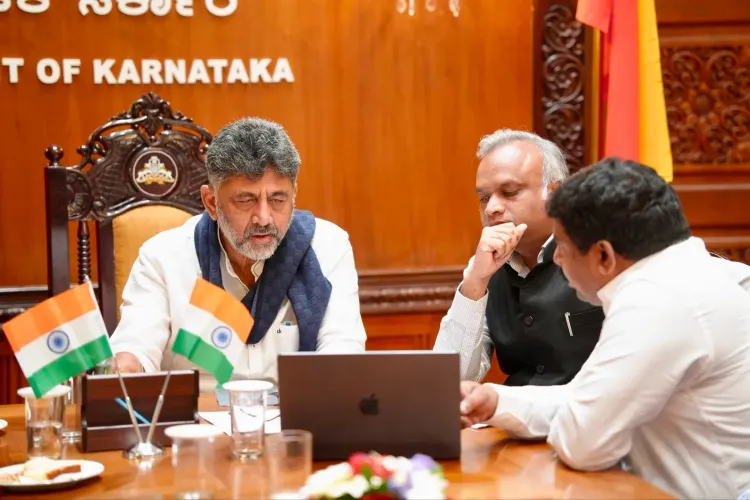
The Director General of C-DAC met Karnataka Chief Minister D.K. Shivakumar on August 7, 2026, presenting the agency's advanced computing and AI capabilities and exploring formal collaboration to strengthen Karnataka's innovation ecosystem — a move that could bring National Supercomputing Mission infrastructure closer to Bengaluru's tech industry.
Key Takeaways
The Director General of C-DAC visited Chief Minister D.K.
Shivakumar in Bengaluru on August 7, 2026 .
C-DAC , established in 1988 , is India's premier autonomous body for high-performance computing, AI, and indigenous software technologies under the Ministry of Electronics and IT.
The meeting covered C-DAC's core capabilities and opportunities to leverage advanced computing, AI, and emerging technologies for Karnataka.
C-DAC is a key partner in the National Supercomputing Mission launched in 2015 to expand HPC infrastructure across India.
Bengaluru hosts one of the world's densest clusters of IT firms and AI startups, making state-level access to central computing infrastructure strategically significant.
No specific project or MoU was announced; follow-up on joint deployments or AI centres remains the key development to watch.
A high-profile push to wire Karnataka's innovation engine into India's most advanced computing infrastructure took shape on Friday, August 7, 2026, when the Director General of C-DAC called on Chief Minister D.K. Shivakumar in Bengaluru. The meeting was more than a courtesy visit — it was a structured briefing on what India's premier advanced-computing body can bring to the state that already calls itself the country's Silicon Valley.
What C-DAC put on the table
The Centre for Development of Advanced Computing (C-DAC) — an autonomous R&D body under the Ministry of Electronics and Information Technology, founded in 1988 — walked the Chief Minister through its core capabilities, which span high-performance computing, artificial intelligence, multilingual technologies, and cybersecurity. The agency's founding mission was blunt: build India's own supercomputing muscle after technology-access restrictions cut the country off from foreign systems. Nearly four decades later, it remains the backbone of India's indigenous computing ambitions.
The two sides explored how those capabilities could be channelled into Karnataka's innovation ecosystem — covering advanced computing infrastructure, AI applications, and emerging technologies that the state's dense cluster of IT firms and research institutions could plug into directly.
Why Bengaluru and C-DAC make strategic sense together
Bengaluru hosts one of the world's largest concentrations of technology companies and AI startups. Yet much of the cutting-edge compute that drives frontier research — the kind needed for large-scale AI training, climate modelling, or drug discovery — sits with central government agencies rather than state ecosystems. A formal partnership with C-DAC would give Karnataka-based researchers and firms a structured pathway to that infrastructure.
C-DAC is already a key implementation partner of the National Supercomputing Mission, launched in 2015, which set out to seed high-performance computing nodes across Indian institutions. Bringing that network closer to Karnataka's industry and academic base is a logical next step — and one several other states have begun pursuing through similar bilateral engagements with central scientific agencies.
The broader AI push this fits into
The meeting lands inside a wider national frame: India's National Strategy for Artificial Intelligence and the push for indigenous electronics and IT development both call for exactly this kind of state-centre collaboration. For Karnataka, which contributes a disproportionate share of India's technology exports and talent, locking in preferential access to advanced computing resources would sharpen a competitive edge that rivals like Telangana and Tamil Nadu are actively contesting.
No specific project, budget figure, or deployment timeline was announced. But the structured nature of the briefing — a Director General-level visit with a formal capability overview — signals that both sides are moving beyond exploratory conversation toward something concrete.
The next signal to watch: whether this translates into a memorandum of understanding, a dedicated AI centre, or a supercomputing node earmarked for Karnataka — announcements that would convert today's meeting into measurable infrastructure.
Point of View
Which anchors India's IT export base, formalising ties with C-DAC could provide a structural advantage in the intensifying inter-state competition for AI investment and talent. The meeting also signals that New Delhi's National Supercomputing Mission and AI strategy are increasingly finding expression at the state level, moving from central mandates to ground-level partnerships. Whether this visit produces a binding agreement or remains a photo-opportunity will be the real test of political intent on both sides.
NationPress
22 Sept 2026
Frequently Asked Questions
What is C-DAC and what does it do?
C-DAC, the Centre for Development of Advanced Computing, is an autonomous R&D body under India's Ministry of Electronics and Information Technology, established in 1988. It develops high-performance computing systems, AI technologies, multilingual software, and cybersecurity solutions, and is a key partner in India's National Supercomputing Mission.
Why did the C-DAC Director General meet Karnataka CM D.K. Shivakumar?
The Director General visited to present an overview of C-DAC's core capabilities and explore opportunities to use advanced computing, AI, and emerging technologies to strengthen Karnataka's innovation ecosystem.
What is the National Supercomputing Mission?
The National Supercomputing Mission was launched in 2015 to build and deploy high-performance computing infrastructure across Indian academic and research institutions, with C-DAC as a primary implementation partner.
What could a C-DAC and Karnataka partnership mean for Bengaluru's tech sector?
A formal partnership could give Bengaluru-based startups, research institutions, and IT firms structured access to C-DAC's supercomputing and AI infrastructure, potentially accelerating research and development in the state.
Was any agreement or MoU signed at the C-DAC Karnataka meeting?
No specific agreement, MoU, or project was announced following the August 7, 2026 meeting. The visit was described as an exploratory briefing on capabilities and opportunities for collaboration.