Karnataka CM DK Shivakumar meets Regional Imbalance panel chief
Synopsis
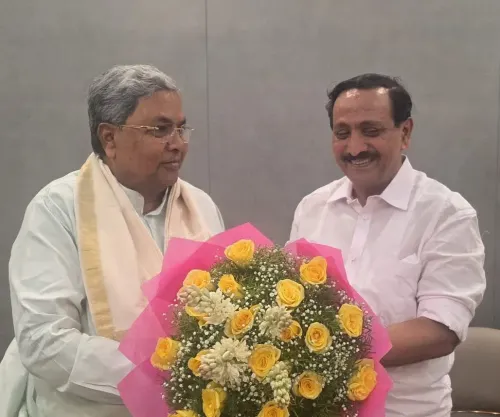
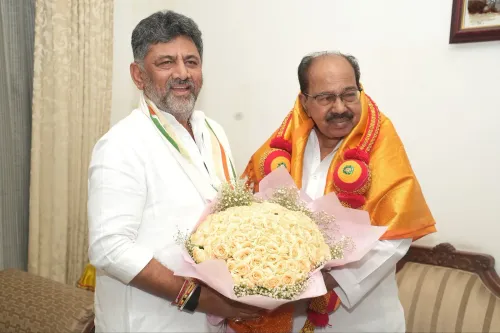
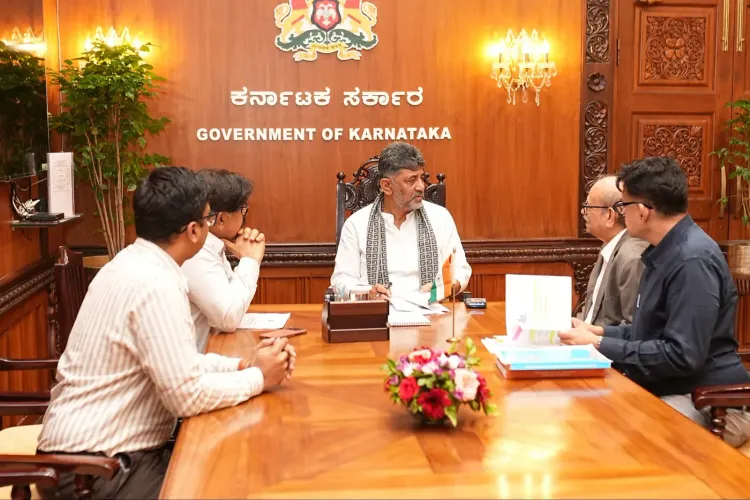
Karnataka Chief Minister DK Shivakumar met Regional Imbalance Redressal Committee chairman Prof. Govindarav at Vidhana Soudha on July 31, 2026. Economic Advisor L.K. Ateek was present, signalling active policy deliberation on bridging the state's long-standing north-south developmental divide.
Key Takeaways
Govindarav , Chairman of the Karnataka Regional Imbalance Redressal Committee , met CM DK Shivakumar at Vidhana Soudha on July 31, 2026 .
Economic Advisor L.K.
Ateek and other senior officials were present at the consultation.
The committee examines developmental disparities between advanced and backward regions of Karnataka, including the Hyderabad-Karnataka region.
The 2002 Nanjundappa Committee report is the foundational benchmark documenting Karnataka's regional imbalances.
The key outcome to watch is the committee's final report and any resulting budgetary allocations for backward taluks.
A committee with the power to reshape how Karnataka's wealth is distributed walked into Vidhana Soudha on Friday, July 31, 2026 — and the Chief Minister was listening. Prof. Govindarav, Chairman of the Karnataka Regional Imbalance Redressal Committee, held a formal consultation with Chief Minister DK Shivakumar, signalling that the long-standing question of uneven development across the state is back at the top of the government's agenda.
The Chief Minister's Office confirmed that L.K. Ateek, Economic Advisor to the Chief Minister, was among the senior officials present at the meeting. The consultation at the seat of Karnataka's legislature underscores that this is not a peripheral exercise — it sits squarely inside the CM's office.
The imbalance Karnataka has never fully fixed
The fault lines are old and well-documented. The landmark Dr. D.M. Nanjundappa Committee report of 2002 laid bare the stark developmental gap between the prosperous Bengaluru-Mysuru corridor and the lagging districts of northern and coastal Karnataka. Successive governments have commissioned studies, announced packages, and invoked Article 371(J) — the constitutional provision granting special development status to the Hyderabad-Karnataka region — yet the disparities in irrigation, industry, and human development indicators have persisted across decades.
The Regional Imbalance Redressal Committee is the current government's institutional answer to that unfinished business. Its mandate: examine where the gaps remain, quantify them, and recommend targeted investments in backward districts and taluks.
What the Shivakumar-Govindarav meeting signals
A committee chairman meeting directly with the Chief Minister — with the Economic Advisor in the room — is rarely a routine courtesy call. It suggests the panel's work has reached a stage where findings are being stress-tested against fiscal and political realities before a final report is shaped. The presence of L.K. Ateek points to active discussion around the budgetary weight any recommendations might carry.
The critical watch now is whether the committee's eventual report translates into concrete budgetary allocations or new schemes for the identified backward taluks — or joins the shelf of well-intentioned Karnataka studies that preceded it.
Point of View
The meeting suggests the committee's recommendations are being evaluated for fiscal feasibility, not merely noted. Karnataka's regional imbalance question carries deep electoral stakes in northern districts, making the eventual report as much a political document as a policy one. Whether the findings produce ring-fenced allocations or dissolve into general development rhetoric will be the true measure of this consultation.
NationPress
15 Sept 2026
Frequently Asked Questions
What is the Karnataka Regional Imbalance Redressal Committee?
It is a state-appointed body tasked with examining uneven economic and infrastructure development between Karnataka's regions — such as the lagging Hyderabad-Karnataka districts and the more advanced Bengaluru-Mysuru belt — and recommending corrective investments.
Who is Prof. Govindarav in Karnataka politics?
Prof. Govindarav is the Chairman of the Karnataka Regional Imbalance Redressal Committee, appointed to lead the panel studying developmental disparities across the state's districts and taluks.
What is Article 371(J) and why does it matter for Karnataka?
Article 371(J) of the Indian Constitution grants special provisions for the Hyderabad-Karnataka region, including reservations in education and government jobs for local residents, recognising its historical developmental backwardness relative to southern Karnataka.
What did the 2002 Nanjundappa Committee report say about Karnataka?
The Dr. D.M. Nanjundappa Committee report of 2002 documented severe regional imbalances across Karnataka and recommended targeted investments in backward districts — it remains the foundational reference for regional equity policy in the state.
What is the role of L.K. Ateek in the Karnataka government?
L.K. Ateek serves as the Economic Advisor to the Chief Minister of Karnataka and participates in key policy consultations, including the July 2026 meeting between CM Shivakumar and the regional imbalance committee chairman.