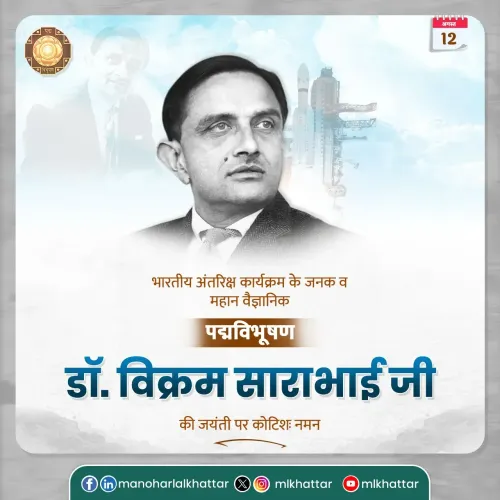
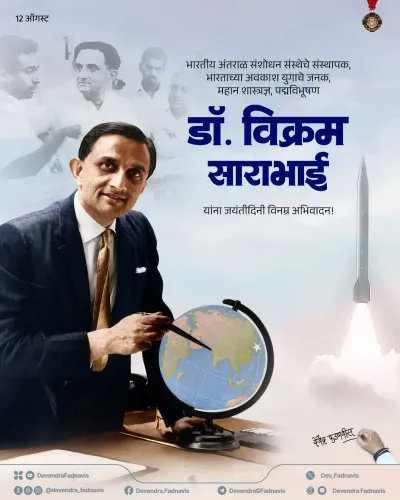
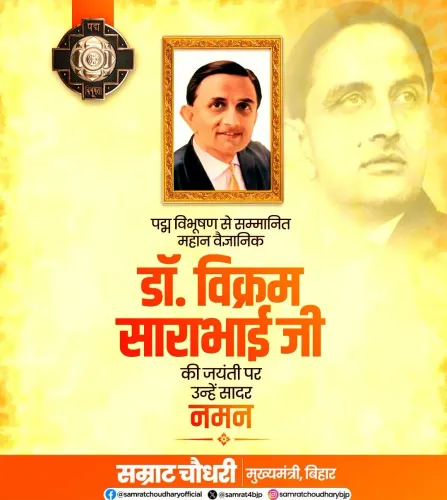
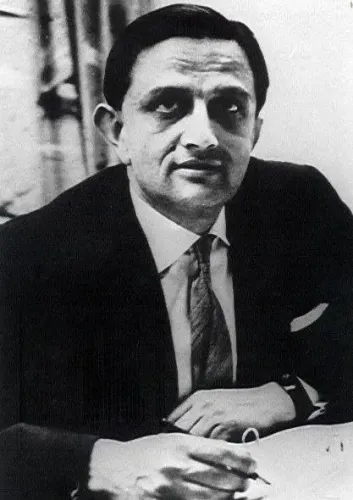
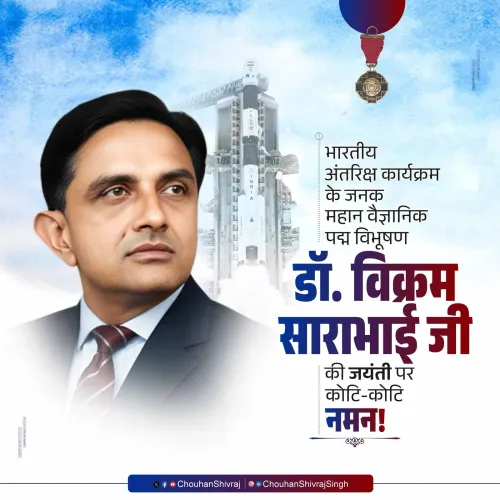
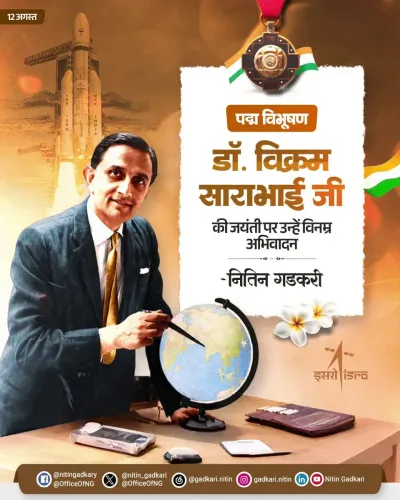
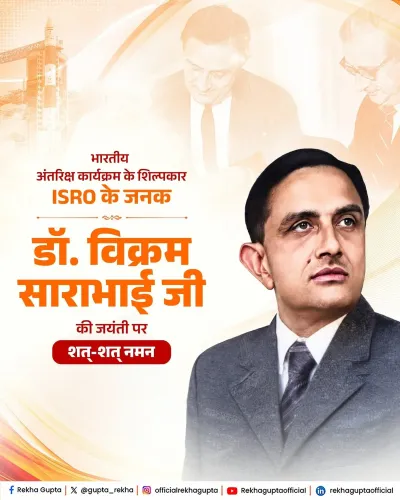
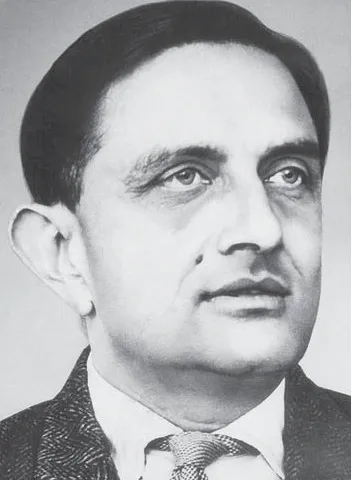
Karnataka CM Office Pays Tribute to Dr Vikram Sarabhai on Birth Anniversary
Synopsis
On Dr Vikram Sarabhai's birth anniversary, the Chief Minister's Office of Karnataka honoured the Padma Bhushan physicist credited with founding ISRO in 1969 and architecting India's first satellite, Aryabhata. His vision of space as a development tool for education, agriculture, and communication remains the backbone of India's space programme.
Key Takeaways
Dr Vikram Sarabhai is honoured on his birth anniversary, 12 August , as the father of India's space science and a Padma Bhushan recipient.
Sarabhai founded the Indian National Committee for Space Research in 1962 , which became ISRO in 1969 .
He was the principal architect of Aryabhata , India's first satellite, launched in 1975 — four years after his death in 1971.
Sarabhai championed using space technology for education, agriculture, and mass communication , not merely prestige.
The Chief Minister's Office of Karnataka paid tribute, reflecting the enduring national reverence for his legacy.
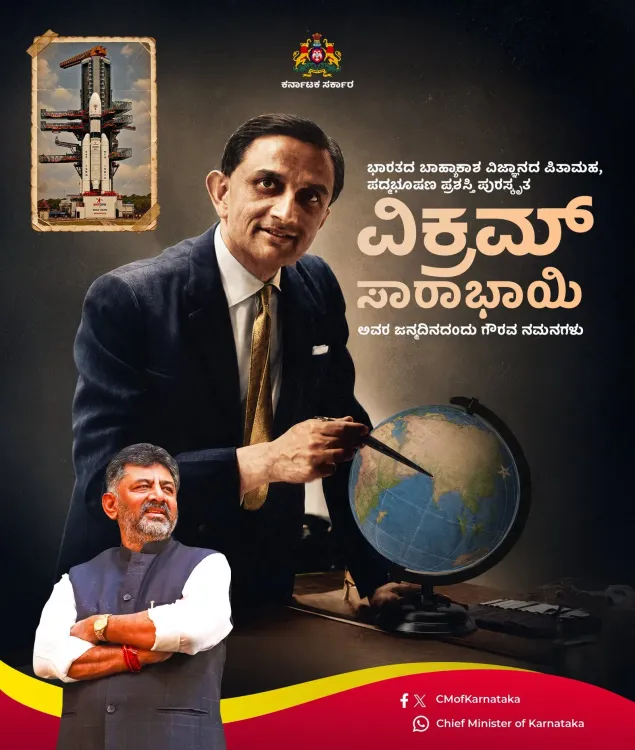
He laid the foundations of a space programme with a nation's development in mind — and six decades later, that vision orbits the Earth daily. On the birth anniversary of Dr Vikram Sarabhai, the Chief Minister's Office of Karnataka offered a reverential tribute to the man history calls the father of India's space science.
The post, shared on 12 August, saluted Sarabhai as ʻBhāratada Bāhyākāśa Vijñānada Pitāmaha' — 'the patriarch of India's space science' — honouring his Padma Bhushan distinction and his unmatched role in giving the country a scientific compass. 'His extraordinary foresight gave birth to ISRO, which has grown into one of the world's foremost space organisations,' the tribute read.
From a 1962 committee to a global space power
The arc Sarabhai drew begins in 1962, when he established the Indian National Committee for Space Research (INCOSPAR) — a body that would, by 1969, evolve into the Indian Space Research Organisation (ISRO). His conviction was precise and unfashionable for its time: space technology was not a prestige project but a development tool, one that could reach farmers, students, and remote communities that roads and wires had not yet touched.
He did not live to see the full fruit of that conviction. Sarabhai passed away in 1971, four years before Aryabhata — India's first satellite, of which he was the principal architect — was launched into orbit in 1975. That satellite was itself a statement: named after the ancient Indian mathematician, it announced that modern India intended to build on deep roots.
Space as a development instrument — Sarabhai's enduring doctrine
The CMO's tribute specifically noted Sarabhai's success in deploying space technology across education, agriculture, and mass communication — sectors that defined India's post-independence priorities. This was not coincidental. Sarabhai had argued, forcefully, that a developing nation had more urgent reasons to invest in space than a wealthy one: satellite reach could compress decades of infrastructure lag into years.
That doctrine has outlasted every government since. Successive administrations have channelled ISRO's satellite data into crop monitoring, disaster response, telemedicine, and rural connectivity programmes — a lineage that traces directly to the institutional architecture Sarabhai built.
On his birth anniversary, the tribute from Karnataka's CMO is more than ceremonial. It is a reminder that the ambition now visible in every ISRO launch was seeded by one physicist who looked at a newly independent nation and saw, not a limitation, but a launchpad.
Point of View
The salute carries quiet political weight — positioning the state as a natural heir to Sarabhai's vision. The emphasis on space technology serving agriculture and education also signals alignment with ongoing central schemes that use satellite data for rural development. Tributes of this kind, while ceremonial, reinforce the political consensus that space investment is inseparable from India's development narrative.
NationPress
12 Aug 2026
Frequently Asked Questions
Who is Vikram Sarabhai and why is he called the father of India's space programme?
Dr Vikram Sarabhai was an Indian physicist and astronomer who founded the Indian National Committee for Space Research in 1962 , which became ISRO in 1969. His institutional vision and insistence on using space technology for national development earned him the title 'father of India's space programme.'
When is Vikram Sarabhai's birth anniversary?
Vikram Sarabhai was born on 12 August 1919 . His birth anniversary is marked annually with tributes from government offices, scientific institutions, and ISRO.
What is Sarabhai's connection to ISRO?
Sarabhai was the driving force behind establishing ISRO in 1969 , building on the foundation of INCOSPAR, which he had set up in 1962. He shaped the organisation's philosophy of directing space research toward practical national development.
What was the Aryabhata satellite and what was Sarabhai's role?
Aryabhata was India's first satellite, launched in 1975 . Sarabhai was its principal architect, though he passed away in 1971 before the launch. It marked India's entry into orbital technology.
Why did Karnataka's CMO post a tribute to Vikram Sarabhai?
The Chief Minister's Office of Karnataka posted the tribute on Sarabhai's birth anniversary to honour his legacy as the founder of India's space programme and to recognise his contributions to science-led national development — a tradition observed annually across government institutions.