Karnataka CM's Office boosts dairy farmers with better milk prices

Synopsis
The Chief Minister's Office of Karnataka announced on November 4, 2026 that the state government will provide more profitable milk procurement prices, boosting incomes for dairy farmers through the KMF-Nandini cooperative network and strengthening the state's dairying sector.
Key Takeaways
The Chief Minister's Office of Karnataka posted on November 4, 2026 announcing a decision to offer remunerative milk prices to dairy farmers.
The government described the move as 'a new preface to the economic development of farmers' in its Kannada-language post.
The decision directly involves the Karnataka Milk Federation (KMF) , the apex dairy cooperative behind the Nandini brand.
Exact revised rates, effective dates, and linked subsidies have not yet been officially disclosed.
The move follows a broader national pattern of state governments adjusting milk procurement prices to offset rising feed and input costs for farmers.
Karnataka's dairy cooperative network is one of India's largest, making pricing decisions here significant in scale and reach.
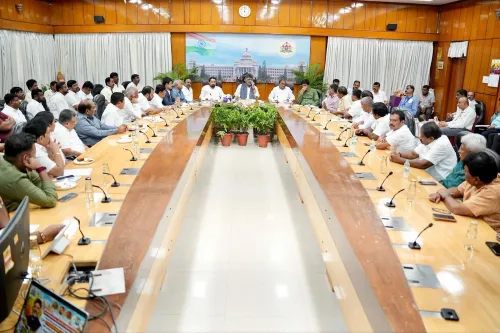
Karnataka's dairy farmers got a significant policy signal on Wednesday, November 4, 2026, as the Chief Minister's Office of Karnataka announced that the state government has decided to provide more profitable prices for milk — a move framed as a foundational step toward the economic advancement of the farming community.
The post, written in Kannada, declares: 'ಹೈನುಗಾರಿಕೆಗೆ ಬಲ!' — 'Strength to dairying!' — and states that the government's decision to offer remunerative prices for milk 'has written a new preface to the economic development of farmers.'
Why milk pricing is a lifeline for Karnataka's dairy belt
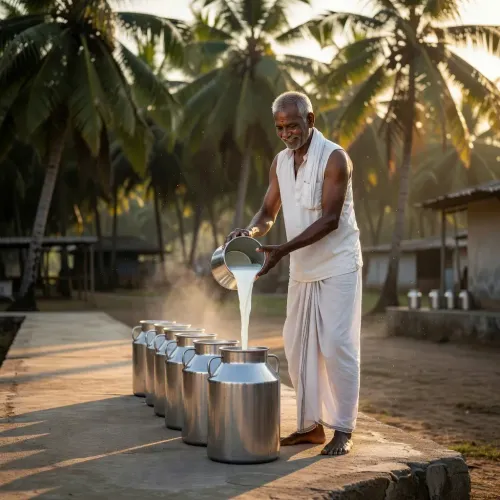
At the heart of this announcement is the Karnataka Milk Federation (KMF), the apex cooperative body that procures milk from farmers across the state and markets it under the iconic Nandini brand. KMF is one of India's largest dairy cooperatives, and the prices it offers at the farm gate directly determine whether lakhs of small and marginal dairy farmers turn a profit or absorb losses.
Rising costs of cattle feed, veterinary care, and fodder have squeezed dairy margins across India in recent years. When procurement prices lag behind input costs, farmers either exit the sector or reduce herd sizes — weakening the cooperative network that the state has built over decades. A revision upward in milk prices, even by a few rupees per litre, can materially shift household incomes for farming families whose dairy earnings supplement or anchor their livelihoods.
A pattern repeated across India's milk-producing states
Karnataka is not acting in isolation. Indian state governments periodically recalibrate milk procurement prices to stabilise cooperative procurement volumes and prevent farmer distress, particularly after high-inflation cycles in agricultural inputs. What sets Karnataka's cooperative model apart is its scale and integration: KMF's Nandini network reaches urban and rural consumers alike, meaning the financial health of the cooperative is tied directly to both farmer welfare and consumer supply chains.
The specific revised rate, its effective date, and any linked subsidies or procurement targets have not yet been officially detailed in public disclosures — those rollout specifics will be the critical numbers to watch as the policy moves from announcement to implementation.
What dairy farmers are watching next
For the state's dairy cooperative members — the tens of thousands of farmers who pour milk into KMF's collection network each morning — the announcement marks a commitment in principle. The test of its impact will come when the revised rates reach the village dairy cooperative society ledger. If the new prices are sustained and not eroded by delayed payments or procurement caps, they could meaningfully stabilise incomes across Karnataka's dairying districts.
Karnataka has consistently positioned its dairy cooperative sector as a pillar of rural welfare. This latest signal from the Chief Minister's Office suggests that commitment remains politically and economically active — and that the government is watching the sector closely enough to intervene on pricing.
Point of View
Karnataka is signalling that dairy farmer welfare is a headline political priority — not a departmental footnote. The move fits a wider pattern of state governments using cooperative milk pricing as a durable, visible lever of rural income support, particularly ahead of agricultural budget cycles or election seasons. The real test, however, lies in implementation: historically, the gap between a procurement-price announcement and its actual realisation at the village cooperative level has been a persistent pain point for Karnataka's dairy farmers. If the revised rates are backed by timely payments and volume guarantees, this could meaningfully reinforce farmer trust in the KMF cooperative model; if they are not, the announcement risks being read as political optics rather than structural relief.
NationPress
4 Nov 2026
Frequently Asked Questions
What did the Karnataka government announce for dairy farmers on November 4, 2026?
The Chief Minister's Office of Karnataka announced that the state government will provide more profitable milk procurement prices to dairy farmers, describing it as a step toward their economic development.
What is KMF and how does it affect Karnataka's dairy farmers?
The Karnataka Milk Federation (KMF) is the apex dairy cooperative in Karnataka that procures milk from farmers and markets it under the Nandini brand. The prices KMF offers at the farm gate directly determine dairy farmer incomes across the state.
What is the new milk price announced by Karnataka?
The specific revised rate has not yet been officially disclosed. The government announcement confirmed the decision in principle; exact figures, effective dates, and linked subsidies are yet to be detailed.
Why does milk procurement pricing matter for Karnataka farmers?
Dairy farming supplements or anchors household incomes for lakhs of small and marginal farmers in Karnataka. Rising feed and input costs have squeezed margins, making a higher procurement price critical to keeping farmers financially viable within the cooperative network.
Is Karnataka the only state revising milk prices for farmers?
No. Indian state governments periodically adjust milk procurement prices to offset rising agricultural input costs and stabilise cooperative procurement volumes. Karnataka's move is part of a broader national pattern.