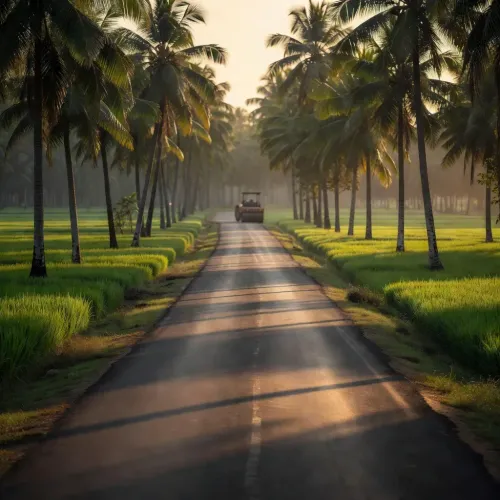
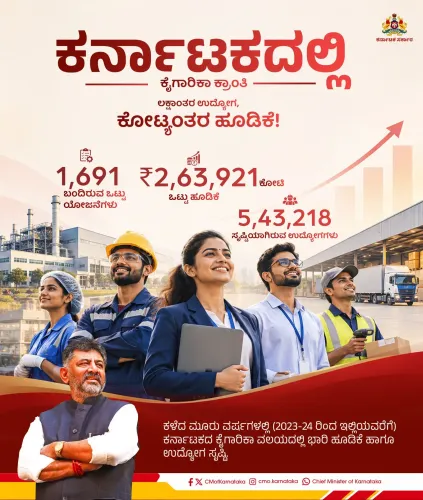
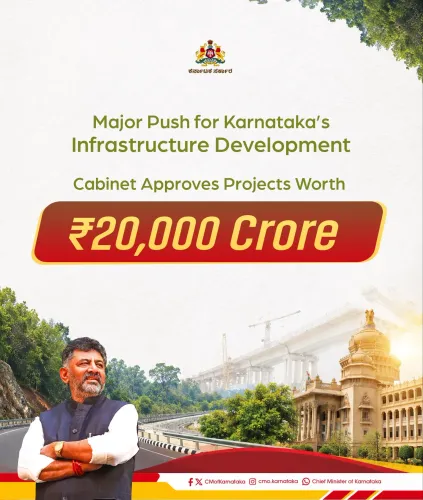
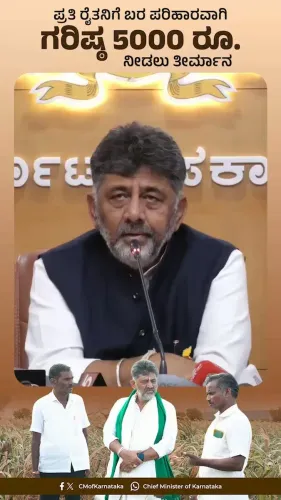
Karnataka CM's Office vows better roads for every village
Synopsis
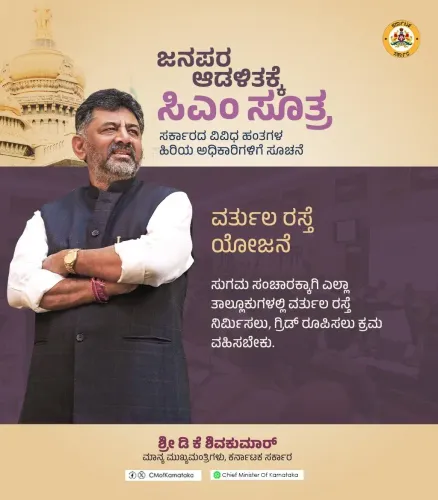
The Chief Minister's Office of Karnataka declared on 19 November 2026 that providing smooth road connectivity to every village is a government priority, with farmers, students, and rural employees named as direct beneficiaries in a Kannada-language post.
Key Takeaways
The Chief Minister's Office of Karnataka posted a rural road connectivity commitment on 19 November 2026 .
The government named farmers, students, and rural employees as the primary beneficiaries of improved roads.
The pledge covers connectivity 'from villages to cities,' signalling a focus on last-mile and inter-urban rural links.
The commitment aligns with the national Pradhan Mantri Gram Sadak Yojana (PMGSY) , launched in 2000 , which targets all-weather rural road access.
No specific schemes, budget allocations, or timelines were announced in the post; concrete details are expected in upcoming assembly sessions.
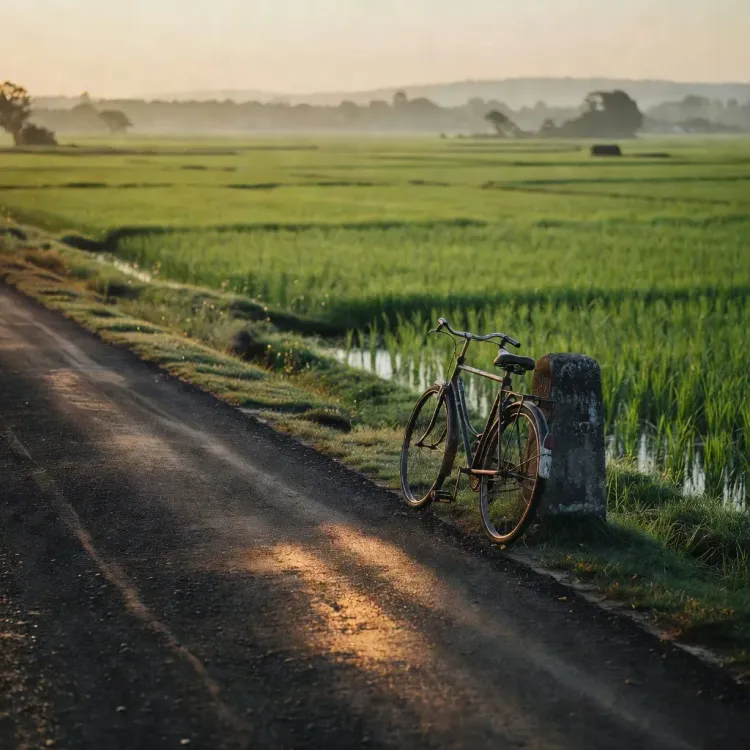
Every farmer hauling produce at dawn, every student trudging to a distant bus stop, every rural worker navigating broken tracks — the Chief Minister's Office of Karnataka put them all at the centre of a firm infrastructure commitment on Thursday, 19 November 2026, pledging smooth, all-weather road connectivity to each village in the state.
The post, written in Kannada, makes the state government's intent unmistakable: 'ಗ್ರಾಮಗಳ ಪ್ರಗತಿಗೆ ಸುಗಮ ರಸ್ತೆ ಸಂಪರ್ಕ ಅತ್ಯಗತ್ಯ' — 'Smooth road connectivity is essential for the progress of villages.' Farmers, students, and employees in rural areas are specifically named as the intended beneficiaries, and the government declares it is 'committed to accelerating rural development by improving the connectivity network from villages to cities.'
Why rural roads are Karnataka's most direct poverty lever
The logic behind the pledge is well-established: a paved road into a village is not merely asphalt — it is a supply chain, a school run, and a job market rolled into one. Across India, the evidence from two decades of rural road-building consistently shows that all-weather connectivity lifts agricultural incomes by cutting post-harvest losses, lowers school dropout rates among girls, and pulls informal workers into the formal wage economy. Karnataka, with its mix of prosperous techno-urban corridors and persistently under-served northern and hill districts, carries that contrast more visibly than most states.
The national architecture for this effort was laid by the Pradhan Mantri Gram Sadak Yojana (PMGSY), launched in 2000, which set out to provide all-weather road access to every unconnected rural habitation above a population threshold. State governments layer their own programmes on top of that framework, funding the last-mile stretches that central guidelines do not always reach. Karnataka's current declaration fits squarely within that tradition.
Who stands to gain — and what to watch next
The three groups named in the post — farmers, students, and employees — are not rhetorical window-dressing. They map onto the three most acute rural mobility needs: getting crops to mandis before spoilage, getting children to secondary schools in nearby towns, and getting daily-wage workers to worksites without spending a third of their earnings on unreliable transport. When road quality improves, all three outcomes shift measurably.
The post stops short of naming specific schemes, budget figures, or timelines — details that will matter most when Karnataka's next assembly session and state development-plan deliberations come around. Those are the moments to test whether this commitment translates into concrete allocations.
A state that connects its last village is a state that has closed its most visible gap. Karnataka has drawn the line; the numbers in the next budget will tell us how deep the commitment runs.
Point of View
It functions primarily as a signal to rural constituencies ahead of assembly deliberations. The timing fits a broader pattern across Indian states, where infrastructure rhetoric is used to consolidate rural support, but Karnataka's northern and hill-district connectivity gaps are genuine and well-documented, giving the pledge substantive ground to stand on. The real test will be whether the next budget translates the CM's Office's words into measurable kilometre targets and timely fund releases.
NationPress
19 Nov 2026
Frequently Asked Questions
What did the Karnataka government announce about rural roads?
On 19 November 2026, the Chief Minister's Office of Karnataka committed to providing smooth, all-weather road connectivity to every village in the state, prioritising farmers, students, and rural employees.
Which national scheme funds rural roads in Karnataka?
The Pradhan Mantri Gram Sadak Yojana (PMGSY), launched in 2000, is the central government's flagship programme for all-weather rural road connectivity; Karnataka supplements it with state-level funding.
Why is rural road connectivity important for farmers in Karnataka?
Better roads reduce post-harvest losses by giving farmers faster access to markets, lower transport costs for daily workers, and improve school attendance by making towns more reachable for rural students.
Did Karnataka announce a specific rural road scheme or budget?
No specific scheme name, budget figure, or timeline was mentioned in the 19 November 2026 post; concrete allocations are expected to emerge in upcoming Karnataka assembly sessions.
Which districts in Karnataka have the worst rural road connectivity?
Karnataka's northern and hill districts have historically faced the most significant rural connectivity gaps, though the CM's Office post did not specify any particular region or district.