Why Should Karnataka Congress Workers Stay Vigilant on SIR?
Synopsis
Karnataka Congress emphasizes the urgency for party members to stay alert about the upcoming SIR of electoral rolls, asserting its critical role in shaping the party's future. Key figures, including D.K. Shivakumar, highlight the need for collective action against potential vote theft and the importance of local elections.
Key Takeaways
Karnataka Congress calls for vigilance on SIR.
Booth Level Agents urged to protect voters' rights.
Local body elections planned within next four to five months.
Collective action is vital for the party's future.
MGNREGA scheme faces challenges under Central law.
Bengaluru, Jan 13 (NationPress) The Karnataka Congress has urged its members and leaders to remain vigilant regarding the forthcoming Special Intensive Revision (SIR) of electoral rolls, emphasizing that this initiative will significantly influence the party's future.
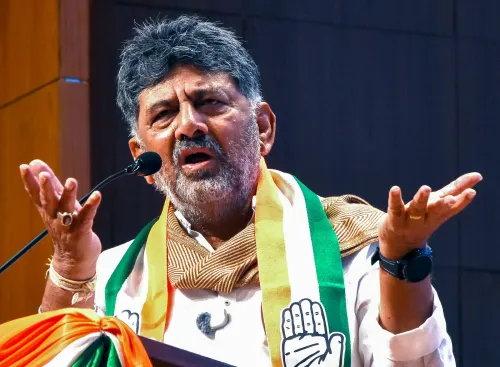
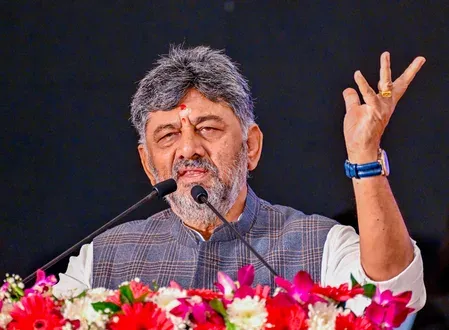
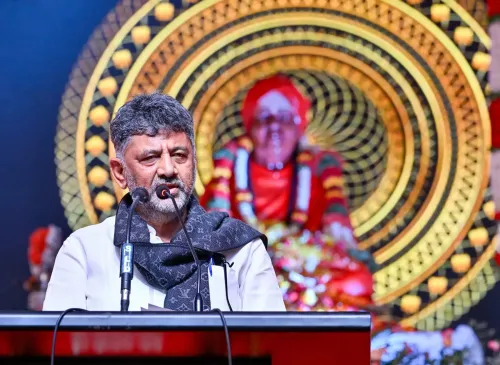
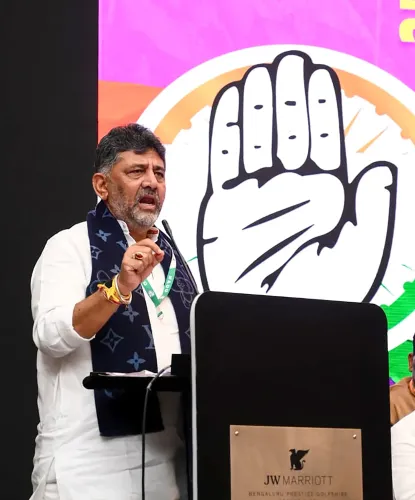
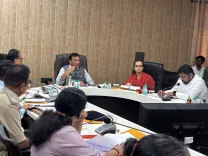
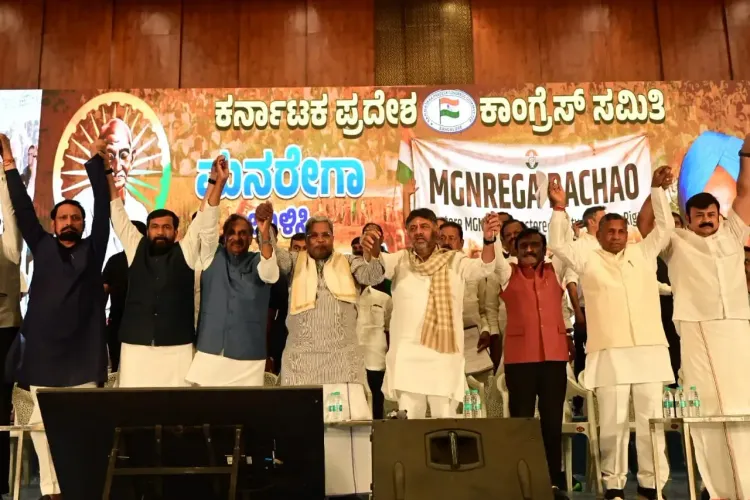
During a preparatory session for the "MGNREGA Bachao Sangram" protest at Palace Grounds on Tuesday, Deputy Chief Minister and State Congress President D.K. Shivakumar cautioned that the SIR process is imminent, with officials already engaged in preparations. He asserted that there would be no tolerance for negligence among booth-level agents, underscoring that the SIR will be pivotal for the party's destiny.
Shivakumar called on Booth Level Agents (BLAs) to be vigilant and safeguard voters' rights, alerting them to a potential "vote theft" scheme.
He commended district presidents, MLAs, and office-bearers for gathering 1.41 crore signatures in the anti-vote theft initiative, noting that leaders like Sonia Gandhi, Rahul Gandhi, and Mallikarjun Kharge have recognized their hard work. He stressed that the party's existence hinges on collective action.
Shivakumar mentioned ongoing discussions for a significant event on February 13, encouraging beneficiary conventions in each taluk and panchayat.
He described the meeting as historic, stating that local body elections had been postponed due to court orders, but a resolution has now been reached to conduct all local elections within the next four to five months.
He highlighted that the Supreme Court has also ordered municipal elections, and the government is dedicated to executing district, taluk, and gram panchayat elections. Cabinet actions have been taken to address issues regarding reservations and other obstacles. He requested party members to prepare accordingly.
Shivakumar remarked that the government's guarantee schemes and development initiatives have reached the populace, with workers empowered through guarantee committees and local nominations. He stated that all appointments, except for 600 state-level nominations, have been concluded, with only minor technical adjustments remaining. So far, 20 DCC presidents, 25 office-bearers, and 47 MLAs have been designated as heads of boards and corporations. Additionally, 19 members who were denied tickets during elections have been appointed as chairpersons, he added.
He strongly criticized the BJP-led Central government, accusing it of having "destroyed" the MGNREGA scheme, which was crucial for rural employment.
"Sonia Gandhi, during the tenure of the Manmohan Singh government, granted the poor the constitutional right to employment guarantee. Consequently, works valued at around Rs 6,000 crore are executed annually at the panchayat and village levels in Karnataka," he stated.
Reflecting on the Ballari padayatra, he recounted that some women expressed reluctance to work on others' land. At that time, while serving as the KPCC working president, he traveled to Delhi and brought the issue to Sonia Gandhi's attention. Following her instruction, provisions were established to compensate for work done on farmers' own land, including land leveling, construction of cattle sheds, compost pits, and farm ponds. Farmers were also given opportunities to cultivate horticultural crops on their property, he noted.
Shivakumar remarked that every panchayat used to receive an average annual grant of Rs 1-2 crore under the scheme. However, he accused the VB-G RAM G Act introduced by the Centre of disrupting this system.
He mentioned having seen media reports where Andhra Pradesh Chief Minister Chandrababu Naidu criticized the new law as impractical.
Shivakumar stated that the AICC has convened a working committee meeting and provided directives on how the party should organize protests on this issue. In the initial phase, district-in-charge ministers will conduct press conferences in all districts. Taluk-level press conferences are also to be organized. MLCs and MPs have been appointed as observers in constituencies without MLAs, and everyone is expected to engage with the media.
He emphasized that all AICC-mandated programs must be executed without exception, warning that reports will be requested regarding observers and office-bearers who do not comply, with those lacking interest facing removal.
He indicated that a decision would be taken in the upcoming Cabinet meeting regarding a two-day special Assembly session on this matter. The significance of reinstating MGNREGA and the shortcomings of the new Central legislation will be thoroughly discussed, leading to a governmental resolution.
Point of View
It is essential to recognize the significance of political engagement at the grassroots level. The Karnataka Congress's call for vigilance among its members reflects the broader theme of safeguarding democratic processes. The emphasis on collective action and local elections highlights the importance of grassroots mobilization in today's political climate.
NationPress
17 Oct 2026
Frequently Asked Questions
What is the Special Intensive Revision (SIR) of electoral rolls?
The SIR is a process that updates and revises the electoral rolls in a state to ensure accuracy and inclusivity of voters.
Why is the SIR important for the Karnataka Congress?
The SIR is crucial as it can significantly impact the party's future by ensuring that voters' rights are protected and that the electoral process is fair.
What measures is the Congress taking to prevent vote theft?
The Congress party is urging its Booth Level Agents to remain vigilant and protect voters' rights, actively campaigning against potential vote theft.
When will the local body elections be held in Karnataka?
The local body elections are expected to be conducted within the next four to five months, following a resolution by the government.
What is the MGNREGA scheme?
MGNREGA is a social security measure that guarantees 100 days of wage employment in a financial year to every rural household in India.