Karnataka MMR roadmap targets below 70 deaths per lakh live births by 2030
Synopsis
Karnataka's MMR sits at 73 — just three points above its new immediate target. The SUMAN Roadmap 2030 is the state's most detailed public health blueprint on maternal care yet, combining district-level accountability, Gram Panchayat mobilisation, and a life-cycle approach from pre-conception to postpartum. The real test is whether the district action plans that follow will carry enforcement teeth.
Key Takeaways
Karnataka unveiled the SUMAN Roadmap 2030 on 25 September 2026 , targeting an MMR below 70 per one lakh live births.
The state's current MMR stands at 73 per one lakh live births, per SRS 2022–24 data.
Seven key strategies identified, including pre-conception care, high-risk pregnancy tracking, obstetric emergency preparedness, and digital monitoring.
A 'Zero Maternal Death Gram Panchayat' campaign will mobilise local bodies to identify and support at-risk pregnant women.
Health Minister U.T.
Khader inaugurated the workshop, stressing quality, timely, and respectful maternal care.
Priority districts will each develop action plans covering three to five targeted local interventions with defined timelines and accountability measures.
The Karnataka Health and Family Welfare Department on Friday, 25 September 2026, unveiled a comprehensive roadmap aimed at reducing the state's Maternal Mortality Ratio (MMR) to below 70 per one lakh live births and achieving the long-term goal of zero preventable maternal deaths. The plan, discussed at a state-level workshop in Bengaluru, marks one of the most structured public health commitments the state has made on maternal care in recent years.
Current MMR and the immediate target
According to the Sample Registration System (SRS) estimate for 2022–24, Karnataka's MMR currently stands at 73 per one lakh live births. The state has set an immediate target of bringing this figure below 70, while simultaneously working towards eliminating all preventable maternal deaths over the longer term. The roadmap, framed under the Surakshit Matritva Aashwasan (SUMAN) Roadmap 2030 programme, was discussed under the theme 'From Roadmap to Results: Accelerating Karnataka's Journey Towards Zero Preventable Maternal Deaths.'
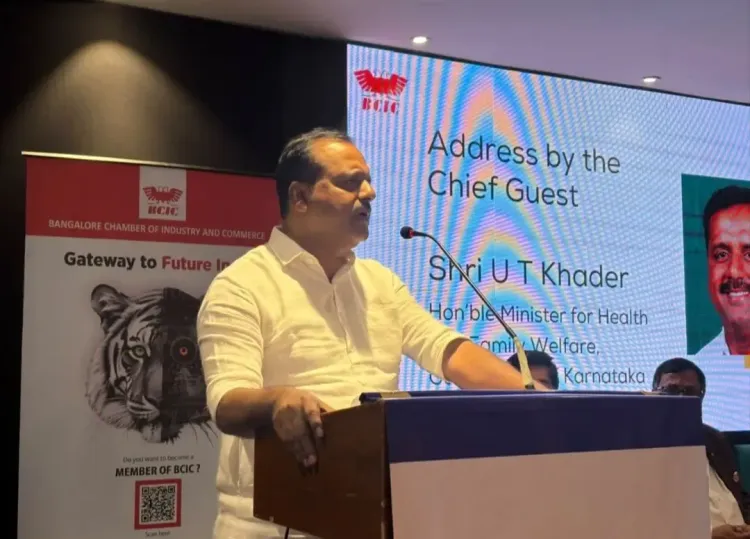
Health Minister U.T. Khader, who inaugurated the workshop and delivered the presidential address, stressed the need to strengthen quality, timely, and respectful maternal healthcare services across the state.
Key pillars of the roadmap
The roadmap identifies seven key strategies: pre-conception care, quality antenatal care and high-risk pregnancy tracking, quality delivery care, preparedness for postpartum haemorrhage (PPH) and obstetric emergencies, a strengthened Maternal Death Surveillance and Response (MDSR) system, a Zero Maternal Death Gram Panchayat campaign, and digital monitoring and accountability.
The plan seeks to shift emphasis from healthcare coverage to care quality, from risk identification to timely intervention, and from state-level metrics to district-level accountability. Districts will be the primary unit of implementation, with priority districts identifying three to five targeted actions based on their specific local maternal health challenges.
Life-cycle approach and high-risk management
Karnataka will adopt a life-cycle approach to maternal healthcare, beginning with pre-conception care and continuing through pregnancy, childbirth, and the postpartum period. Greater emphasis will be placed on identifying and managing anaemia, nutritional deficiencies, non-communicable diseases, and other risk factors before pregnancy takes hold.
For high-risk pregnancies, the department plans to reinforce the entire care chain — from identification and risk stratification to referral, treatment, follow-up, and safe delivery. Health institutions will be equipped with essential medicines, trained personnel, blood availability, and emergency transportation systems to handle obstetric emergencies including PPH, hypertensive crises, and sepsis.
Community-level mobilisation
A distinct feature of the roadmap is the launch of the 'Zero Maternal Death Gram Panchayat' campaign, designed to draw local governance bodies into the prevention effort. Gram Panchayats will be encouraged to identify pregnant and high-risk women, link them to antenatal care, strengthen birth preparedness plans, and ensure postpartum follow-up. This community-facing layer represents a departure from hospital-centric maternal health planning.
The workshop brought together representatives from priority districts, including Regional Chief Health Officers, District Health Officers, medical superintendents, obstetricians and gynaecologists, alongside state officials, technical experts, and development partners. The department said the state would provide policy direction and technical standards, while districts, institutions, and communities would lead on-ground execution.
What comes next
'Every mother deserves safe and respectful care. Every preventable maternal death must be prevented,' the department said, reiterating its commitment to the MMR target and the zero-death vision. District action plans with defined responsibilities, timelines, and outcome metrics are expected to follow. How effectively accountability is enforced at the district level will ultimately determine whether this roadmap translates into measurable reductions in maternal mortality.
Point of View
Which makes the push below 70 achievable but also a reminder that the hardest maternal deaths to prevent are those in the last statistical mile — typically in remote, high-risk, or socially marginalised populations. The roadmap's shift from state-level targets to district-level accountability is the right structural move, but district health systems in Karnataka have historically varied sharply in capacity. The 'Zero Maternal Death Gram Panchayat' campaign is an imaginative community layer, yet community mobilisation without reliable referral transport and fully staffed delivery centres risks becoming a documentation exercise. The true measure of this roadmap will not be the workshop — it will be whether district action plans are published, tracked publicly, and corrected when they stall.
NationPress
25 Sept 2026
Frequently Asked Questions
What is Karnataka's current Maternal Mortality Ratio and its new target?
Karnataka's MMR currently stands at 73 per one lakh live births, based on the Sample Registration System estimate for 2022–24. The state has set an immediate target of bringing this below 70, with a longer-term ambition of zero preventable maternal deaths under the SUMAN Roadmap 2030.
What is the SUMAN Roadmap 2030?
The SUMAN Roadmap 2030 is Karnataka's structured plan under the Surakshit Matritva Aashwasan (SUMAN) programme, unveiled on 25 September 2026, to accelerate the reduction of preventable maternal deaths. It outlines seven key strategies spanning pre-conception care, high-risk pregnancy management, obstetric emergency preparedness, community mobilisation, and digital accountability.
What is the Zero Maternal Death Gram Panchayat campaign?
It is a community-level initiative under the roadmap that encourages Gram Panchayats to identify pregnant and high-risk women, link them to antenatal care, strengthen birth preparedness and referral plans, and ensure postpartum follow-up. The campaign aims to extend maternal health accountability beyond hospitals to the grassroots level.
How will districts be held accountable under the new roadmap?
Districts will be the primary unit of implementation, with each priority district required to identify three to five targeted actions based on local maternal health challenges. District action plans will specify responsibilities, timelines, and outcome metrics, with the state providing technical guidance and monitoring support.
Who participated in the Karnataka SUMAN workshop on 25 September 2026?
The workshop was attended by Regional Chief Health Officers, District Health Officers, medical superintendents, obstetricians and gynaecologists from priority districts, alongside state officials, technical experts, and development partners. Health Minister U.T. Khader inaugurated the event and delivered the presidential address.