Cauvery water release: Karnataka to decide after legal consultations, all-party meet backs govt
Synopsis
Karnataka’s all-party meeting on the Cauvery dispute sent a unified signal: no water release to Tamil Nadu until legal experts, senior leaders, and stakeholders are consulted. With reservoirs at critically low levels — releases down from 50 TMC last year to barely 6.5 TMC this season — and a CWMA order for 3,500 cusecs hanging over the state, CM Shivakumar is walking a tightrope between federal compliance and farmer fury.
Key Takeaways
Shivakumar convened an all-party meeting on 2 August to deliberate on Cauvery water release to Tamil Nadu .
The CWRC and CWMA have directed Karnataka to release 3,500 cusecs to Tamil Nadu for 15 days ; Karnataka is examining a legal challenge.
The state has received only 30–35% of normal monsoon rainfall; total reservoir inflow stood at 67,378 cusecs on Sunday.
Water releases to Tamil Nadu this year are sharply lower: 2.9 TMC in June vs 19.19 TMC last June; 3.6 TMC in July vs 31 TMC last July.
Karnataka must retain at least 40 TMC , including 36 TMC mandatory for drinking water.
A Karnataka bandh on 13 August has been called by several organisations; Shivakumar has appealed for restraint.
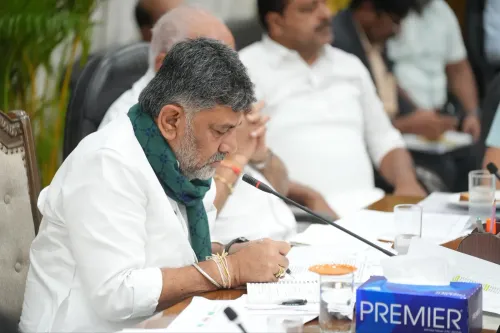
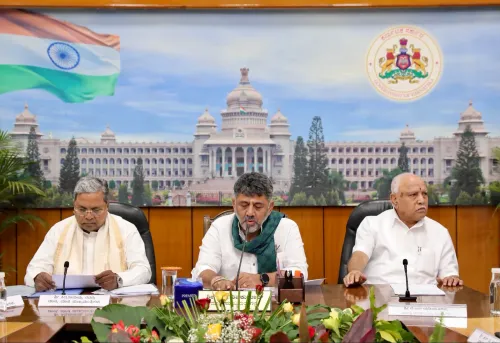
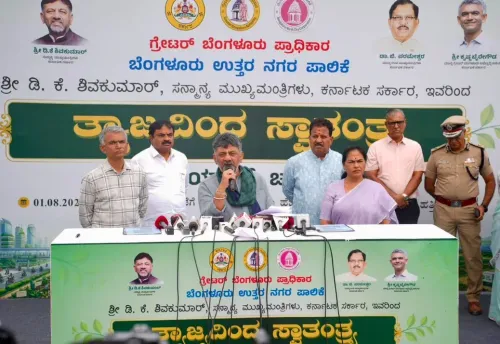
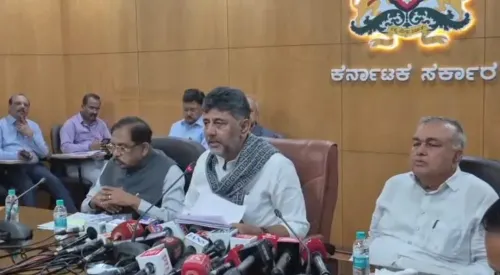
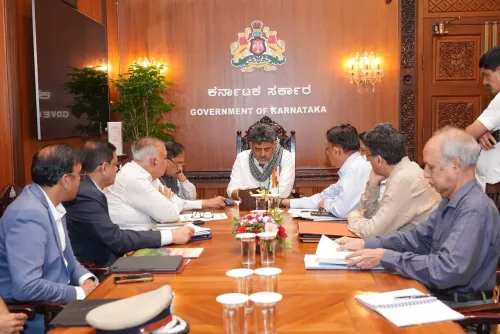
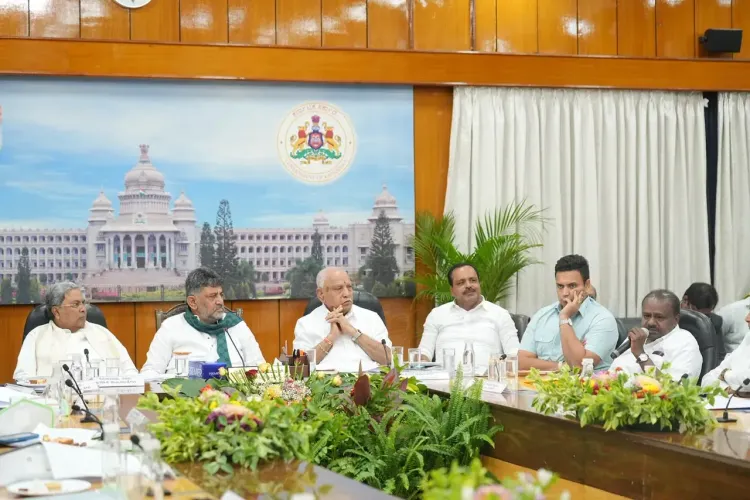
Karnataka Chief Minister D.K. Shivakumar on Sunday, 2 August said the state government would take a final call on releasing Cauvery water to Tamil Nadu only after consulting legal experts, senior leaders, and all stakeholders — a position endorsed unanimously at a high-level all-party meeting convened in Bengaluru to deliberate on the interstate river dispute amid severe drought conditions.
A Historic Gathering Across Party Lines
Shivakumar described the meeting as “historic,” noting that it brought together leaders from across the political spectrum. Among those present were former Chief Ministers Siddaramaiah, B.S. Yediyurappa, H.D. Kumaraswamy, and Basavaraj Bommai, along with Union Minister Shobha Karandlaje, Cabinet colleagues, Members of Parliament from both the Lok Sabha and Rajya Sabha, and former Irrigation Ministers.
“They offered valuable suggestions and assured the state government of their full support in protecting Karnataka’s interests,” Shivakumar said. Former Prime Minister H.D. Deve Gowda was unable to attend but conveyed his views separately.
The Drought Context and Reservoir Situation
Karnataka has received only 30–35 per cent of normal monsoon rainfall this season, triggering a water crisis that has complicated compliance with federal water-sharing orders. The Cauvery Water Regulation Committee (CWRC) and the Cauvery Water Management Authority (CWMA) had directed Karnataka to release 3,500 cusecs of water to Tamil Nadu for 15 days — an order Shivakumar said came “during a crisis period.”
However, the Chief Minister noted that the rainfall situation had improved in recent days. As of Sunday, total reservoir inflows stood at 67,378 cusecs — comprising Kabini at 24,000 cusecs, KRS at 22,000 cusecs, Harangi at 10,430 cusecs, and Hemavathi at 12,000 cusecs. Despite this, Shivakumar stressed that Karnataka must retain at least 40 TMC of water, of which 36 TMC is mandatory for drinking water requirements.
Sharp Contrast With Last Year’s Releases
Shivakumar provided a stark year-on-year comparison to illustrate the severity of the current shortfall. In June last year, Karnataka released 19.19 TMC of water; this year, only 2.9 TMC was released. In July last year, the state released 31 TMC; this year, the figure stood at approximately 3.6 TMC. He noted that until Sunday, no water had been released from any reservoir specifically for inter-state sharing — water from Kabini was released later in the day solely for dam safety.
Legal Options and the Supreme Court
The state government is examining whether to challenge the latest CWMA directions before the Supreme Court. “Our legal team is examining all aspects. After discussions, the state government will take an appropriate decision,” Shivakumar said. He declined to comment on a private petition reportedly filed by the Dravida Munnetra Kazhagam (DMK) in the Supreme Court regarding the distress-sharing formula, saying private petitions were generally not entertained and Karnataka would respond through proper legal channels.
Notably, former Chief Minister Basavaraj Bommai suggested that the long-pending Mekedatu balancing reservoir project offered a permanent solution to the recurring dispute, arguing it would benefit both states during distress years. Shivakumar said discussions on expediting the project in accordance with Supreme Court directions would be taken forward with the Centre.
Bandh Appeal and Political Temperature
Several pro-Kannada, farmers’, and progressive organisations have called a Karnataka bandh on 13 August over the Cauvery issue, with the Bharatiya Janata Party (BJP) and Janata Dal (Secular) (JD-S) extending support. Shivakumar appealed for restraint, saying he would personally speak to the organisations to request they call off the shutdown. “The government and nature are now standing with the people. There is no need for protests at this stage,” he said.
On demands for an immediate drought declaration, Shivakumar said the Centre’s prescribed norms required assessment reports by the end of August before any formal declaration could be made, dismissing the Opposition’s call as “political.” He also revealed that Tamil Nadu Chief Minister C. Joseph Vijay had agreed to postpone a proposed event after being requested to do so, given the all-party meeting and the ongoing crisis. Karnataka BJP president B.Y. Vijayendra had also written to CM Vijay on the Cauvery dispute.
With the CWRC and CWMA meeting every 15 days and fresh directions possible through January, Karnataka’s legal and political strategy on Cauvery will remain fluid in the weeks ahead.
Point of View
Suggesting Karnataka’s long-term water security strategy remains hostage to interstate politics rather than infrastructure. The year-on-year release data — barely 6.5 TMC this season against 50 TMC last year — is the real headline, and it frames the CWMA order as genuinely difficult to comply with, not merely inconvenient. What’s missing from the political theatre is a credible distress-sharing formula that both states can live with; without it, this cycle will repeat next monsoon.
NationPress
17 Sept 2026
Frequently Asked Questions
What did the Karnataka all-party meeting decide on Cauvery water release?
The all-party meeting, held on 2 August in Bengaluru, reached a consensus that Karnataka would not take a final decision on releasing Cauvery water to Tamil Nadu until legal experts, senior leaders, and all stakeholders were consulted. All parties present assured the state government of their full support in protecting Karnataka’s interests.
What has the CWMA ordered Karnataka to do?
The Cauvery Water Management Authority (CWMA) and the Cauvery Water Regulation Committee (CWRC) have directed Karnataka to release 3,500 cusecs of water to Tamil Nadu for 15 days. The Karnataka government is examining whether to challenge this order before the Supreme Court.
How severe is Karnataka’s water shortage this year?
Karnataka has received only 30–35 per cent of normal monsoon rainfall this season. Water releases to Tamil Nadu have fallen sharply — just 2.9 TMC in June compared to 19.19 TMC in June last year, and around 3.6 TMC in July against 31 TMC in July last year. The state says it must retain at least 40 TMC for drinking water needs.
What is the Mekedatu project and why is it relevant?
The Mekedatu balancing reservoir is a long-pending dam project on the Cauvery river proposed by Karnataka. Former CM Basavaraj Bommai suggested at the all-party meeting that the project would provide a permanent solution to recurring Cauvery disputes by storing surplus water during good monsoon years for use during distress periods, benefiting both Karnataka and Tamil Nadu.
What is the Karnataka bandh on 13 August about?
Several pro-Kannada, farmers’, and progressive organisations have called a Karnataka bandh on 13 August to protest the Cauvery water release orders. The BJP and JD-S have extended support to the shutdown. CM Shivakumar has appealed for restraint, saying he will personally request the organisations to call it off.