Cauvery water row: Shivakumar says Karnataka yet to release water to Tamil Nadu
Synopsis
Karnataka CM D.K. Shivakumar has pushed back against BJP criticism, confirming no Cauvery water has been released to Tamil Nadu yet — even as a key reservoir approaches full capacity with inflows of up to 39,000 cusecs against a directed release of just 3,500 cusecs. An all-party meeting on Sunday and a looming Tamil Nadu Supreme Court petition make the next 48 hours critical.
Key Takeaways
Shivakumar confirmed on 1 August that no Cauvery water has been released to Tamil Nadu yet.
Current inflow into Karnataka's Cauvery catchment reservoirs stands at 36,000–39,000 cusecs ; the directed release is only 3,500 cusecs .
One Karnataka reservoir was expected to reach full capacity by the evening of 1 August .
An all-party meeting has been convened in Bengaluru on Sunday, 2 August to decide on water release.
Tamil Nadu is reportedly preparing to approach the Supreme Court over the dispute.
Shivakumar condemned an attack on civic officials during a Shivajinagar anti-encroachment drive, calling it 'an attack on the government.'
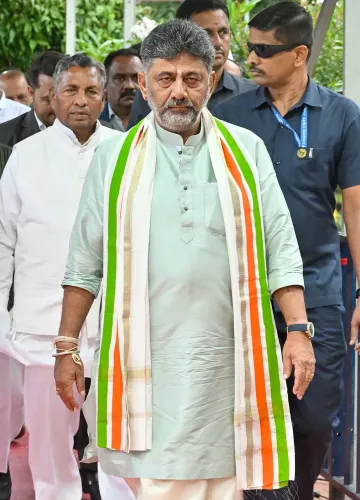
Karnataka Chief Minister D.K. Shivakumar on Saturday, 1 August clarified that the state government has not yet released any Cauvery water to Tamil Nadu, and stressed that any decision on the contentious inter-state water dispute would be taken only after consulting legal experts and opposition leaders. The remarks came amid mounting political pressure from the Bharatiya Janata Party (BJP) over the state's handling of the Cauvery sharing arrangement.
Shivakumar's Rebuttal to BJP
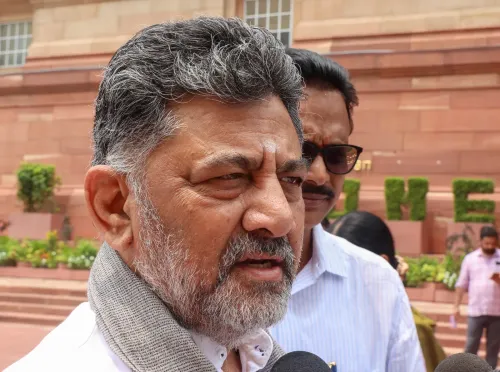
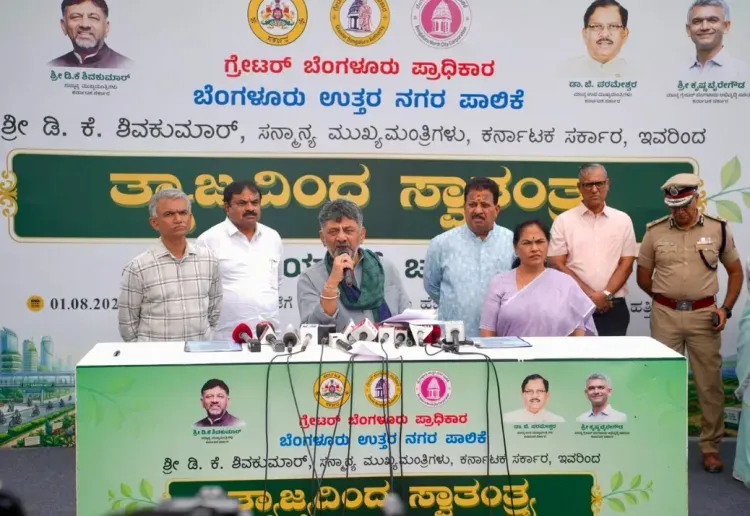
Responding to criticism from BJP leaders, Shivakumar pushed back sharply, saying the Opposition had begun levelling allegations even before a single cusec of water had been released. 'The BJP has been making allegations, but we have not yet released water. They themselves had suggested convening an all-party meeting,' he told reporters in Bengaluru on the sidelines of the launch of the 'Freedom from Waste' campaign.
The Chief Minister's remarks signal the Congress government's intent to proceed cautiously on an issue that carries significant electoral and legal weight in both Karnataka and Tamil Nadu.
Reservoir Capacity and Inflow Pressures
Shivakumar disclosed that one of Karnataka's reservoirs in the Cauvery catchment area was likely to reach full capacity by the evening of 1 August, making it physically difficult to retain further inflows. 'Once the reservoir is full, it is not possible to hold back any more water,' he said.
He noted that the current inflow stands at approximately 36,000 to 39,000 cusecs, while Karnataka has been directed to release only 3,500 cusecs to Tamil Nadu. Tamil Nadu, meanwhile, is reportedly preparing to approach the Supreme Court over the matter, adding a judicial dimension to an already fraught situation.
All-Party Meeting Called for Sunday
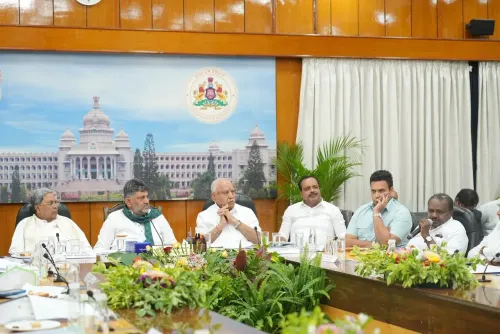
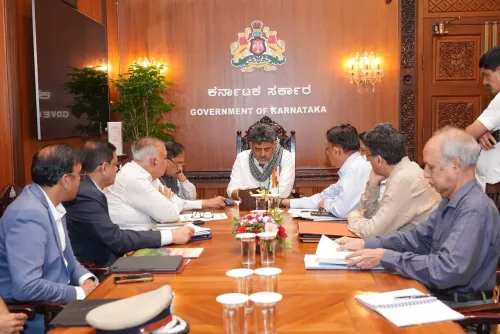
The Congress government has convened an all-party meeting in Bengaluru on Sunday, 2 August to deliberate on the water release decision. Shivakumar reiterated that the government would take 'an appropriate decision' only after consulting legal experts and opposition leaders — a formulation designed to insulate the administration from unilateral blame on a politically sensitive issue.
This is not the first time Karnataka has faced this dilemma. The Cauvery dispute is a decades-old flashpoint, with the Cauvery Water Disputes Tribunal award and subsequent Supreme Court directives setting the framework for inter-state sharing — a framework that routinely comes under stress during low-rainfall years.
Shivajinagar Attack and Anti-Encroachment Drive
Separately, Shivakumar strongly condemned a recent attack on civic officials during an anti-encroachment drive in Bengaluru's Shivajinagar area. He framed the incident as an assault on the government itself rather than merely on public servants. 'If anyone thinks it was only an attack on officials, they are mistaken. It was an attack on the government, its ministers and legislators,' he said.
The Chief Minister affirmed that the anti-encroachment drive would continue, while ensuring that displaced street vendors are provided alternative locations wherever feasible. Encroachments on footpaths and roads obstructing pedestrians and vehicular traffic, he said, would not be tolerated.
Bengaluru's Cleanliness Push
Shivakumar also called on legislators across Karnataka to replicate Bengaluru's 'Freedom from Waste' campaign in their own constituencies, describing it as a model for the state. He emphasised that sustained civic participation and public responsibility would be essential to eliminating illegal waste dumping in urban areas.
With the all-party meeting scheduled for Sunday and Tamil Nadu reportedly readying a Supreme Court petition, the next 24 to 48 hours are likely to be decisive for Karnataka's Cauvery position.
Point of View
And we will consult everyone before we do' — is as much a political manoeuvre as an administrative update. The BJP's pre-emptive criticism, before any release, reflects how thoroughly the Cauvery issue has been weaponised in Karnataka's political culture, where any concession to Tamil Nadu carries electoral cost. What is missing from the public discourse is a frank acknowledgment that once a reservoir is full, Karnataka has limited legal room to withhold water under existing Supreme Court directives. The all-party meeting on Sunday is prudent optics, but the hydraulic and judicial reality may leave the state with fewer choices than the political theatre suggests.
NationPress
15 Sept 2026
Frequently Asked Questions
Has Karnataka released Cauvery water to Tamil Nadu?
No. Karnataka CM D.K. Shivakumar confirmed on 1 August that the state has not yet released any Cauvery water to Tamil Nadu. A decision is expected after an all-party meeting on Sunday, 2 August.
Why is Karnataka finding it difficult to hold back Cauvery water?
A reservoir in the Cauvery catchment area was expected to reach full capacity by the evening of 1 August, with inflows of 36,000 to 39,000 cusecs. Once a reservoir is full, retaining additional inflows is not physically possible.
What is the directed water release for Karnataka to Tamil Nadu?
Karnataka has been directed to release 3,500 cusecs of Cauvery water to Tamil Nadu, significantly lower than the current inflow of 36,000 to 39,000 cusecs into its catchment reservoirs.
Is Tamil Nadu approaching the Supreme Court over Cauvery water?
According to Shivakumar's statement, Tamil Nadu is reportedly preparing to approach the Supreme Court over the Cauvery water dispute. No petition has been formally filed as per available information on 1 August.
What is the Cauvery water dispute between Karnataka and Tamil Nadu?
The Cauvery dispute is a decades-old inter-state conflict over the sharing of river water for agriculture and drinking needs. It is governed by the Cauvery Water Disputes Tribunal award and subsequent Supreme Court directives, which periodically mandate specific release volumes from Karnataka to Tamil Nadu.