Cauvery dispute: Tamil Nadu moves Supreme Court for 26.954 tmcft from Karnataka
Synopsis
Tamil Nadu has dragged Karnataka to the Supreme Court over Cauvery water, arguing that Karnataka's four reservoirs collectively hold over 77 tmcft — yet the state has released a fraction of what the sharing formula mandates. With the CWMA's directed release amounting to barely 4.536 tmcft against Tamil Nadu's claimed entitlement of 26.954 tmcft, the gap is stark and the apex court is now the arbiter.
Key Takeaways
Tamil Nadu filed a petition in the Supreme Court on 3 August seeking 26.954 tmcft of Cauvery water from Karnataka .
The CWRC at its 139th meeting on 28 July directed Karnataka to release 3,500 cusecs at Biligundlu from 29 July to 12 August .
Karnataka's four reservoirs held a combined 77.537 tmcft as of 3 August , with utilisable storage of 67.517 tmcft .
The CWMA-directed release of 3,500 cusecs for 15 days amounts to only 4.536 tmcft — far short of Tamil Nadu's claimed 26.954 tmcft entitlement.
Heavy rainfall in KRS and Kabini catchment areas has reportedly improved inflows, strengthening Tamil Nadu's case.
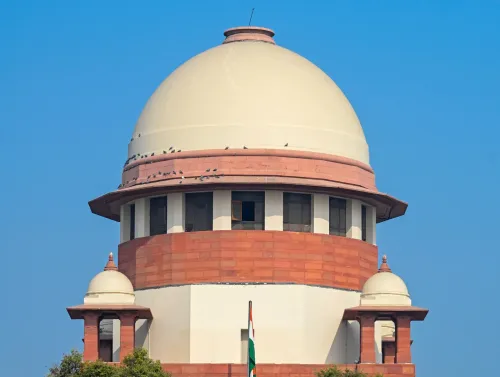
The Tamil Nadu government on Monday, 3 August moved the Supreme Court seeking directions to Karnataka to immediately release 26.954 tmcft of Cauvery water, alleging that the neighbouring state has failed to comply with orders issued by the Cauvery Water Regulation Committee (CWRC) and the Cauvery Water Management Authority (CWMA). The petition puts the two southern states back on a collision course over one of India's most contested inter-state river disputes.
What the Regulatory Bodies Directed
According to the petition, the CWRC, at its 139th meeting held on 28 July, reviewed hydrological and meteorological conditions across the Cauvery basin and directed Karnataka to ensure a flow of 3,500 cusecs at Biligundlu for 15 days, from 29 July to 12 August. The committee specifically instructed Karnataka to regulate releases from the Krishnaraja Sagar (KRS) and Kabini reservoirs to maintain the stipulated flow. The CWMA subsequently endorsed this recommendation at its 54th emergency meeting on 30 July.
Karnataka's Reservoir Levels and Tamil Nadu's Case
Tamil Nadu contended that despite these directives, the quantity of water actually received at Biligundlu after the order was far below its rightful share. The state submitted that as of 3 August, Karnataka's four major Cauvery basin reservoirs together held 77.537 tmcft of water — with KRS at 23.078 tmcft, Kabini at 18.610 tmcft, Harangi at 7.827 tmcft, and Hemavathi at 28.022 tmcft. Total utilisable storage was stated to be 67.517 tmcft.
Tamil Nadu further argued that heavy rainfall recorded in the catchment areas of the KRS and Kabini reservoirs had significantly improved inflows, leaving Karnataka with no reasonable grounds to withhold releases.
Why Tamil Nadu Calls CWMA Order 'Grossly Inadequate'
The state argued that based on prevailing hydrological conditions and the prescribed sharing formula, its due share amounts to 26.954 tmcft at Biligundlu. By contrast, the release directed by the CWMA — 3,500 cusecs for 15 days — would translate to only approximately 4.536 tmcft, which Tamil Nadu described as grossly inadequate. The gap between what the formula prescribes and what has been directed underlines the core of the dispute before the apex court.
What Tamil Nadu Has Sought
In its petition, Tamil Nadu urged the Supreme Court to issue appropriate directions compelling Karnataka to immediately release the full 26.954 tmcft and ensure strict compliance with all standing orders of the CWMA and CWRC. The matter is likely to be taken up for hearing in the coming days, with both states expected to present their positions before the bench.
This is not the first time the two states have clashed before the Supreme Court over Cauvery flows — the river's allocation has been a flashpoint for decades, with the Cauvery Water Disputes Tribunal having issued its final award in 2007, later modified by the Supreme Court in 2018. The current petition signals that even with institutional mechanisms in place, seasonal shortfalls continue to push the dispute back into judicial territory.
Point of View
Yet the CWMA directed a release that would yield barely 4.5 tmcft — roughly one-sixth of what Tamil Nadu claims as its due. The institutional architecture of the CWRC and CWMA was designed to depoliticise exactly these seasonal standoffs, but Tamil Nadu's resort to the Supreme Court suggests those bodies lack the enforcement teeth to translate their orders into actual water flows. Until the apex court or Parliament strengthens the compliance mechanism, this cycle — monsoon inflows, downstream demand, upstream reluctance, judicial escalation — will repeat every year.
NationPress
17 Sept 2026
Frequently Asked Questions
Why has Tamil Nadu moved the Supreme Court over Cauvery water?
Tamil Nadu filed a petition on 3 August alleging that Karnataka has not complied with directions from the CWRC and CWMA to release Cauvery water. The state argues it is entitled to 26.954 tmcft based on the prescribed sharing formula, but the actual water received at Biligundlu has been far below that amount.
How much water is Tamil Nadu demanding from Karnataka?
Tamil Nadu is seeking 26.954 tmcft of Cauvery water at the Biligundlu gauging station. It contends that the CWMA-directed release of 3,500 cusecs for 15 days would amount to only about 4.536 tmcft, which it has called grossly inadequate.
What did the CWRC and CWMA order Karnataka to do?
The CWRC, at its 139th meeting on 28 July, directed Karnataka to maintain a flow of 3,500 cusecs at Biligundlu from 29 July to 12 August by regulating releases from the KRS and Kabini reservoirs. The CWMA endorsed this at its 54th emergency meeting on 30 July.
How much water do Karnataka's Cauvery reservoirs currently hold?
As of 3 August, Karnataka's four major Cauvery basin reservoirs — KRS, Kabini, Harangi, and Hemavathi — collectively held 77.537 tmcft, with total utilisable storage of 67.517 tmcft, according to Tamil Nadu's petition.
What is the background of the Cauvery water dispute between Tamil Nadu and Karnataka?
The Cauvery dispute is one of India's longest-running inter-state river conflicts. The Cauvery Water Disputes Tribunal issued its final award in 2007, which the Supreme Court modified in 2018, establishing the CWRC and CWMA to oversee compliance. Seasonal shortfalls, however, have repeatedly pushed the two states back into litigation.