Cauvery water release: Karnataka to decide after all-party meet on August 2
Synopsis
Karnataka has refused to immediately comply with a CWMA order directing it to release 3,500 cusecs of Cauvery water daily to Tamil Nadu, instead calling an all-party meeting on 2 August before deciding. With KRS reservoir at just 36% and the state recording its lowest release in 100 years, the political and hydrological stakes could not be higher — and Tamil Nadu CM Joseph Vijay's planned Bengaluru visit on 3 August adds a charged diplomatic dimension.
Key Takeaways
Karnataka will decide on Cauvery water release to Tamil Nadu only after an all-party meeting on 2 August 2025 .
The CWMA upheld a directive asking Karnataka to release 3,500 cusecs per day for 15 days ; Karnataka had sought a reduction and deferment.
Until July 2025 , Karnataka released only 0.6 TMC — the lowest in 100 years , according to CM D.K.
KRS reservoir stands at only 36% capacity; current system inflows are approximately 26,000 cusecs .
Tamil Nadu CM Joseph Vijay's proposed visit to Bengaluru on 3 August has been requested to be postponed amid the ongoing tensions.
Last year, Karnataka released over 400 TMC against a stipulated 177 TMC , according to Shivakumar.
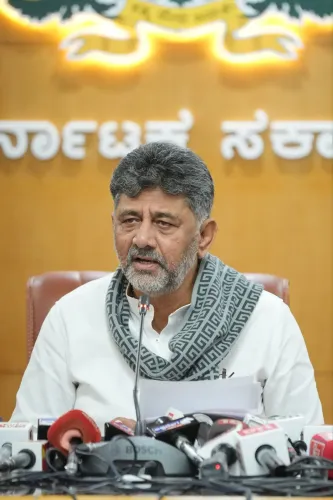
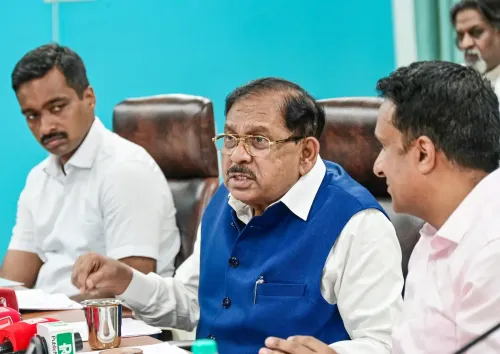
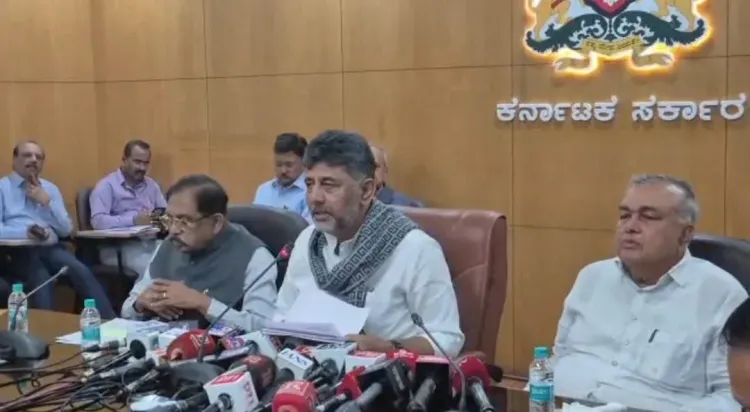
The Karnataka government on Friday, 31 July announced it would finalise its position on releasing Cauvery water to Tamil Nadu only after an all-party meeting convened for Sunday, 2 August, with Chief Minister D.K. Shivakumar declaring that protecting the state's interests is the government's foremost obligation. The announcement was made at a joint press conference at Vidhana Soudha, Bengaluru, attended by Deputy Chief Minister G. Parameshwara and Water Resources Minister Ramalinga Reddy.
All-Party Meeting: What Is Being Planned
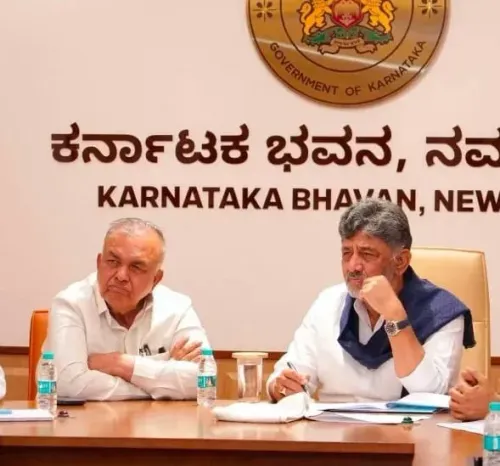
CM Shivakumar said all former chief ministers, Members of Parliament, ministers, legal experts, and senior bureaucrats have been invited to the 2 August meeting to deliberate on every dimension of the dispute. 'The all-party meeting will be briefed on the legal, hydrological, and administrative aspects of the matter. Thereafter, a decision will be taken on the future course of action,' he said.
The meeting follows a directive from the Cauvery Water Management Authority (CWMA), which on Thursday, 31 July upheld the Cauvery Water Regulation Committee's (CWRC) order asking Karnataka to release 3,500 cusecs of water per day to Tamil Nadu for 15 days. Karnataka had filed an appeal before the CWMA seeking a reduction in the quantum and a deferment of the release dates, but the authority did not grant relief.
Reservoir Levels and the Water Deficit Argument
Shivakumar presented the state's hydrological position in detail, noting that reservoir levels varied sharply. Harangi reservoir stood at 90% capacity, Kabini at 83%, Hemavathi at 67%, and the critical Krishna Raja Sagar (KRS) reservoir at only 36%. Current inflows into the system were approximately 26,000 cusecs, or around 2 TMC per day.
Notably, until July 2025, Karnataka had released only 0.6 TMC of water — the lowest in 100 years, according to the Chief Minister. He also pointed out that Tamil Nadu had originally sought 9.94 TMC of water, but the CWMA directed a release of roughly half that quantum.
Shivakumar cited last year's figures to argue Karnataka's track record: against a stipulated 177 TMC, the state released over 400 TMC to Tamil Nadu in a year of surplus rainfall. 'Much of that water eventually flowed into the sea. Tamil Nadu was also satisfied with the release,' he said.
Cross-Party Unity and Political Undertones
In a rare display of cross-party acknowledgement, Shivakumar welcomed the support of BJP MPs and Union Ministers — including Pralhad Joshi, V. Somanna, and Shobha Karandlaje — in presenting Karnataka's case before the Centre and the CWMA. He also noted that even the technical advisor appointed during former Chief Minister Basavaraj Bommai's tenure participated in the proceedings before the CWRC.
At the same time, the Chief Minister pushed back against BJP and Kannada organisations staging protests over the issue, asserting that Congress governments have 'consistently protected the interests of Karnataka' since the tenure of former Chief Minister S. Bangarappa.
Tamil Nadu CM Visit and Diplomatic Caution
On the proposed visit of Tamil Nadu Chief Minister Joseph Vijay to Bengaluru on 3 August, Shivakumar said he had personally requested Vijay to postpone the trip given the prevailing tensions. 'His responsibility is to protect the interests of his state, while ours is to safeguard Karnataka's interests. We are both approaching this issue with that understanding and are hopeful that it can be resolved amicably,' he said.
Shivakumar also referenced broader inter-state water cooperation, noting that Andhra Pradesh Chief Minister N. Chandrababu Naidu had recently participated in a meeting in Karnataka on river water management, with discussions covering the Tungabhadra river and a proposed Godavari-Cauvery-Krishna river-linking project. He credited Union Minister C.R. Patil for facilitating those initiatives.
What Happens Next
The all-party meeting on 2 August will determine Karnataka's formal response to the CWMA directive. The state's legal and technical teams are expected to present compliance options, and a decision on whether — and how much — water will be released is anticipated shortly thereafter. The outcome will be closely watched by farming communities on both sides of the border and by the Supreme Court, which has jurisdiction over the broader Cauvery dispute.
Point of View
But the state's own data showing 400 TMC released last year against a 177 TMC mandate complicates a purely scarcity-based argument. What this dispute consistently exposes is the absence of a real-time, independently verified water-accounting system that both states and the CWMA can rely on — without which every monsoon season becomes a fresh political crisis rather than a managed resource allocation.
NationPress
15 Sept 2026
Frequently Asked Questions
What has the CWMA ordered Karnataka to do regarding Cauvery water?
The Cauvery Water Management Authority (CWMA) has upheld a directive asking Karnataka to release 3,500 cusecs of Cauvery water per day to Tamil Nadu for 15 days. Karnataka had appealed for a reduction in the quantity and a deferment of the release dates, but the CWMA did not grant relief.
Why is Karnataka holding an all-party meeting before deciding?
Chief Minister D.K. Shivakumar convened the 2 August all-party meeting to brief former chief ministers, MPs, ministers, legal experts, and senior bureaucrats on the legal, hydrological, and administrative aspects of the Cauvery dispute before taking a final call. The government says the meeting is intended to build consensus and ensure Karnataka's interests are protected.
What are the current water levels in Karnataka's Cauvery reservoirs?
As of 31 July, Harangi reservoir was at 90% capacity, Kabini at 83%, Hemavathi at 67%, and the Krishna Raja Sagar (KRS) reservoir — the most critical for the Cauvery basin — at only 36%. Current inflows into the system stand at approximately 26,000 cusecs, or around 2 TMC per day.
How much Cauvery water has Karnataka released this year?
Until July 2025, Karnataka had released only 0.6 TMC of Cauvery water — the lowest recorded release in 100 years, according to CM Shivakumar. The state says there is only a regular flow and no additional release has been made beyond that.
What is the significance of Tamil Nadu CM Joseph Vijay's proposed Bengaluru visit?
Tamil Nadu Chief Minister Joseph Vijay had planned to visit Bengaluru on 3 August, a day after the Karnataka all-party meeting. CM Shivakumar has requested Vijay to postpone the trip given the prevailing tensions over the Cauvery water dispute, though both leaders have indicated they hope for an amicable resolution.