Giriraj Singh boosts Kashmir Pashmina testing to 170/day
Synopsis
Union Textiles Minister Giriraj Singh announced that the Pashmina Testing Centre in Srinagar has expanded verification capacity to around 170 tests per day, strengthening authentication of GI-tagged Kashmiri crafts like Pashmina, Kani shawls, and Sozni embroidery to protect artisans and boost consumer trust.
Key Takeaways
Union Textiles Minister Giriraj Singh announced the expanded testing capacity on 29 October 2026 .
The Pashmina Testing Centre in Srinagar can now conduct approximately 170 tests per day .
The expansion covers authentication of Kashmir Pashmina, Kani shawls, and Sozni embroidery .
Kashmir Pashmina received its Geographical Indication (GI) tag in 2008 , making authenticated provenance critical to its market value.
Faster verification is intended to curb counterfeits, protect artisan livelihoods, and strengthen buyer confidence in Kashmiri handicraft exports.
The move aligns with broader post-2019 government emphasis on economic development in Jammu and Kashmir through traditional craft promotion.
Kashmir's most iconic handcrafts — Pashmina, Kani shawls, and Sozni embroidery — are getting a sharper shield against counterfeits. Union Textiles Minister Giriraj Singh announced on Thursday, 29 October 2026, that the Pashmina Testing Centre in Srinagar has scaled its verification capacity to approximately 170 tests per day, a move aimed at protecting artisans and rebuilding buyer trust in authentic Kashmiri goods.
In his post, the Minister wrote: 'कश्मीर की पश्मीना, कानी शॉल और सोजनी कढ़ाई जैसे पारंपरिक हस्तशिल्प की पहचान अब और तेजी से होगी' — 'Traditional handicrafts of Kashmir like Pashmina, Kani shawl, and Sozni embroidery will now be authenticated faster.' The expanded throughput, he said, will strengthen consumer confidence and safeguard the livelihoods of craftspeople who depend on the genuine article's premium value.
Why the Srinagar testing centre matters
The problem the centre is built to solve is deceptively simple: fake Pashmina is everywhere, and it costs real artisans real money. Kashmir Pashmina earned its Geographical Indication (GI) tag in 2008, a legal anchor that ties the product's name to its origin and quality. But a GI tag is only as powerful as the infrastructure backing it. Without fast, credible authentication, counterfeit shawls — machine-woven, synthetic-blended, or misrepresented in origin — undercut genuine hand-spun Pashmina on price, eroding both artisan income and the product's global reputation.
By pushing daily testing capacity higher, the centre effectively shortens the queue between a craftsperson weaving a shawl and that shawl reaching a buyer with a verified certificate in hand. For Kashmiri handicraft exporters, that speed translates directly into market access and contract fulfilment timelines. Faster authentication is, in practical terms, faster trade.
Fitting into a larger craft-protection push
The expansion is not a standalone gesture. The Ministry of Textiles has been widening lab-based authentication infrastructure for handloom and handicraft products since the early 2010s. Broader government policy since 2019 has placed the economic development of Jammu and Kashmir at the centre of post-reorganisation priorities, with traditional crafts positioned as a high-value, employment-intensive sector that benefits from state attention without requiring heavy industrial investment.
Similar GI-linked authentication frameworks have been applied to products across India — from Darjeeling tea to Banarasi silk — with the consistent logic that verified provenance commands a price premium that flows back to the original producer. Kashmir's textile cluster, home to Pashmina, Kani weaving, and Sozni needlework, sits at the premium end of this ecosystem. Strengthening its authentication backbone is as much an export-credibility play as it is an artisan-welfare measure.
The next indicator to watch: whether the Ministry follows the capacity announcement with linked data on artisan welfare uptake, export volumes, or further lab expansions at other craft hubs in the region.
Point of View
Boosting authentication throughput is a relatively low-cost intervention that generates visible, artisan-friendly optics — essential in a post-2019 Jammu and Kashmir where demonstrating economic normalcy and development carries clear political weight. The broader arc here is the Centre's push to make GI tags commercially meaningful rather than symbolically nominal, a challenge that has historically stalled on thin lab infrastructure. Whether this announcement is accompanied by export data or artisan income metrics in coming months will determine how substantive the impact really is.
NationPress
29 Oct 2026
Frequently Asked Questions
What is the Pashmina Testing Centre in Srinagar?
It is a government-run facility in Srinagar that authenticates Kashmiri Pashmina and other traditional textiles, verifying that products meet the standards of their Geographical Indication (GI) tag to protect buyers and artisans from counterfeits.
Why does Kashmir Pashmina need authentication?
Kashmir Pashmina holds a GI tag granted in 2008, but counterfeits — synthetic or machine-made imitations — flood the market at lower prices, undercutting genuine hand-crafted products and reducing artisan incomes. Certified authentication distinguishes real from fake.
What is a Geographical Indication (GI) tag and when did Kashmir Pashmina get it?
A GI tag is a legal designation that links a product's quality and reputation to its geographic origin. Kashmir Pashmina received its GI tag in 2008, giving it protected status under Indian and international trade law.
What are Kani shawls and Sozni embroidery?
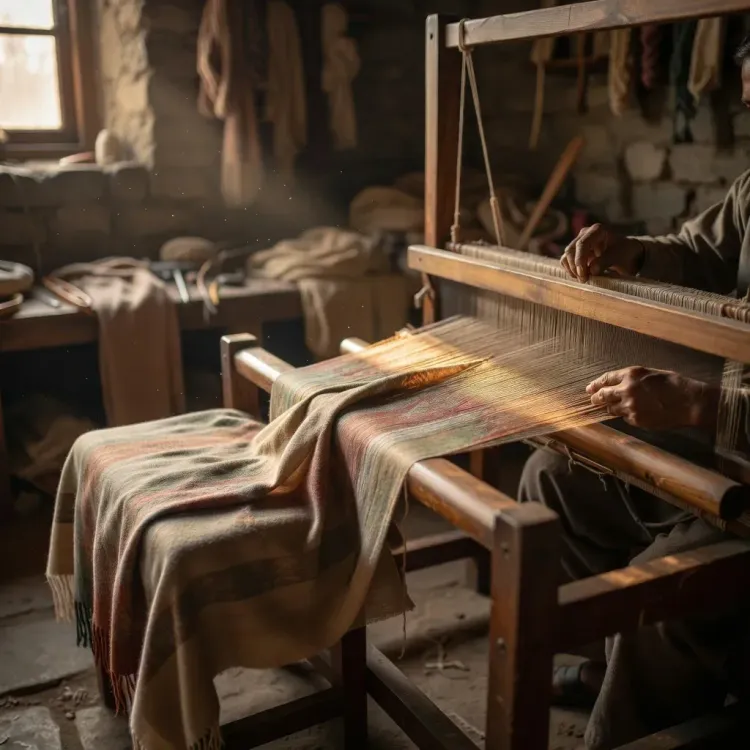
Kani shawls are intricately woven Kashmiri shawls made on special wooden sticks called 'kanis,' producing detailed tapestry-like patterns. Sozni is a fine needlework embroidery tradition from Kashmir, both considered premium handicrafts with strong export demand.
How does expanding testing capacity help Kashmiri artisans?
Higher daily testing throughput reduces wait times for certification, allowing artisans and exporters to authenticate products faster, meet order deadlines, access premium markets, and command higher prices that genuine, certified Kashmiri crafts command over uncertified goods.