Kashmir handicraft exports cross ₹1,100 crore, J&K eyes ₹2,000 crore target
Synopsis
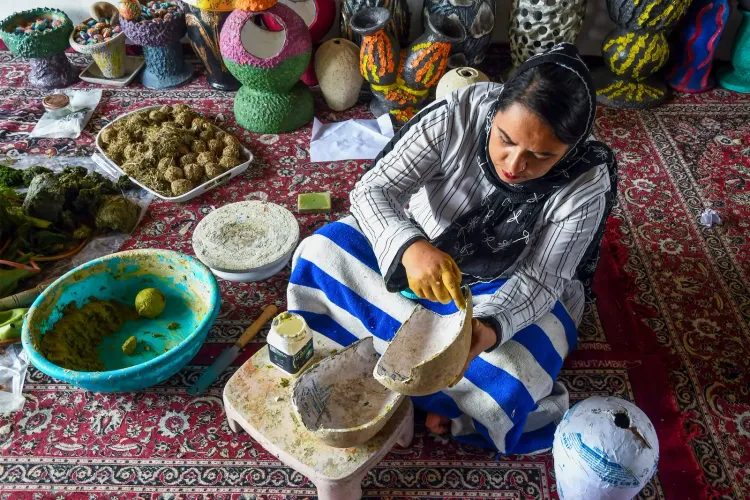
Kashmir's handicraft sector has crossed ₹1,100 crore in exports — a recovery milestone after decades of militancy and pandemic disruption. With the J&K government targeting ₹2,000 crore, training 11,000 carpet weavers, launching a Quality Control Council, and chasing markets in Dubai, London, Tokyo, and New York, centuries-old crafts are being engineered into globally competitive products.
Key Takeaways
Kashmir's handicraft exports have crossed ₹1,100 crore , with the J&K government targeting ₹2,000 crore .
The sector supports 4.45 lakh artisans and craftsmen across Jammu and Kashmir , per the Economic Survey 2025-26 .
Woollen shawls account for ₹477.25 crore and carpets for ₹317 crore of exports.
In 2025 , around 11,000 people were trained in carpet weaving; in April 2026 , a Handicrafts Quality Control Council was formed.
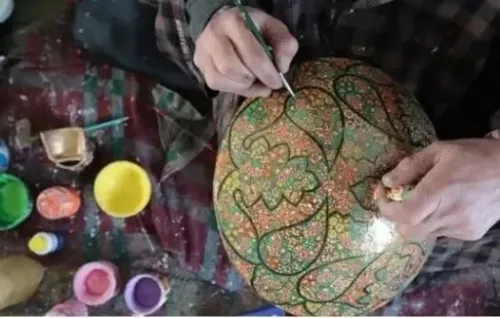
GI tags now cover products including Pashmina shawls, Kani shawls, Walnut Wood Carving, and Kashmiri hand-knotted carpets, among others.
Target global markets include Dubai , London , Singapore , Paris , New York , Milan , and Tokyo .
Kashmir's handicraft industry is staging a significant revival after years marked by militancy and the disruptions of the Covid-19 pandemic, with exports surpassing ₹1,100 crore and the Jammu and Kashmir government setting an ambitious ₹2,000-crore export target, according to a report by India Narrative. The sector, which sustains 4.45 lakh artisans and craftsmen across the Union Territory, is finding fresh momentum through better market access, quality certification, and global outreach.
Export Numbers and Key Products
Citing the Jammu and Kashmir Economic Survey 2025-26, the report highlights that woollen shawls alone account for ₹477.25 crore of exports, while carpets contribute ₹317 crore. Together, these two product categories represent the backbone of the sector's foreign-exchange earnings. The overall export figure crossing ₹1,100 crore marks a notable recovery milestone for an industry that had faced severe demand shocks over the past two decades.
Artisans Find New Markets at Home and Abroad
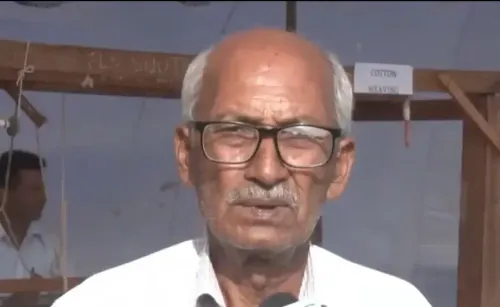
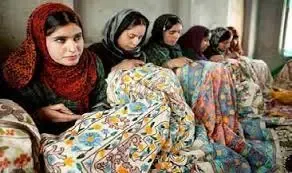
For craftspeople on the ground, the revival is tangible. Gulam Sadiq, a third-generation artisan from Baramulla, described how access to bulk buyers and high-end export markets has transformed prospects for traditional craftspeople. 'Kashmiri artisans now have a direct pathway to bulk buyers and high-end export markets by combining traditional craftsmanship with better materials, contemporary design, quality certification, and access to international showrooms. This is helping transform centuries-old craftsmanship into globally competitive products while preserving the skills, stories, and cultural heritage,' he said, according to the report.
Trader Noor Hasan echoed this optimism, noting that the J&K government has stepped up its global push — setting targets to modernise traditional crafts, improve artisan skills, strengthen market access, and promote Geographical Indication (GI)-certified products internationally. Target international markets reportedly include Dubai, London, Singapore, Paris, New York, Milan, and Tokyo.
Government Policy: Subsidies, Infrastructure, and Quality Control
The J&K government's policy framework envisages export subsidies, marketing support, design development, and infrastructure upgrades. In 2025, approximately 11,000 people were trained in carpet weaving to preserve and revive the craft. In April 2026, the government constituted a Handicrafts Quality Control Council to protect the authenticity and reputation of Kashmiri crafts — a step industry stakeholders say was long overdue.
GI Tagging: Protecting Authenticity and Expanding Reach
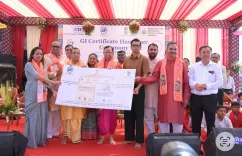
GI tagging has emerged as a key tool in the sector's revival. A senior official in the Jammu and Kashmir Industries Department noted that tags have been secured for products including Pashmina shawls, Kani shawls, Sozni Craft, Papier-mache, Walnut Wood Carving, Gabba, Willow bats, and Kashmiri hand-knotted carpets. Even products from other parts of J&K — Basohli Painting, Basohli Pashmina, Rajouri Chikri Wood Craft, Ramban's Sulai Honey, and Udhampur Kaladi — have received GI status, according to the official.
GI certification allows buyers to verify the authenticity of Kashmiri handicrafts, building consumer trust and enabling artisans to access premium market segments both domestically and globally. The report characterises the ₹2,000-crore export target as 'a milestone rather than a destination', signalling that stakeholders view it as a stepping stone to far greater ambitions. With institutional support deepening and global interest in authentic artisanal products growing, the sector appears poised for sustained growth — provided execution keeps pace with aspiration.
Point of View
100-crore export figure is encouraging, but the distance to the ₹2,000-crore target is not trivial — it requires nearly doubling earnings in a sector that has historically struggled with counterfeit products undercutting genuine artisans. GI tagging and the new Quality Control Council address authenticity, but market access for small artisans beyond aggregators remains patchy. The government's global city shortlist — Dubai, London, New York, Tokyo — reflects ambition, yet without sustained retail infrastructure and e-commerce integration at the artisan level, the gains may accrue disproportionately to middlemen rather than the 4.45 lakh craftspeople the policy is meant to empower.
NationPress
11 Oct 2026
Frequently Asked Questions
What is the current export figure for Kashmir's handicraft industry?
Kashmir's handicraft exports have crossed ₹1,100 crore, according to a report citing the Jammu and Kashmir Economic Survey 2025-26. Woollen shawls account for ₹477.25 crore and carpets for ₹317 crore of that total.
What is the J&K government's handicraft export target?
The Jammu and Kashmir government has set a target of ₹2,000 crore in handicraft exports. The policy includes export subsidies, marketing support, design development, and infrastructure upgrades to reach that goal.
How many artisans does the Kashmir handicraft sector employ?
The sector supports approximately 4.45 lakh artisans and craftsmen across Jammu and Kashmir, according to the Economic Survey 2025-26. The government trained around 11,000 people in carpet weaving in 2025 to help preserve the craft.
What role does GI tagging play in Kashmir's handicraft revival?
Geographical Indication (GI) tags protect the authenticity of products such as Pashmina shawls, Kani shawls, Walnut Wood Carving, and Kashmiri hand-knotted carpets. They help buyers identify genuine Kashmiri crafts and allow artisans to access premium market segments in India and abroad.
What is the Handicrafts Quality Control Council formed in April 2026?
The Handicrafts Quality Control Council was constituted by the J&K government in April 2026 to protect the authenticity and reputation of Kashmiri crafts. It is designed to curb counterfeits and ensure that certified products meet quality standards demanded by high-end domestic and international buyers.