Shekhawat secures Katra rail link for western Rajasthan
Synopsis
Union Minister Gajendra Singh Shekhawat announces the Sabarmati–Jammu Tawi Express has been extended to Katra, ending mandatory train changes at Jammu Tawi for pilgrims from Jodhpur and western Rajasthan heading to the Vaishno Devi shrine.
Key Takeaways
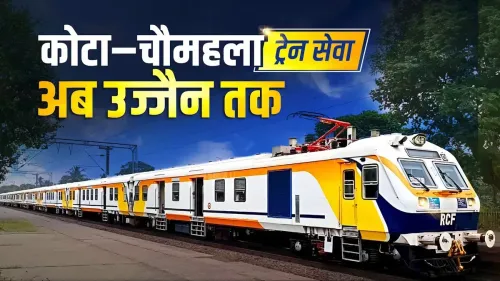
The Sabarmati–Jammu Tawi Express has been extended to Katra , the rail gateway to the Shri Mata Vaishno Devi shrine.
Passengers from Jodhpur and western Rajasthan will now have direct, single-train connectivity to Katra — no change required at Jammu Tawi.
Union Culture and Tourism Minister Gajendra Singh Shekhawat had formally written to Railways Minister Ashwini Vaishnaw requesting the extension.
The Udhampur–Katra rail section was originally commissioned in 2014 to provide direct rail access to the Vaishno Devi pilgrimage site.
The move aligns with Indian Railways' broader policy of extending long-distance trains to pilgrimage termini to reduce passenger transfers.
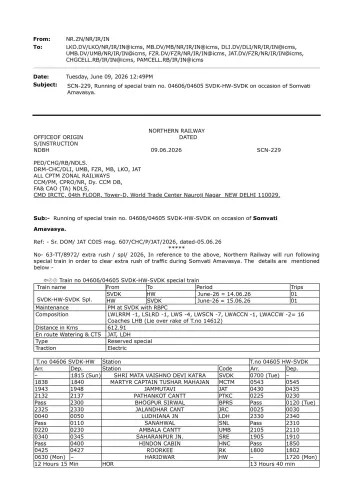
An official revised timetable from Indian Railways is expected to follow the announcement.
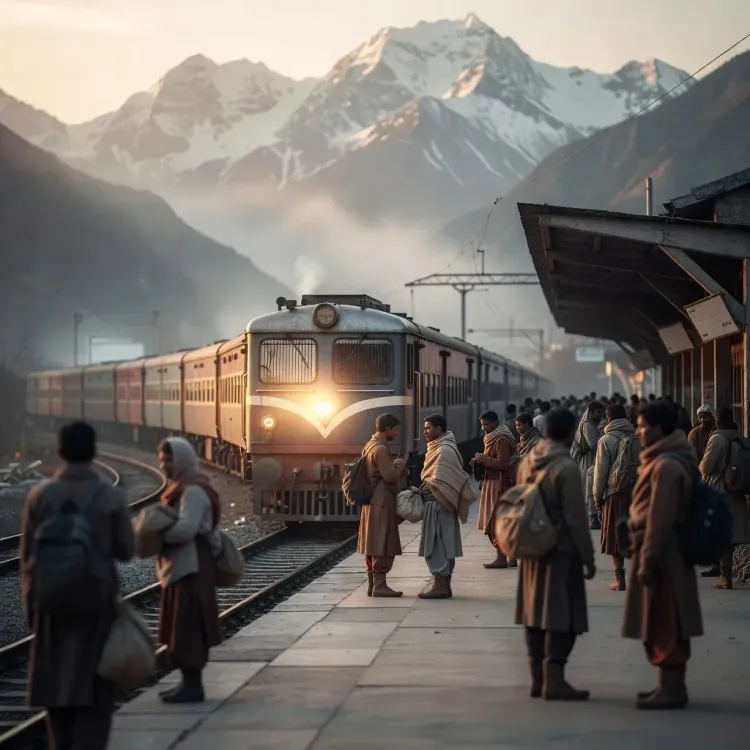
Millions of pilgrims from western Rajasthan travelling to the Shri Mata Vaishno Devi shrine just got a direct rail lifeline — no more changing trains at Jammu Tawi. Union Culture and Tourism Minister Gajendra Singh Shekhawat announced on Sunday, 18 October 2026, that the Sabarmati–Jammu Tawi Express has been extended all the way to Katra, the railway terminus that serves one of India's most visited pilgrimage destinations.
Posting in Hindi on X, Shekhawat wrote: 'साबरमती-जम्मू तवी एक्सप्रेस का विस्तार अब श्री माता वैष्णो देवी, कटरा तक कर दिया गया है' — ('The Sabarmati–Jammu Tawi Express has now been extended to Shri Mata Vaishno Devi, Katra'). He confirmed that passengers from Jodhpur and western Rajasthan will now have seamless, single-train connectivity to Katra, eliminating the cumbersome transfer at Jammu Tawi junction.
A letter to the Railways Minister — and a swift 'yes'
The extension was not accidental. Shekhawat disclosed that he had written formally to Union Railways Minister Ashwini Vaishnaw requesting the service upgrade. The minister expressed warm gratitude to Vaishnaw for acting positively on the request and making the facility available to travellers. It is a neat illustration of how constituency-level advocacy — a letter from one minister to another — can translate directly into a new rail schedule affecting hundreds of thousands of passengers.
Why Katra, and why this route mattered
The Udhampur–Katra rail section was commissioned in 2014 to give pilgrims direct rail access to the Vaishno Devi shrine, replacing a long and often arduous road leg from Jammu. Since then, Indian Railways has progressively extended select long-distance trains from western and southern India to terminate at Katra rather than Jammu Tawi, reducing passenger inconvenience and boosting pilgrim footfall to Jammu and Kashmir.
For travellers boarding in Jodhpur and other cities across western Rajasthan — a region with a deep tradition of Vaishno Devi pilgrimage — the earlier arrangement meant reaching Jammu Tawi, disembarking with luggage, and hunting for a connecting service. That friction, small as it sounds, is a real deterrent, particularly for elderly pilgrims and large family groups.
Pilgrimage corridors as connectivity policy
Shekhawat's role as Culture and Tourism Minister adds an institutional layer to what might look like a routine rail extension. Reducing travel friction to major religious sites directly feeds India's pilgrimage tourism economy, a segment the current government has invested in heavily — from the Kashi Vishwanath Corridor to upgraded ghats and shrine infrastructure. A smoother Katra connection from Rajasthan is a small but concrete piece of that larger mosaic.
With Indian Railways still finalising the revised schedule, travellers and travel agents will be watching for the official notification on the new timetable and halts. When it drops, western Rajasthan's faithful will have one fewer reason to dread the journey north.
Point of View
It carries political and institutional weight simultaneously. As Culture and Tourism Minister, championing smoother access to a major pilgrimage site reinforces the government's 'pilgrimage tourism' narrative without requiring fresh budget outlay. The inter-ministerial letter-and-acknowledgement dynamic also signals cooperative governance optics ahead of the Rajasthan election cycle. Longer term, western India's connectivity to Jammu and Kashmir's pilgrim economy remains a growth corridor that both the Railways and Tourism ministries have incentive to keep expanding.
NationPress
18 Oct 2026
Frequently Asked Questions
Has the Sabarmati–Jammu Tawi Express been extended to Katra?
Yes. Union Minister Gajendra Singh Shekhawat confirmed on 18 October 2026 that the Sabarmati–Jammu Tawi Express has been extended to Katra, the railway station serving the Shri Mata Vaishno Devi shrine.
Do passengers from Jodhpur still need to change trains at Jammu Tawi for Katra?
No. With the extension to Katra, passengers from Jodhpur and western Rajasthan can now travel directly without changing trains at Jammu Tawi.
Who approved the extension of the train to Katra?
Union Railways Minister Ashwini Vaishnaw approved the extension after receiving a formal request letter from Culture and Tourism Minister Gajendra Singh Shekhawat.
When was the Katra railway station built?
The Udhampur–Katra rail section was commissioned in 2014 to provide direct rail access to the Vaishno Devi pilgrimage site in Jammu and Kashmir.
What is the new timetable for the Sabarmati–Katra Express?
An official revised schedule from Indian Railways is expected but had not been formally notified at the time of Shekhawat's announcement on 18 October 2026.