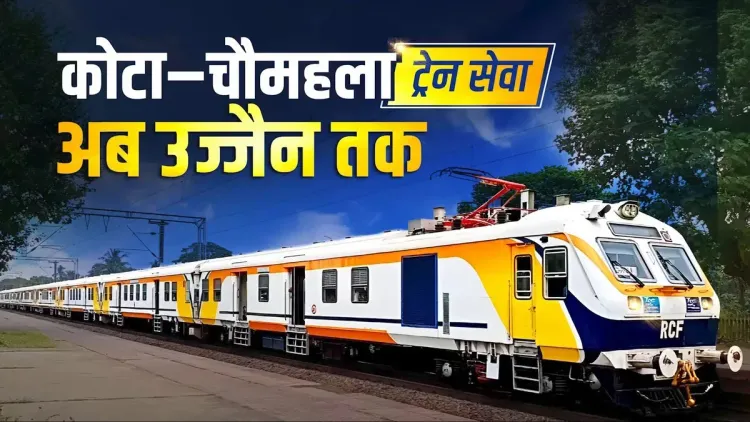
Vaishnaw Extends Kota–Chaumahla Train Service to Ujjain
Synopsis
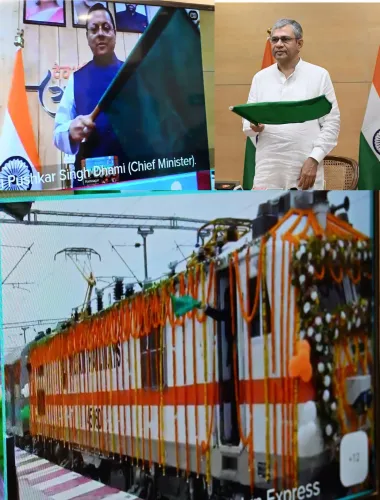
Union Minister Ashwini Vaishnaw on 15 June 2026 announced the extension of the Kota–Chaumahla train service to Ujjain, bridging a key rail gap between Rajasthan and Madhya Pradesh and improving access for pilgrims, commuters, and traders on the corridor.
Key Takeaways
Union Minister Ashwini Vaishnaw announced the extension of the Kota–Chaumahla train service to Ujjain on 15 June 2026 .
Chaumahla is located in Jhalawar district, Rajasthan , close to the Madhya Pradesh border on the Kota–Nagda rail section.
Ujjain is a major religious destination in MP, home to the Mahakaleshwar Jyotirlinga and a Kumbh Mela site, generating heavy pilgrim traffic year-round.
The move aligns with the Ministry's network-rationalisation strategy and the PM Gati Shakti multimodal connectivity framework.
Station redevelopment on the Kota–Ujjain corridor is already under way under the Amrit Bharat Stations scheme launched in 2023 .
The revised timetable and effective date of the extension are pending notification by the Western Railway zone.
Union Minister Ashwini Vaishnaw announced on Monday, 15 June 2026 the extension of the Kota–Chaumahla train service to Ujjain, strengthening rail connectivity between Rajasthan and Madhya Pradesh. The move directly links two of the region's most significant rail nodes and opens a continuous corridor from Kota through Jhalawar district to the temple city of Ujjain.
Context
The Kota–Chaumahla service had previously terminated at Chaumahla, a station in Jhalawar district, Rajasthan, situated on the Kota–Nagda section close to the Madhya Pradesh border. By pushing the service further into MP and terminating it at Ujjain, the Ministry of Railways closes a last-mile gap that commuters, pilgrims, and traders on this corridor had long faced. The announcement was made by Vaishnaw via a post on X on the evening of 15 June 2026.
Ujjain is one of the four sites of the Kumbh Mela and home to the Mahakaleshwar Jyotirlinga temple, making it a high-footfall religious destination that draws visitors from across Rajasthan, Gujarat, and central India throughout the year.
Policy Backdrop
The extension fits squarely within a sustained push by Indian Railways — which operates over 13,000 passenger trains daily — to optimise existing routes rather than wait for entirely new lines. The Ministry's network-rationalisation approach, accelerated since 2021 when Vaishnaw assumed charge of the Railways portfolio, has seen dozens of train services extended or rerouted to plug inter-state connectivity gaps in western and central India.
The Amrit Bharat Stations scheme, launched in 2023, included station redevelopment on the Kota–Ujjain corridor, meaning the infrastructure groundwork for higher passenger volumes on this section has been progressively laid. The move also aligns with the broader PM Gati Shakti framework, which emphasises multimodal logistics and seamless inter-state movement in central India.
Similar service rationalisations have been carried out on other cross-border sections, including Gujarat–Rajasthan and MP–Maharashtra, establishing a clear pattern of incremental connectivity enhancements across state boundaries.
Stakeholders and Impact
The primary beneficiaries are daily rail commuters and small-scale traders who travel between Kota, Jhalawar, and Ujjain — a corridor that has historically lacked direct, uninterrupted train options. Religious tourists heading to the Mahakaleshwar temple from Rajasthan now gain a more convenient direct rail option without needing to change trains at an intermediate junction.
For Kota — a major railway division and one of India's largest coaching hubs — the extension also marginally expands its regional rail footprint, reinforcing its status as a connectivity anchor for southeastern Rajasthan. Local traders and small businesses along the Jhalawar–Ujjain belt stand to benefit from improved freight movement and easier personal travel.
What's Next
The operationalisation timeline and revised timetable for the extended service are expected to be notified by the Western Railway zone in the coming weeks. Passengers and stakeholders will watch for the official schedule, including departure and arrival times, intermediate stoppages, and the effective commencement date. The section may also feature in the next Railway Works Programme for any accompanying infrastructure upgrades required to handle increased traffic volumes.
If the extension draws strong ridership — particularly during peak pilgrimage seasons at Ujjain — it could serve as a template for further service elongations on other Rajasthan–MP border routes, deepening the inter-state rail web that the Ministry has been steadily weaving since 2021.
Point of View
High political and social dividend. Ujjain's religious significance gives the announcement outsized visibility ahead of what remains a politically contested Rajasthan–MP belt. For Vaishnaw, who holds three heavyweight portfolios, rail announcements of this kind serve a dual purpose: they demonstrate tangible governance delivery and reinforce the BJP's connectivity narrative in states where it has a strong organisational presence. The broader pattern of inter-state service extensions suggests the Ministry is methodically stitching together a denser central-India rail web, one corridor at a time.
NationPress
14 Sept 2026
Frequently Asked Questions
Which train service has been extended to Ujjain?
The Kota–Chaumahla train service has been extended to Ujjain, as announced by Union Minister Ashwini Vaishnaw on 15 June 2026.
Where is Chaumahla station located?
Chaumahla is a railway station in Jhalawar district of Rajasthan, situated on the Kota–Nagda rail section near the Madhya Pradesh border.
Why is Ujjain an important destination for this rail extension?
Ujjain is one of the four Kumbh Mela sites and home to the Mahakaleshwar Jyotirlinga temple, making it a high-footfall religious destination for pilgrims from Rajasthan and central India throughout the year.
When will the extended Kota–Ujjain train service begin operations?
The exact commencement date has not been announced yet; the revised timetable and operational details are expected to be notified by the Western Railway zone in the coming weeks.
How does this extension fit into the Railways Ministry's broader policy?
The extension aligns with the Ministry's network-rationalisation approach under Ashwini Vaishnaw and the PM Gati Shakti framework, which prioritises optimising existing routes to improve inter-state connectivity in central India.