HP CM Office Affiliates Kaza School with CBSE
Synopsis
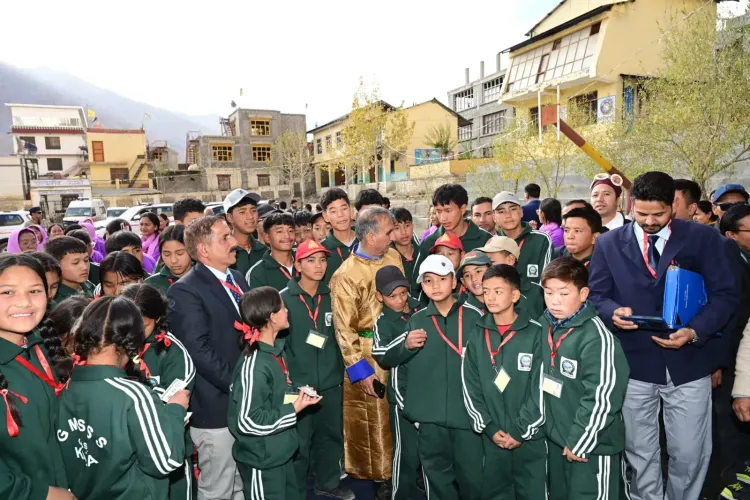
The Himachal Pradesh Chief Minister's Office announced CBSE affiliation for a school in Kaza, the remote Spiti Valley headquarters, on October 14, 2026 — positioning better facilities and equal opportunity as the state's answer to the talent already present in its most isolated communities.
Key Takeaways
The Chief Minister's Office of Himachal Pradesh announced CBSE affiliation for a school in Kaza , Lahaul and Spiti district, on October 14, 2026 .
Kaza is the high-altitude administrative headquarters of Spiti Valley , one of India's most geographically remote regions.
The stated purpose is to provide students with better facilities and standardised national-level education .
CBSE affiliation brings the school's curriculum and examinations in line with national standards , improving students' competitiveness for higher education.
The government framed the move as addressing an opportunity gap, not a talent gap, among Kaza's children.
Specific details on infrastructure upgrades, teacher deployment, or enrollment targets have not yet been disclosed.
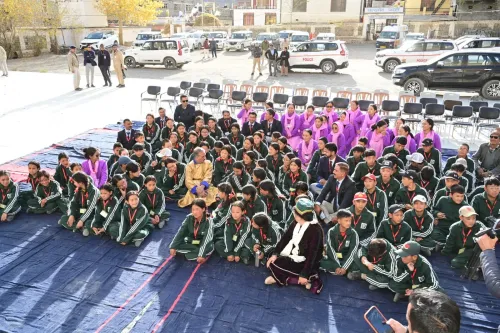
Deep in the Spiti Valley — one of India's most remote and high-altitude regions — a school in Kaza has just been brought under the umbrella of the Central Board of Secondary Education (CBSE), giving its students a direct pathway to nationally standardised education for the first time. The Chief Minister's Office of Himachal Pradesh announced the move on Wednesday, October 14, 2026, framing it as a statement of faith in the children of this rugged frontier.
The CMO's post put it plainly: 'हमारे दुर्गम क्षेत्र काजा में बच्चों में प्रतिभा की कमी नहीं है। जरूरत है तो बस उन्हें बेहतर सुविधाएं और आगे बढ़ने के उचित अवसर प्रदान करने की।' — 'The children of our remote area Kaza lack no talent. What they need is better facilities and the right opportunities to move ahead.' The government, the post added, has now affiliated the school with CBSE precisely to deliver those facilities.
Why Kaza, and why CBSE affiliation matters
Kaza serves as the administrative headquarters of Lahaul and Spiti district, perched at an altitude that leaves it snowbound and cut off from the rest of Himachal Pradesh for months each year. Infrastructure of any kind is hard-won here. Schools in such terrain have historically operated under state board curricula, which, while functional, can leave students at a disadvantage when competing for central government entrance examinations or higher-education seats that benchmark against the CBSE syllabus.
Affiliation with CBSE aligns the school's curriculum, examination standards, and recognition with institutions across India. For a student in Kaza, that alignment can be the difference between staying local and reaching a national stage — the same stage their peers in Delhi or Bengaluru train for from class one.
A pattern across Himachal's tribal belt
This step follows a broader pattern: Himachal Pradesh has historically prioritised educational access in its tribal belts, and state governments across India have increasingly sought CBSE affiliation for government schools in geographically isolated Himalayan districts. The logic is consistent — bring the mountain to the student when the student cannot easily reach the mountain. What makes this announcement distinctive is its explicit acknowledgement that the gap is not one of talent but of opportunity, a framing that shifts the burden squarely onto the system.
The details of infrastructure upgrades, teacher training, or enrollment targets that would accompany the affiliation are yet to be made public. Those specifics will determine whether this affiliation translates into tangible outcomes — or remains a policy gesture.
For the children of Kaza, the syllabus just got bigger. Whether the support structures grow with it is the question the state now owes them an answer to.
Point of View
High-signal political and policy move: it costs the state relatively little upfront while projecting visible commitment to equity in a tribal constituency. The harder test, however, is implementation — CBSE affiliation without matching teacher quality, infrastructure, and connectivity upgrades has repeatedly stalled in Himalayan districts. The CMO's framing — talent exists, opportunity does not — is politically astute because it deflects criticism of past neglect while setting an expectation benchmark the government will eventually be held against. If Himachal Pradesh can document enrollment and performance gains from this school, it becomes a replicable model for other remote pockets in the state.
NationPress
14 Oct 2026
Frequently Asked Questions
Which school in Kaza has been affiliated with CBSE?
The Himachal Pradesh Chief Minister's Office announced CBSE affiliation for a school in Kaza, Spiti Valley, but the specific name of the school was not mentioned in the official post.
What does CBSE affiliation mean for a government school?
CBSE affiliation means the school adopts the Central Board of Secondary Education curriculum and examination standards, which are recognised nationally and align students with competitive entrance examinations and higher-education institutions across India.
Where is Kaza located in Himachal Pradesh?
Kaza is the administrative headquarters of Lahaul and Spiti district in Himachal Pradesh. It sits in the high-altitude Spiti Valley and is one of India's most remote and geographically challenging regions.
Why is education access difficult in Spiti Valley?
Spiti Valley's extreme altitude, harsh winters, and poor road connectivity leave it snowbound and isolated for months each year, making it difficult to staff schools, deliver resources, and provide students with the same educational infrastructure available in urban or low-altitude areas.
Has Himachal Pradesh affiliated other remote schools with CBSE before?
Himachal Pradesh has historically emphasised educational access in its tribal belts, and state governments across India have periodically affiliated government schools in remote Himalayan districts with national boards such as CBSE to bridge curriculum and opportunity gaps.