Kejriwal Claims AAP Forms First Third-Party District Govt in Gujarat
Synopsis
AAP convenor Arvind Kejriwal claimed on 25 May 2026 that his party has formed a district-level government in Gujarat — the first by a party other than BJP or Congress in the state — and predicted a full-majority AAP government in Gujarat in 2027.
Key Takeaways
AAP convenor Arvind Kejriwal claimed on 25 May 2026 that AAP has formed a government in a Gujarat district for the first time as a third party.
BJP has governed Gujarat uninterrupted since 1995 — a span of over 30 years .
Kejriwal predicted AAP would win a full majority in the 2027 Gujarat assembly elections .
AAP won five seats in the 2022 Gujarat assembly elections , marking its first entry into the state legislature.
The specific district involved was not named in Kejriwal's post; the claim is yet to be independently verified.
AAP currently holds power in Delhi (since 2015 ) and Punjab (since 2022 ).
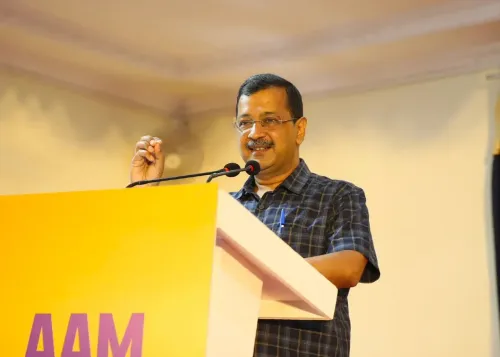
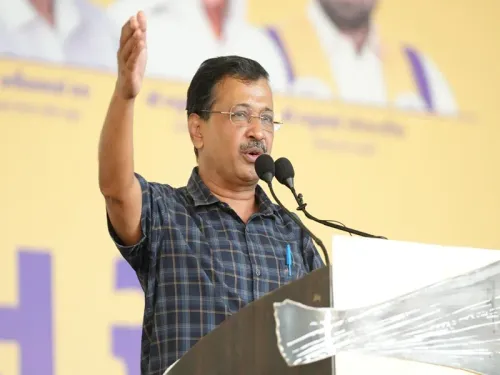
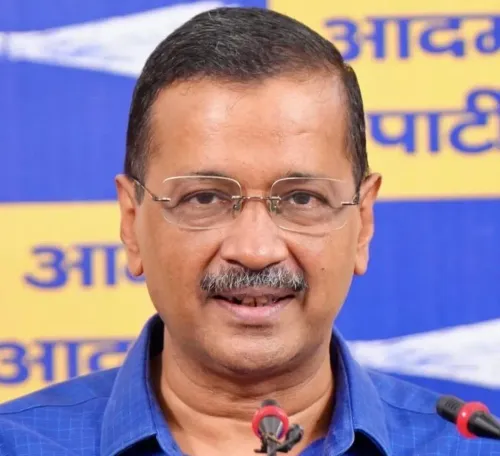
AAP convenor Arvind Kejriwal on Monday, 25 May 2026, claimed that the Aam Aadmi Party has formed a government in a Gujarat district — marking what he described as the first time a party other than the BJP or Congress has come to power at the district level in the state. Kejriwal also declared that AAP would form a full-majority government across Gujarat in 2027.
Context
Posting in Hindi on X, Kejriwal wrote: 'Pehli baar Gujarat mein Congress BJP se hatkar teesri party ki kisi jile mein sarkar bani hai' — 'For the first time in Gujarat, a government has been formed by a third party, other than Congress or BJP, in a district.' He added that BJP has governed Gujarat for thirty years, and asserted that in 2027, AAP would win a full majority across the entire state.
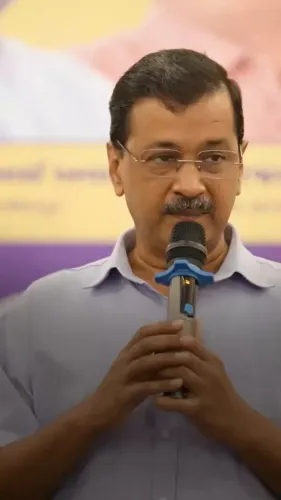
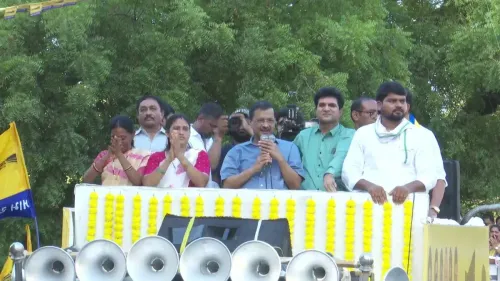
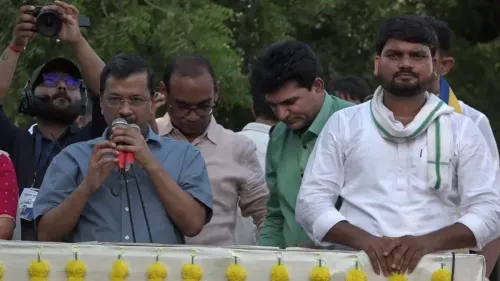
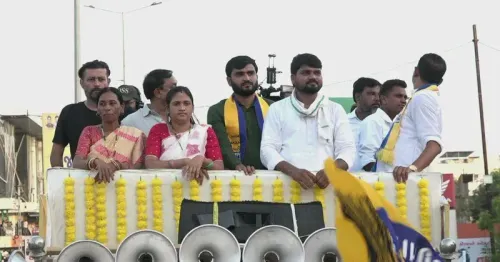
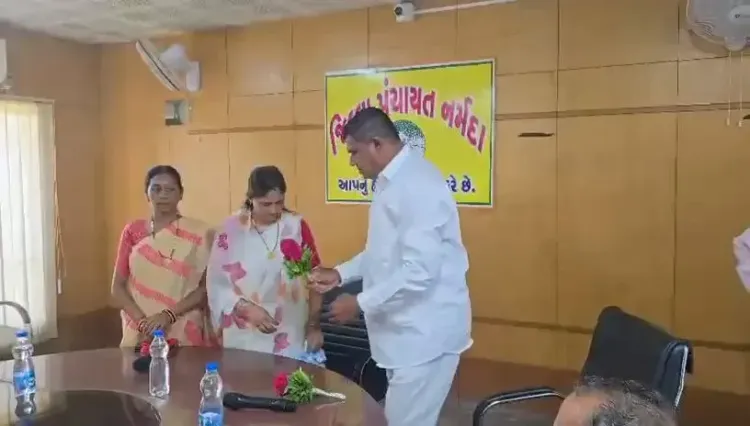
The post accompanied two videos, which are expected to show visuals from the district-level win. The specific district was not named in the text of the post.
Policy Backdrop
BJP first formed a government in Gujarat in 1995 and has won every subsequent state assembly election, making it one of the longest uninterrupted ruling streaks by a single party in any Indian state. Congress had previously been the principal opposition and the only other party to have governed the state before that period.
AAP entered Gujarat politics formally during the 2022 state assembly elections, winning five seats — its first foothold in the state legislature. The party has since pursued local-body and district-level contests as part of a broader strategy to expand beyond its strongholds in Delhi and Punjab, where it holds power since 2015 and 2022 respectively.
Stakeholders and Impact
The claimed district-level win, if confirmed, would be symbolically significant for Gujarat voters who have seen only a Congress-BJP alternation at various tiers of government for three decades. A third-party presence at the district level could shift the competitive dynamics ahead of the 2027 Gujarat assembly elections.
For AAP nationally, the development — if verified — would reinforce the party's positioning as a credible alternative in BJP-dominant states, building on its record of unseating established parties in Delhi and Punjab. It would also strengthen Kejriwal's personal narrative as the face of a pan-India opposition force.
What's Next
The immediate focus will be on confirming the specific district and the margin of AAP's win, as well as the nature of the local body — whether it is a district panchayat, a municipal council, or another tier. Formal verification of the results will determine how widely the claim is accepted across the political spectrum.
Looking ahead, all eyes will be on AAP's organisational build-up in Gujarat through 2026 and into the run-up to the 2027 state assembly elections. If the party sustains momentum at the local-body level, it could emerge as a genuine three-cornered contest — a scenario that would fundamentally alter the calculus for both BJP and Congress in one of India's most politically stable states.
Point of View
If verified, marks a meaningful crack in Gujarat's entrenched two-party order — a state that has been politically synonymous with BJP dominance for three decades. The framing is deliberate: by invoking the '30-year BJP rule' and positioning AAP as the breaker of that duopoly, Kejriwal is laying the narrative groundwork for the 2027 assembly campaign well in advance. The move mirrors AAP's playbook in Punjab, where local-body wins preceded a full state sweep. Whether district-level momentum can translate to assembly seats in a state with deep BJP roots remains the central question.
NationPress
9 Oct 2026
Frequently Asked Questions
Has AAP ever won in Gujarat before?
Yes. AAP won five seats in the 2022 Gujarat assembly elections , marking its first-ever presence in the state legislature, though it remained far from forming a government.
How long has BJP ruled Gujarat?
BJP has governed Gujarat continuously since 1995 — over 30 years — winning every state assembly election held in that period.
What did Kejriwal say about Gujarat on 25 May 2026?
Kejriwal claimed that AAP had formed a government in a Gujarat district for the first time as a third party — breaking the historic BJP-Congress duopoly — and predicted AAP would win a full majority in Gujarat in 2027 .
When are the next Gujarat assembly elections?
The next Gujarat assembly elections are expected in 2027 , and AAP has declared its intent to contest for a full majority in the state.
Which district in Gujarat did AAP win?
Kejriwal's post did not specify the name of the district. The exact district and nature of the local body involved had not been confirmed at the time of the post.