Kejriwal calls for dharmacharyas to manage Ram Mandir

Synopsis
AAP convenor Arvind Kejriwal has demanded that the Ram Mandir in Ayodhya be managed by dharmacharyas — religious scholars — rather than politicians or government officers, reigniting the debate over state versus clerical control of major Hindu temples in India.
Key Takeaways
AAP convenor Arvind Kejriwal posted on 27 June 2026 demanding dharmacharyas be given management of the Ram Mandir .
The Shri Ram Janmabhoomi Teerth Kshetra Trust , formed after the November 2019 Supreme Court verdict , currently oversees the temple.
The Ram Mandir was inaugurated on 22 January 2024 by Prime Minister Narendra Modi .
Kejriwal's demand echoes long-standing 'temple liberation' movements in states like Tamil Nadu and Andhra Pradesh .
Responses from the Ram Temple Trust and the Uttar Pradesh government are awaited.
AAP convenor Arvind Kejriwal on Saturday, 27 June 2026, called for the management of the Ram Mandir in Ayodhya to be handed over to religious scholars rather than politicians or bureaucrats, posting his demand on X.
In the post, Kejriwal wrote: 'राम मंदिर का प्रबंधन किसी नेता या अफ़सर की बजाय धर्माचार्यों के हाथों में दिया जाए' — ('The management of the Ram Mandir should be given to dharmacharyas rather than any politician or officer.')
Context
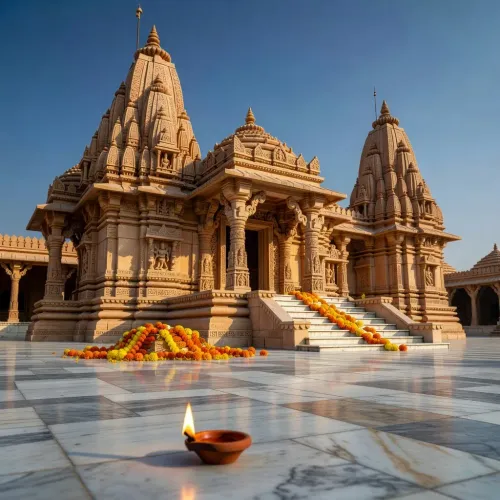
The Ram Mandir in Ayodhya, Uttar Pradesh, was inaugurated on 22 January 2024 by Prime Minister Narendra Modi, following the Supreme Court of India's landmark November 2019 verdict that directed the formation of a trust to oversee the temple's construction and management. The Shri Ram Janmabhoomi Teerth Kshetra Trust was subsequently constituted and has since held operational control of the temple complex.
Kejriwal's demand specifically targets the current composition of that oversight structure, arguing that authority over one of Hinduism's most sacred sites should rest with dharmacharyas — senior religious scholars and spiritual leaders — rather than with individuals drawn from politics or the administrative services.
Policy Backdrop
The question of who should govern major Hindu temples has been a recurring fault line in Indian public life. States such as Tamil Nadu and Andhra Pradesh have long-running 'temple liberation' movements that contest government control over religious endowments, arguing that such oversight dilutes the sanctity and autonomy of religious institutions.
The Ram Mandir's management model emerged from a hybrid arrangement — judicially mandated trustees alongside religious figures — that critics from multiple political traditions have questioned. Kejriwal's position aligns with a broader argument that temples of national religious significance should be freed from the influence of elected or appointed officials whose priorities may diverge from those of devotees and the faith community.
Stakeholders and Impact
Hindu devotees and dharmacharyas across the country are the primary stakeholders in any change to the Ram Mandir's governance structure. Religious bodies and seers who have historically advocated for clerical autonomy in temple management are likely to find common cause with Kejriwal's stated position.
The Shri Ram Janmabhoomi Teerth Kshetra Trust and the Uttar Pradesh government, led by Chief Minister Yogi Adityanath, would be directly affected by any structural change. The Bharatiya Janata Party, which has been closely associated with the Ram Mandir cause, may view the demand as a political challenge to its stewardship of the project.
What's Next
Formal responses from the Ram Temple Trust, the Uttar Pradesh government, and prominent Hindu religious organisations will be closely watched. Whether Kejriwal's call translates into a legislative proposal or remains a political statement will determine its practical weight.
With temple governance debates gaining renewed attention nationally, this intervention could pressure other parties to articulate their own positions on the balance between state oversight and religious autonomy at major pilgrimage sites across India.
Point of View
It could force a broader national conversation about the legal and constitutional frameworks governing temple administration in India.
NationPress
27 Jun 2026
Frequently Asked Questions
What did Arvind Kejriwal say about Ram Mandir management?
Kejriwal demanded on 27 June 2026 that the Ram Mandir in Ayodhya be managed by dharmacharyas — senior religious scholars — rather than politicians or government officers.
Who currently manages the Ram Mandir in Ayodhya?
The Shri Ram Janmabhoomi Teerth Kshetra Trust, constituted following the Supreme Court's November 2019 verdict, currently oversees the management and operations of the Ram Mandir.
What are dharmacharyas?
Dharmacharyas are senior Hindu religious scholars and spiritual leaders regarded as authoritative figures within the faith, distinct from politicians or civil servants.
Why is temple management a political issue in India?
Major temples in India attract large revenues and pilgrim footfall, making their governance contentious. Movements for 'temple liberation' from state control have existed for decades, particularly in Tamil Nadu and Andhra Pradesh.
What is the Shri Ram Janmabhoomi Teerth Kshetra Trust?
It is the body formed by the central government following the Supreme Court's 2019 verdict to oversee the construction and management of the Ram Temple at the disputed site in Ayodhya, Uttar Pradesh.