Indian Navy Eastern Fleet ships dock at Sattahip, Thailand to boost interoperability
Synopsis
India's Eastern Fleet — three warships and 610 personnel — has docked in Thailand days after a Vietnam port call, signalling a deliberate, sequenced naval push through Southeast Asia. Framed under the ASEAN-India Year of Maritime Cooperation 2026 and India's MAHASAGAR doctrine, the deployment is less a routine visit and more a statement of strategic intent in an Indo-Pacific increasingly shaped by Chinese maritime pressure.
Key Takeaways
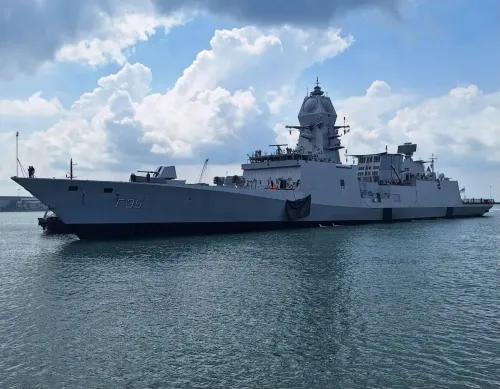
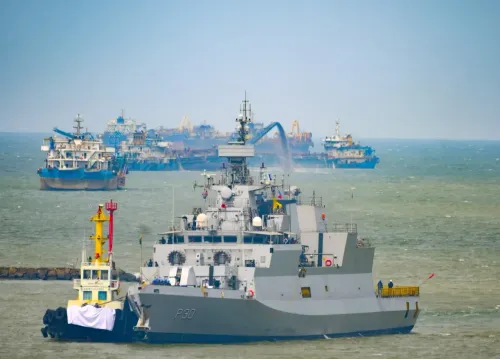
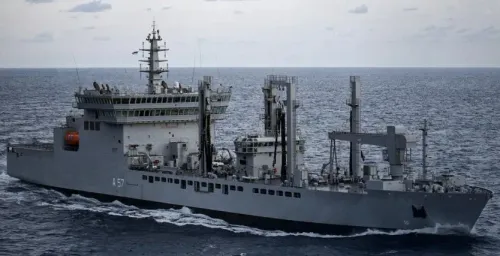
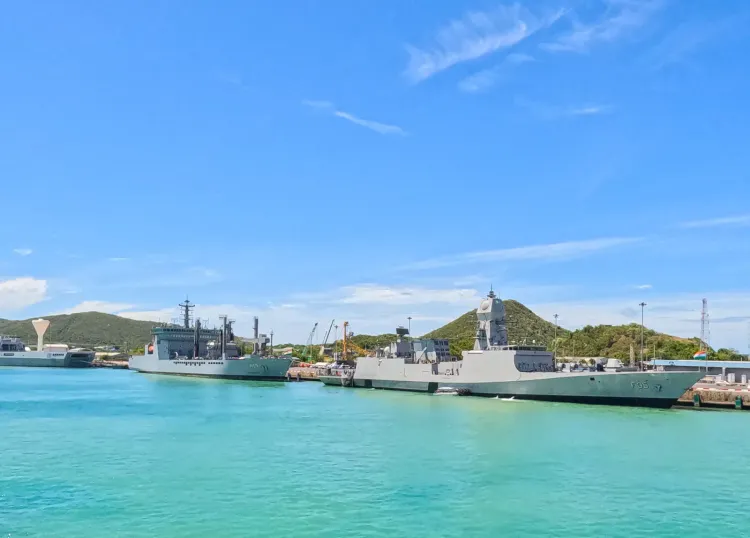
INS Udaygiri , INS Shakti , and INS Kavaratti arrived at Sattahip, Thailand on 27 June 2026 under Rear Admiral Alok Ananda .
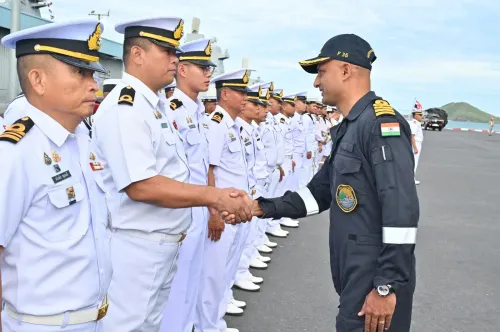
The visit aims to enhance interoperability with the Royal Thai Navy through operational, sporting, and community outreach activities.
The deployment aligns with India's Act East Policy , the MAHASAGAR framework, and the ASEAN-India Year of Maritime Cooperation 2026 .
Earlier this week, INS Udaygiri and INS Kavaratti made a port call at Ho Chi Minh City, Vietnam , with a delegation of 610 officers and sailors .
Maritime cooperation is described as a key pillar of India's Enhanced Comprehensive Strategic Partnership with Vietnam.
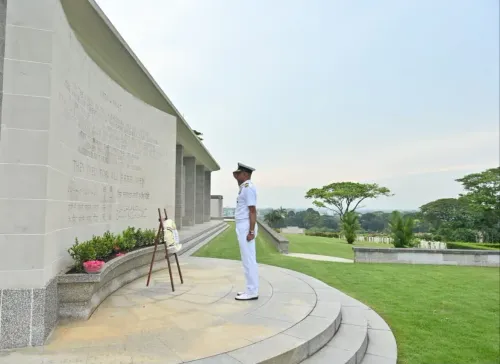
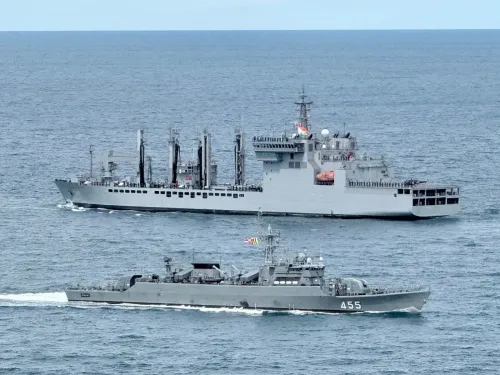
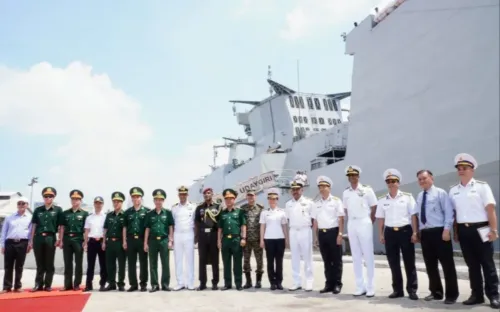
Indian Navy Eastern Fleet warships INS Udaygiri, INS Shakti, and INS Kavaratti arrived at Sattahip, Thailand on Saturday, 27 June, as part of a multi-nation deployment aimed at deepening maritime interoperability and strengthening professional ties with the Royal Thai Navy. The flotilla is led by Rear Admiral Alok Ananda, Flag Officer Commanding Eastern Fleet (FOCEF).
Purpose of the Port Call
According to the Indian Navy, the Sattahip visit is designed to advance operational cooperation through a structured programme of professional interactions, sporting engagements, and community outreach activities with Thai naval counterparts. The port call directly reflects India's commitment to its Act East Policy and the MAHASAGAR (Mutual and Holistic Advancement for Security and Growth Across Regions) framework, both of which prioritise deepening India's strategic footprint in the Indo-Pacific.
The visit also carries diplomatic weight as it falls within the ASEAN-India Year of Maritime Cooperation 2026, a designated period intended to reinforce maritime partnerships between India and Association of Southeast Asian Nations (ASEAN) member states.
Vietnam Stop Earlier This Week
Before reaching Thailand, INS Udaygiri and INS Kavaratti made a port call at Ho Chi Minh City, Vietnam, arriving on Monday under the same Eastern Fleet command. The Indian Embassy in Hanoi noted that 'maritime cooperation is one of the strongest pillars of the Enhanced Comprehensive Strategic Partnership between India and Vietnam.'
The delegation, comprising 610 officers and sailors, was received by representatives from Vietnam's military, diplomatic agencies, and Ho Chi Minh City civic authorities. Activities during the Vietnam leg included professional exchanges, cultural interactions, and collaborative exercises aimed at building lasting institutional relationships between the two navies.
Broader Strategic Context
This deployment is part of a broader pattern of Indian naval outreach in Southeast Asia, a region where Beijing's maritime assertiveness has prompted littoral states to deepen security partnerships with New Delhi. India's Act East Policy, now over a decade old, has increasingly found expression in naval diplomacy — port calls, passage exercises, and joint patrols — rather than purely economic engagement.
Notably, the Eastern Fleet's simultaneous visits to Vietnam and Thailand signal India's intent to build layered maritime relationships across the ASEAN bloc, rather than engaging countries in isolation. Both Vietnam and Thailand are strategically significant: Vietnam shares a contested maritime boundary with China in the South China Sea, while Thailand anchors India's connectivity ambitions in mainland Southeast Asia.
What Comes Next
The Eastern Fleet ships are expected to conduct a series of operational interactions with the Royal Thai Navy during the Sattahip stopover before continuing their regional deployment. Further details on the schedule of exercises and the fleet's onward itinerary are awaited from the Indian Navy.
Point of View
Built on navy-to-navy trust rather than infrastructure loans. The real test of this deployment is whether the 'professional interactions' translate into interoperability frameworks — data-sharing, coordinated patrols, logistics access agreements — that outlast the goodwill of a port call. Symbolic visits have their place, but India's Indo-Pacific credibility now requires institutional depth, not just flag-showing.
NationPress
26 Sept 2026
Frequently Asked Questions
Which Indian Navy ships arrived in Thailand and when?
INS Udaygiri, INS Shakti, and INS Kavaratti arrived at Sattahip, Thailand on 27 June 2026. The flotilla is commanded by Rear Admiral Alok Ananda, Flag Officer Commanding Eastern Fleet.
What is the purpose of the Indian Navy's visit to Thailand?
The visit aims to enhance interoperability and strengthen professional cooperation with the Royal Thai Navy through operational interactions, sporting engagements, and community outreach. It also reinforces India's Act East Policy and the MAHASAGAR framework for cooperative maritime security in the Indo-Pacific.
What is the ASEAN-India Year of Maritime Cooperation 2026?
It is a designated bilateral initiative between India and ASEAN member states focused on deepening maritime partnerships. The Indian Navy's current Eastern Fleet deployment is framed as part of this cooperation year.
Did the Indian Navy visit any other country on this deployment?
Yes. Before arriving in Thailand, INS Udaygiri and INS Kavaratti made a port call at Ho Chi Minh City, Vietnam, earlier in the week. A delegation of 610 officers and sailors participated in professional exchanges and cultural interactions with Vietnamese naval and diplomatic counterparts.
What is India's MAHASAGAR framework?
MAHASAGAR stands for Mutual and Holistic Advancement for Security and Growth Across Regions. It is India's policy framework for cooperative maritime security in the Indo-Pacific, emphasising partnerships with regional navies, including ASEAN member states.