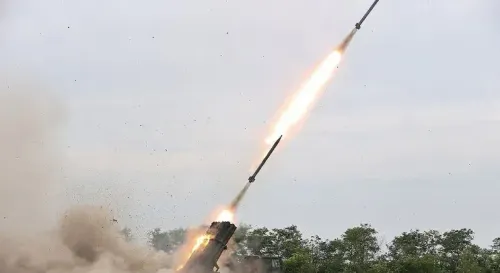
Chinese, Russian military jets enter South Korea's KADIZ in 11th joint patrol
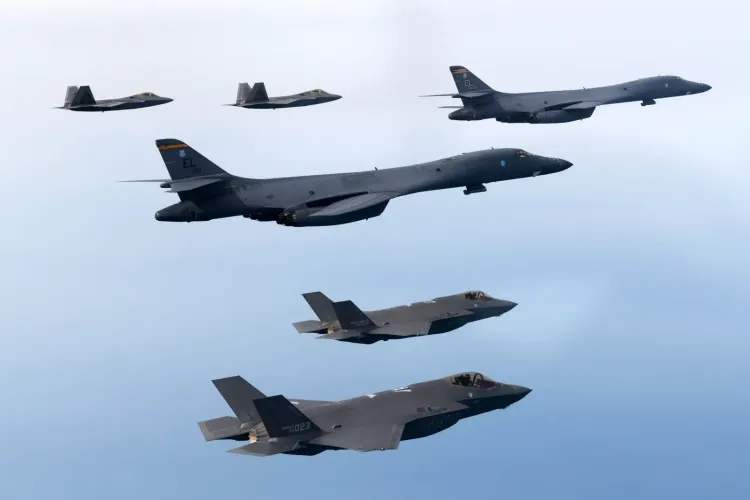
Synopsis
China and Russia flew nearly 10 military aircraft — including bombers and fighter jets — into South Korea's air defence zone on 27 June, marking their 11th joint strategic aerial patrol. Seoul scrambled jets in response. With no prior notice given and the pattern repeating annually since 2019, this is less a one-off provocation and more a deliberate, normalised signal to South Korea and its US ally.
Key Takeaways
Nearly 10 Chinese and Russian military aircraft entered and exited South Korea's KADIZ on 27 June over eastern and southern waters.
The incursion was part of the 11th joint strategic aerial patrol by Chinese and Russian forces, confirmed by Beijing's defence ministry .
No territorial airspace was violated, according to the Joint Chiefs of Staff (JCS) .
South Korea scrambled Air Force fighter jets as a precautionary measure upon detecting the aircraft.
Seoul lodged a 'stern' protest; Russia does not recognise the KADIZ as legally binding.
Since 2019 , China and Russia have entered the KADIZ once or twice a year during joint exercises, always without prior notice.
Nearly 10 Chinese and Russian military aircraft briefly entered and exited South Korea's Air Defence Identification Zone (KADIZ) over the country's eastern and southern waters on Saturday, 27 June, the South Korean military confirmed. The incursion, which included bombers and fighter jets, did not breach South Korea's actual territorial airspace, according to the Joint Chiefs of Staff (JCS).
What Happened
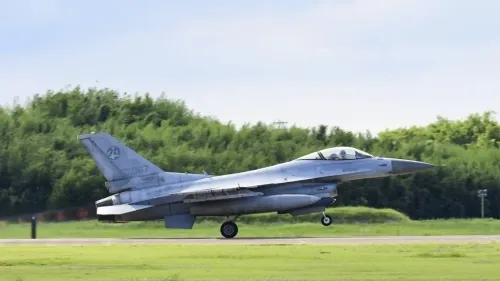
The Chinese and Russian aircraft entered the KADIZ in succession before withdrawing from the zone, the JCS said. South Korea's military detected the aircraft prior to their entry and scrambled Air Force fighter jets as a precautionary measure against any possible contingencies.
A JCS official indicated the brief entry appeared to have taken place in the course of joint air drills between China and Russia. Beijing's defence ministry subsequently confirmed that Chinese and Russian forces had conducted their 11th joint strategic aerial patrol, stating it was intended to demonstrate their resolve to safeguard regional peace and stability.
China and Russia's Position
Russia has consistently denied recognising the KADIZ, arguing it has no basis in international law. China and South Korea also maintain overlapping air defence zones over Ieodo, a submerged rock located south of Jeju Island, making that area a recurring flashpoint between Seoul and Beijing.
It is important to note that an Air Defence Identification Zone is not territorial airspace — it is a self-declared buffer that requires foreign aircraft to identify themselves in order to prevent accidental clashes. Entry into a KADIZ does not, by itself, constitute a violation of sovereignty.
South Korea's Response
Lee Kwang-suk, director general of the South Korean defence ministry's international policy bureau, lodged a 'stern' protest over the aircraft's entry into the zone. The ministry reiterated its standing position from December last year: 'Our military will actively respond to aircraft activities from neighbouring countries in the KADIZ in compliance with international law.'
A Pattern of Provocations
This is not an isolated incident. In December last year, two Chinese military planes and seven Russian aircraft briefly entered and exited the KADIZ, prompting a similar scramble of South Korean Air Force jets. Notably, since 2019, the two countries have dispatched military aircraft into the KADIZ once or twice annually during joint exercises — consistently without prior notice to Seoul. Saturday's event marks the 11th such joint strategic aerial patrol, reflecting an increasingly regularised pattern of Sino-Russian military coordination along South Korea's periphery.
Strategic Context
The joint patrols come amid deepening military ties between Moscow and Beijing, which have expanded cooperation across land, sea, and air domains in recent years. For South Korea — a key US ally hosting American troops — the repeated KADIZ entries by two major neighbouring powers carry significant strategic weight, even when they stop short of formal airspace violations. Analysts argue the drills serve as a signal to both Seoul and Washington.
Point of View
And Beijing and Moscow have made KADIZ entries a routine feature of their annual military calendar since 2019. South Korea's scramble-and-protest cycle has done little to alter that behaviour. Russia's explicit non-recognition of the KADIZ as legally valid gives the two powers a convenient procedural shield, even as the operational message to Seoul — and to US Forces Korea — grows clearer with each iteration. The real question is whether South Korea's defence posture, or its diplomatic engagement with Beijing, will evolve beyond the current reactive loop.
NationPress
26 Sept 2026
Frequently Asked Questions
What is the KADIZ and why does it matter?
The KADIZ, or Korea Air Defence Identification Zone, is a self-declared buffer zone above South Korea's surrounding waters where foreign aircraft are expected to identify themselves to prevent accidental clashes. It is not territorial airspace, so entry does not constitute a sovereignty violation — but repeated unannounced entries by military aircraft are treated as serious provocations by Seoul.
Did Chinese and Russian aircraft violate South Korean airspace on 27 June?
No. According to the South Korean Joint Chiefs of Staff, the nearly 10 Chinese and Russian military aircraft entered and exited the KADIZ but did not breach South Korea's actual territorial airspace. South Korea nonetheless scrambled Air Force fighter jets as a precaution.
What was the purpose of the joint patrol, according to China?
Beijing's defence ministry said the operation was the 11th joint strategic aerial patrol conducted by Chinese and Russian forces, carried out to demonstrate their resolve to safeguard regional peace and stability.
How often do China and Russia conduct these KADIZ entries?
Since 2019, China and Russia have sent military aircraft into the KADIZ once or twice a year during joint exercises, consistently without providing prior notice to South Korea.
How did South Korea respond to the incursion?
The South Korean military scrambled Air Force fighter jets upon detecting the aircraft before they entered the KADIZ. Separately, Lee Kwang-suk, director general of the defence ministry's international policy bureau, lodged a stern protest with the relevant parties over the entry.