Supreme Court directs Centre to act on PIL seeking deepfake, online threat safeguards
Synopsis
The Supreme Court has nudged the Centre to act on a PIL demanding an emergency, URL-specific takedown mechanism for rape threats, doxxing, and deepfake content — but stopped short of mandating one itself. The bench's pointed disposal, citing a 22 June 2026 representation to three ministries, signals judicial discomfort with the status quo while leaving the policy fix squarely in the government's hands.
Key Takeaways
The Supreme Court disposed of a PIL on 11 August 2026 seeking a supervised mechanism against online threats, doxxing, and deepfake content.
A bench of CJI Surya Kant , Justice Joymalya Bagchi , and Justice V.
Mohana directed the Union government to act on the petitioner's representation.
The representation, dated 22 June 2026 , was addressed to the Ministries of Electronics and IT , Home Affairs , and Law and Justice .
The PIL sought URL-specific, time-bound, judicially supervised takedowns — explicitly not blanket censorship.
The court acknowledged the urgency of the issue but noted that detection and prevention measures require domain expertise.
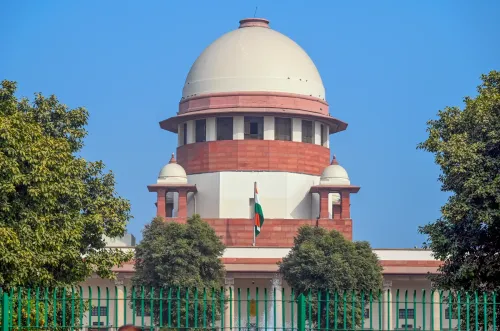
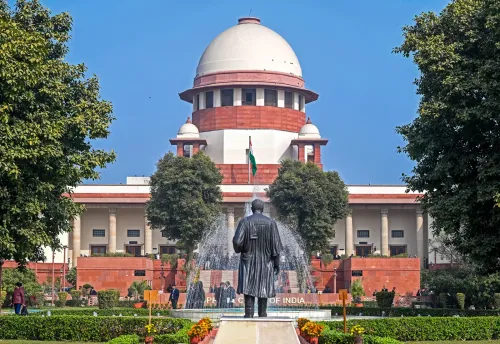
The Supreme Court of India on Tuesday, 11 August 2026, disposed of a public interest litigation (PIL) seeking the creation of a time-bound, URL-specific, and legally supervised mechanism to counter grave forms of online harm — including rape and death threats, doxxing, exposure of children's private details, and non-consensual deepfake content. The bench directed the Union government to examine the petitioner's representation and take remedial action as warranted.
What the PIL Sought
The petition called for an emergency digital-harm response framework covering specific categories: threats of physical or sexual violence, doxxing and unauthorised disclosure of residential or location details, exposure of private identity markers of minor children, non-consensual intimate or AI-generated content, and harmful deepfake impersonation. The petitioner was explicit that the mechanism was not intended as blanket censorship, but as a targeted, content-specific, reasoned, and time-bound process subject to legal or judicial oversight.
The Court's Observations
A bench comprising Chief Justice of India (CJI) Surya Kant, Justice Joymalya Bagchi, and Justice V. Mohana acknowledged that the petitioner had 'highlighted very well' the various modes and facets of cybercrime. However, the bench noted that questions of detection and preventive measures fell within the domain of technical experts, and that the court was not best placed to prescribe the mechanism itself.
During the hearing, advocate Narendra Kumar Goswami, appearing for the petitioner, underscored the urgency with a pointed illustration: 'Suppose a woman's home address is posted with a rape threat tonight, at 9 p.m. Will it be allowed to remain online at this stage?' The question drew attention to the core gap the PIL sought to address — the mismatch between the speed at which online harm spreads and the pace at which conventional legal remedies operate.
Key Directions Issued
The CJI Kant-led bench recorded that the petitioner had already addressed a representation dated 22 June 2026 to the Union Ministries of Electronics and Information Technology, Home Affairs, and Law and Justice. Directing the respondent authorities and all other stakeholders to examine the representation, the bench ordered: 'At this stage, we direct respondent authorities, along with all other stakeholders, to look into the issues raised in the petitioner's representation and take such remedial measures as may be required.' The petition was thereafter disposed of.
Why This Matters
The PIL highlighted a structural problem in India's current digital-harm response architecture: grave unlawful content — from deepfake sexual imagery to targeted rape threats — can spread within minutes, while conventional legal remedies may take considerably longer. This gap leaves victims, particularly women and children, without an effective real-time remedy. Notably, India does not yet have a dedicated, judicially supervised URL-takedown mechanism for emergency digital harms, even as deepfake technology becomes increasingly accessible. The court's direction to the Centre keeps the issue alive in the policy domain, even as it stops short of mandating a specific legislative or regulatory outcome.
What Happens Next
The ball now rests with the Union government, which must consider the petitioner's representation and determine what remedial steps, if any, to implement. Industry bodies, civil society organisations, and domain experts are expected to be consulted as stakeholders. Whether the Centre moves toward a dedicated statutory framework or opts for administrative guidelines under existing law — such as the Information Technology Act or the Digital Personal Data Protection Act — remains to be seen.
Point of View
The bench preserves judicial restraint but risks letting urgency dissipate in the corridors of three ministries. India's deepfake problem is not waiting for inter-ministerial consultation — the technology is already being weaponised against women and children at scale. The PIL's core ask — a URL-specific, judicially supervised emergency mechanism — is neither novel nor technically impossible; the UK's Online Safety Act and the EU's Digital Services Act both contain analogous provisions. The real question is whether the Centre will treat this court nudge as a mandate for action or as permission to delay.
NationPress
12 Aug 2026
Frequently Asked Questions
What did the Supreme Court order in the deepfake and online threats PIL?
The Supreme Court directed the Union government to examine a representation filed by the petitioner on 22 June 2026 and take remedial measures as required. The bench, led by CJI Surya Kant, disposed of the PIL without issuing specific legislative or regulatory mandates, leaving the policy response to the Centre.
What safeguards did the PIL seek against online harm?
The PIL sought a time-bound, URL-specific, and legally or judicially supervised mechanism to address rape and death threats, doxxing, unauthorised disclosure of children's private details, non-consensual intimate content, and harmful deepfake or AI-generated impersonation. The petitioner clarified the mechanism was not intended as censorship but as targeted, reasoned action subject to oversight.
Which government ministries were addressed in the petitioner's representation?
The petitioner's representation, dated 22 June 2026, was addressed to the Union Ministries of Electronics and Information Technology, Home Affairs, and Law and Justice.
Why did the petitioner argue the matter was urgent?
The petitioner argued that digital harms — such as a rape threat posted with a woman's home address — can spread within minutes, while conventional legal remedies take considerably longer. This gap leaves victims without an effective real-time remedy under existing law.
What happens after the Supreme Court's disposal of the PIL?
The Union government is now expected to consult stakeholders — including domain experts, industry bodies, and civil society — before deciding whether to introduce a dedicated statutory framework or administrative guidelines under existing laws such as the Information Technology Act or the Digital Personal Data Protection Act.