India tightens deepfake rules: takedowns now in 3 hours under IT Rules

Synopsis
India has slashed the window for platforms to remove deepfake and unlawful AI-generated content from 36 hours to just 3 hours — and to 2 hours for cases involving nudity or impersonation. Backed by IIT-developed detection tools and a new centralised SAHYOG enforcement portal, this is the Centre's sharpest legislative move yet against synthetic media misuse.
Key Takeaways
Content removal timelines cut from 36 hours to 3 hours for unlawful AI-generated content under amended IT Rules, 2021 .
Grievance redressal for sensitive cases (nudity, impersonation) reduced from 24 hours to 2 hours .
Platforms must deploy automated tools to prevent creation or sharing of unlawful synthetically generated content.
Government-backed detection tools include Saakshya (IIT Jodhpur & IIT Madras), AI Vishleshak , and IIT Kharagpur's voice deepfake system.
The SAHYOG Portal enables centralised, automated removal notices from government agencies to intermediaries.
Users can appeal unresolved complaints to a Central Appellate Forum online.
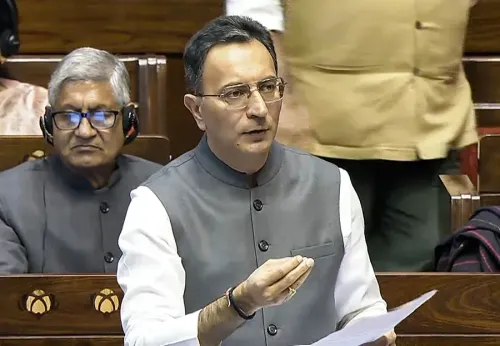
The Centre has significantly strengthened its regulatory framework to combat AI-generated deepfakes, slashing content removal timelines and imposing stricter compliance obligations on social media intermediaries, Minister of State for Electronics and Information Technology Jitin Prasada informed the Lok Sabha on 6 August. The amendments to the IT Rules, 2021 represent the government's most comprehensive legislative response yet to the growing threat of synthetically generated information (SGI).
Key Rule Changes
Under the revised framework, intermediaries must now remove unlawful content within three hours of receiving intimation — a sharp reduction from the earlier window of 36 hours. For sensitive categories such as nudity or impersonation, grievance redressal deadlines have been compressed from 24 hours to just two hours.
Platforms are also required to ensure clear labelling and traceable metadata for all permissible AI-generated content, enabling users to distinguish synthetic material from authentic content. The rules explicitly cover child sexual exploitation material, non-consensual intimate imagery, and impersonation — requiring platforms to proactively prevent such content and act promptly upon detection.
Platform Obligations and User Accountability
Intermediaries must deploy automated tools or other reasonable technical measures to prevent users from creating, generating, modifying, publishing, or disseminating any synthetically generated content that violates Indian law. Platforms are further required to conduct mandatory user awareness programmes on the legal consequences of unlawful AI-generated content.
All intermediaries must appoint Grievance Officers and resolve complaints within prescribed timelines. Users whose complaints are not addressed by platform Grievance Officers can escalate to a Central Appellate Forum, accessible online.
Government Detection Initiatives
Minister Prasada highlighted several state-backed deepfake detection projects. These include Saakshya, a multi-agent detection framework developed jointly by IIT Jodhpur and IIT Madras; AI Vishleshak, aimed at improving audio-visual forgery detection; and a Real-Time Voice Deepfake Detection System developed by IIT Kharagpur.
SAHYOG Portal and Centralised Enforcement
The government has operationalised the SAHYOG Portal, which enables automated, centralised removal notices to intermediaries from government agencies across India. The portal streamlines the process by which authorised agencies request the takedown of unlawful content — reducing the scope for delays or non-compliance by platforms.
This comes amid a global surge in AI-generated misinformation, with deepfakes increasingly weaponised for political manipulation, financial fraud, and non-consensual imagery. India's move mirrors regulatory tightening in the European Union under the AI Act and aligns with broader G20 discussions on AI governance. The next test will be whether platforms meet the new timelines consistently — and whether enforcement mechanisms have the teeth to hold them accountable.
Point of View
Yet centralised removal notices raise legitimate questions about executive overreach if oversight mechanisms are weak. More critically, the rules address distribution but say little about liability at the point of AI model deployment — the upstream source of the problem. Detection tools from IITs are promising but remain research-stage; scaling them to real-time platform moderation is an unsolved engineering and governance challenge.
NationPress
21 Sept 2026
Frequently Asked Questions
What are India's new deepfake rules under the IT Rules 2021 amendment?
The amended IT Rules, 2021 require social media intermediaries to remove unlawful AI-generated content within 3 hours of notification, down from 36 hours. For sensitive cases involving nudity or impersonation, grievance redressal must be completed within 2 hours.
What is the SAHYOG Portal?
The SAHYOG Portal is a government-operated platform that sends automated, centralised removal notices to social media intermediaries. It allows authorised government agencies across India to formally request the takedown of unlawful content in a streamlined manner.
What detection tools has the government developed against deepfakes?
The government has supported three key initiatives: Saakshya, a multi-agent deepfake detection framework by IIT Jodhpur and IIT Madras; AI Vishleshak for audio-visual forgery detection; and a Real-Time Voice Deepfake Detection System developed by IIT Kharagpur.
What obligations do platforms have under the new framework?
Platforms must deploy automated tools to block creation or spread of unlawful synthetic content, ensure AI-generated content is clearly labelled with traceable metadata, appoint Grievance Officers, and run mandatory user awareness programmes on the legal consequences of deepfake misuse.
How can users escalate unresolved deepfake complaints?
If a platform's Grievance Officer does not resolve a complaint within the prescribed timeline, users can appeal online to the Central Appellate Forum set up by the government at the national level.