Kejriwal cites Ram's words to defend Sunderkand recitation
Synopsis
AAP convenor Arvind Kejriwal on 12 July 2026 invoked a statement attributed to Lord Ram — that those with demonic tendencies would oppose Sunderkand recitation in the Kali Yuga — in an apparent rebuke of critics of his public religious engagements.
Key Takeaways
Kejriwal posted on 12 July 2026 citing a statement he attributed to Lord Ram about opposition to Sunderkand recitation in the Kali Yuga.
The Sunderkand is the fifth chapter of the Valmiki Ramayana and one of the most widely recited passages in Hindu devotional practice.
The remark appears directed at political critics of Kejriwal's public religious engagements, framing opposition as spiritually deficient.
The attribution of the quoted prophecy to Lord Ram is not traceable to widely cited canonical Ramayana texts, and religious scholars may contest it.
Responses from opposition parties and religious organisations are anticipated in the coming days.
The statement fits a broader pattern of Indian politicians invoking Ramayana references during cultural or electoral positioning exercises.
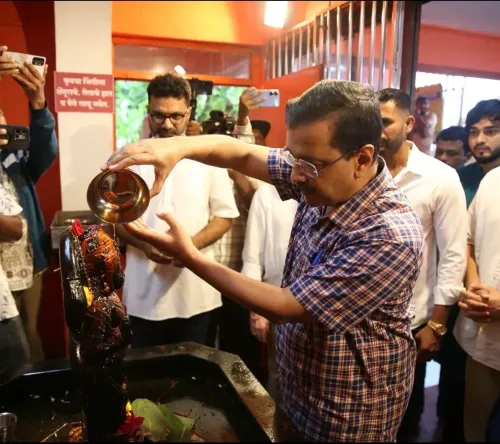
AAP convenor Arvind Kejriwal invoked a reference attributed to Lord Ram on Sunday, 12 July 2026, asserting that those with demonic tendencies would, in the Kali Yuga, oppose the recitation of the Sunderkand — a pointed remark that appeared directed at political critics of his public religious engagements.
In the post, Kejriwal wrote: 'भगवान राम ने कहा था - कलयुग में राक्षसी प्रवृत्ति वाले लोग सुंदरकांड पाठ का विरोध करेंगे।' ('Lord Ram had said — in the Kali Yuga, people with demonic tendencies will oppose the recitation of the Sunderkand.')
Context
The Sunderkand is the fifth chapter of the Valmiki Ramayana, centred on Hanuman's journey to Lanka in search of Sita. It is among the most widely recited passages in Hindu devotional practice, held to bring spiritual protection and fortitude to the devotee. Public readings of the Sunderkand — known as Sunderkand paath — are common at temples, homes, and community gatherings across India.
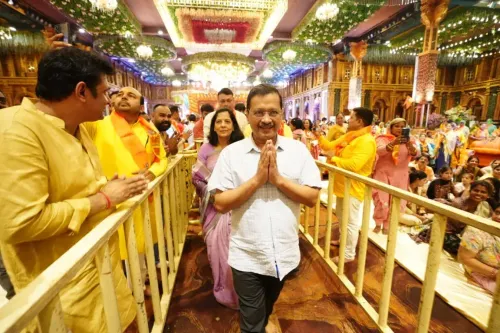
Kejriwal has, on several occasions, publicly participated in or organised religious events, a practice that has drawn both support from devotees and criticism from political opponents who question the intent behind such displays.
Policy Backdrop
Indian politicians across the spectrum have periodically invoked Ramayana episodes and Vedic references in public discourse. Such invocations typically arise during cultural debates, electoral campaigns, or in response to criticism of a leader's religious positioning. The framing of political opposition as spiritually or morally deficient — using scriptural language — is a rhetorical device that recurs across party lines.
Kejriwal's statement does not reference a specific policy or scheme. It is instead a cultural-political assertion, positioning critics of his religious conduct as adversaries of devotion itself.
Stakeholders and Impact
Hindu devotees who regularly observe Sunderkand recitations may view the remark as a validation of their practice and an appeal to shared religious identity. Political rivals, particularly those who have accused Kejriwal of performative religiosity, are likely to contest the framing.
Religious organisations and dharmacharyas (religious preceptors) may also respond to the attribution of the quoted statement, since the claim that Lord Ram prophesied opposition to Sunderkand in the Kali Yuga is not a passage from widely cited canonical texts — a distinction that could draw scrutiny from scholars of the Ramayana tradition.
What's Next
Responses from opposition parties and religious bodies are expected on social media and in public forums in the coming days. The remark is likely to amplify ongoing debates about the role of religious symbolism in AAP's political communication, particularly as the party seeks to consolidate its base in Delhi and expand in other states. Whether Kejriwal elaborates on the statement in subsequent public appearances will determine how far the conversation travels beyond social media.
Point of View
Which has leaned more visibly into Hindu cultural symbolism since the party's 2025 Delhi assembly setback. However, the unverifiable nature of the specific attribution to Lord Ram introduces a vulnerability: if religious scholars publicly dispute the source, the post could invite a different kind of scrutiny. The episode underscores how scripture and electoral politics continue to intersect in Indian public life, with social media as the primary arena.
NationPress
12 Jul 2026
Frequently Asked Questions
What did Kejriwal say about Sunderkand on 12 July 2026?
Kejriwal posted on X claiming that Lord Ram had said people with demonic tendencies would oppose Sunderkand recitation in the Kali Yuga, an apparent rebuke of his political critics.
What is Sunderkand and why is it significant?
The Sunderkand is the fifth chapter of the Valmiki Ramayana, narrating Hanuman's journey to Lanka. It is widely recited in Hindu devotional practice and is believed to bring spiritual protection to the devotee.
Why is Kejriwal invoking religious references in his posts?
Kejriwal has increasingly incorporated Hindu cultural and religious symbolism into his public communication, a pattern observers link to electoral positioning and efforts to connect with a broad devotee base.
Is the statement attributed to Lord Ram about Sunderkand found in the Ramayana?
The specific prophecy Kejriwal cited is not traceable to widely recognised canonical Ramayana texts, and religious scholars may question its attribution to Lord Ram.
How have political rivals responded to Kejriwal's religious statements?
Opposition parties have previously accused Kejriwal of performative religiosity; formal responses to this specific post from rivals and religious organisations are expected in the coming days.