Kejriwal flags safety risk in Modi govt's ATF ethanol blending plan

Synopsis
AAP convenor Arvind Kejriwal alleged on 6 August 2026 that the Modi government plans to blend ethanol into Aviation Turbine Fuel, claiming experts warn this could seriously compromise flight safety. No official confirmation or denial has emerged from the Ministry of Petroleum or Civil Aviation.
Key Takeaways
Arvind Kejriwal alleged on 6 August 2026 that the Modi government plans to introduce ethanol blending in Aviation Turbine Fuel (ATF) .
Kejriwal cited unnamed sources and experts warning the move could 'seriously compromise the safety of flights.' India's National Policy on Biofuels 2018 set a 20% ethanol blending target in petrol — but ATF involves distinct cold-flow, energy-density, and engine-certification requirements.
The Ministry of Petroleum and Natural Gas and the Ministry of Civil Aviation have not publicly confirmed or denied any such plan.
Any ATF specification change would require approval from aviation regulators, the Bureau of Indian Standards , and aircraft engine OEMs before implementation.
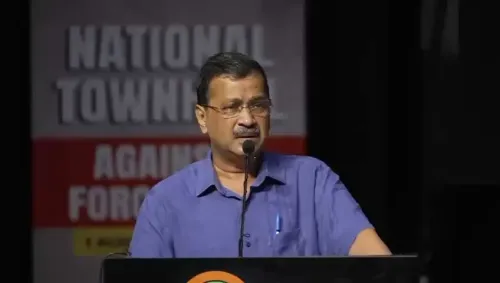
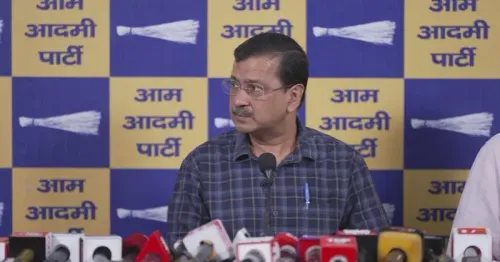
A claim that could rattle India's aviation sector landed on social media on Thursday, 6 August 2026, when AAP national convenor Arvind Kejriwal alleged that the Modi government is planning to blend ethanol into Aviation Turbine Fuel (ATF) — and warned that experts believe the move could 'seriously compromise the safety of flights.'
What ethanol in ATF actually means for a jet engine
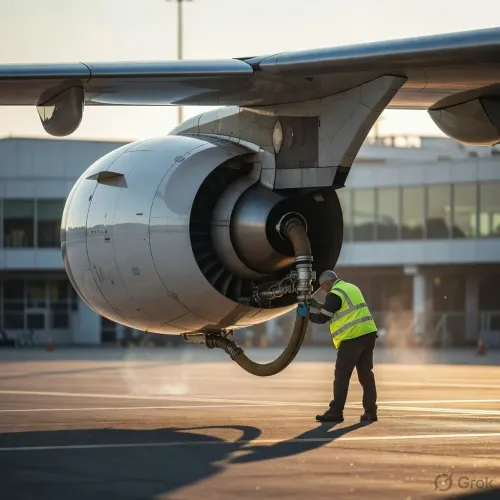
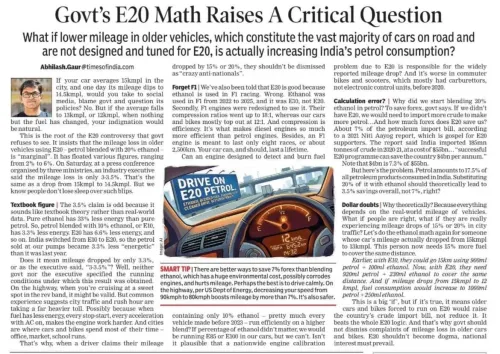
Ethanol blending in road transport fuels is well-established policy in India. The National Policy on Biofuels 2018 set a 20% ethanol blending target in petrol, a goal the government accelerated to 2025. But aviation is an entirely different engineering universe. ATF must perform at altitudes where temperatures plunge well below freezing — ethanol's cold-flow properties, lower energy density, and interaction with aircraft engine certification standards raise questions that do not arise with petrol-blended fuels on the ground.
Airline operators, aviation regulators, and aircraft engine manufacturers (OEMs) would all need to sign off before any such specification change could take effect. No draft notification from the Ministry of Civil Aviation or revised ATF specifications from the Bureau of Indian Standards have been publicly confirmed as of this report.
Kejriwal's charge and the government's silence
Kejriwal's post, framed around unnamed 'sources' and unspecified 'experts,' is explicitly a political alert rather than a technical report. The Ministry of Petroleum and Natural Gas, which oversees fuel blending policy, has not publicly responded to the claim. The absence of an official denial — or an official confirmation — leaves the allegation in contested territory.
What is not contested is the broader direction of Indian energy policy: the government has aggressively pushed biofuel integration to reduce crude import dependence and support domestic sugarcane and grain farmers. Whether that push is now extending to ATF is the precise question Kejriwal is raising — and the one regulators and the aviation industry will be watching closely.
If any formal proposal does emerge, the stress-test will be swift: engine OEMs, airline safety teams, and the Directorate General of Civil Aviation would be expected to weigh in before a single blended litre reaches an aircraft tank.
Point of View
Passenger aviation safety — to force the government onto the defensive before any formal proposal is even tabled. The allegation is politically potent precisely because aviation safety is non-negotiable in public perception, and the Modi government's biofuel expansion record gives the claim surface plausibility. Whether or not the plan materialises, the episode signals that India's aggressive ethanol push is now generating political friction beyond road transport, and that any move toward ATF blending will face intense pre-emptive scrutiny from opposition parties and, more consequentially, from the aviation industry itself.
NationPress
20 Sept 2026
Frequently Asked Questions
What did Kejriwal say about ethanol in aviation fuel?
AAP convenor Arvind Kejriwal alleged on 6 August 2026 that the Modi government plans to blend ethanol into Aviation Turbine Fuel (ATF), and claimed that experts say this could seriously compromise the safety of flights.
Is it safe to blend ethanol in Aviation Turbine Fuel?
Aviation fuel faces strict requirements around cold-flow properties, energy density, and engine certification that differ significantly from petrol used in road vehicles. Ethanol's characteristics raise technical concerns in these areas, though no official expert assessment on an India-specific ATF blending proposal has been publicly released.
Has the Modi government officially announced ethanol blending in ATF?
As of 6 August 2026, neither the Ministry of Petroleum and Natural Gas nor the Ministry of Civil Aviation has publicly confirmed any plan to blend ethanol in ATF. Kejriwal's claim is based on unnamed sources.
What is India's current ethanol blending policy?
India's National Policy on Biofuels 2018 set a target of 20% ethanol blending in petrol by 2030, a deadline the government advanced to 2025. This policy applies to road transport fuels, not aviation fuel.
Who would need to approve any change to ATF specifications in India?
Any revision to ATF specifications would require consultation with the Bureau of Indian Standards, the Directorate General of Civil Aviation, airline operators, and aircraft engine manufacturers (OEMs) before implementation.