Kejriwal Questions E20 Ethanol Policy on Forex Impact
Synopsis
AAP convenor Arvind Kejriwal has publicly contested the government's claim that E20 ethanol blending saves foreign exchange, asserting the policy instead causes greater forex outflow while imposing costs and hardship on ordinary petrol consumers. His post reignites debate over the economic rationale behind India's accelerated biofuel blending programme.
Key Takeaways
AAP convenor Arvind Kejriwal on 9 July 2026 challenged the government's claim that E20 ethanol blending saves foreign exchange.
Kejriwal alleged the E20 mandate is causing more forex outflow , not less, with no offsetting benefit.
India's ethanol blending programme began in 2003 at a 5 per cent target; the National Policy on Biofuels 2018 raised it to 20 per cent .
The E20 deadline was advanced from 2030 to 2025 by the central government in 2021 .
Key affected groups include petrol consumers , vehicle owners , and oil marketing companies that have upgraded pump infrastructure.
Official disaggregated data on net forex impact of E20 rollout is yet to be publicly released.
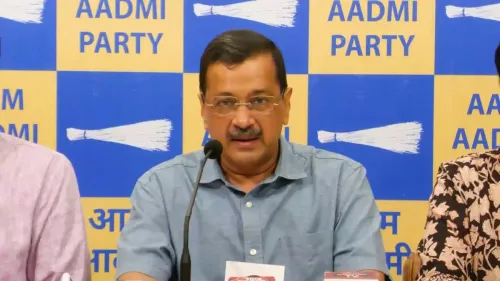
AAP convenor Arvind Kejriwal on Thursday, 9 July 2026, publicly challenged the central government's justification for its E20 ethanol blending mandate, claiming the policy is causing greater foreign exchange outflow rather than saving it, while imposing costs and hardship on ordinary consumers.
Context
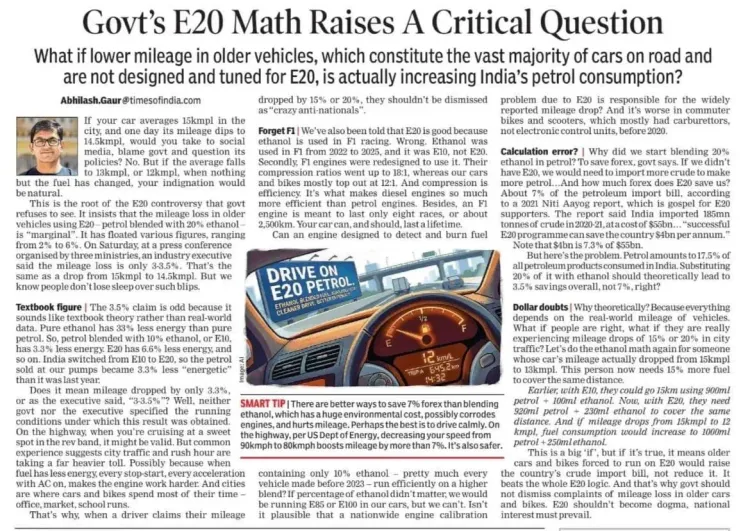
Kejriwal shared what he described as a must-read article on the economic impact of the E20 policy, writing: 'Govt was saying that ethanol saves forex. No. On the contrary, E20 decision is causing more forex outflow and no other benefit with huge costs and harassment to ordinary people.' The post directly disputes a central plank of the government's case for accelerating ethanol blending — that it reduces India's dependence on costly crude oil imports.
The E20 programme mandates blending up to 20 per cent ethanol with petrol at fuel pumps across the country. The government has positioned it as a tool for energy security, farmer income support, and reduction of the oil import bill.
Policy Backdrop
India's ethanol blending programme dates to 2003, when an initial 5 per cent blending target was introduced under the Ethanol Blended Petrol programme. The National Policy on Biofuels, 2018 raised the ambition to a 20 per cent blending target, originally set for 2030.
In 2021, the central government advanced that deadline to 2025 and began a phased rollout at fuel pumps, requiring upgrades to dispensing infrastructure and vehicle compatibility standards. Successive administrations have linked higher ethanol targets to sugarcane and grain feedstock procurement, framing the policy as a dual benefit for farmers and the exchequer.
The standard official argument has been that displacing imported crude with domestically produced ethanol reduces the forex burden on India's current account. Kejriwal's post challenges that arithmetic directly, alleging the net effect runs in the opposite direction.
Stakeholders and Impact
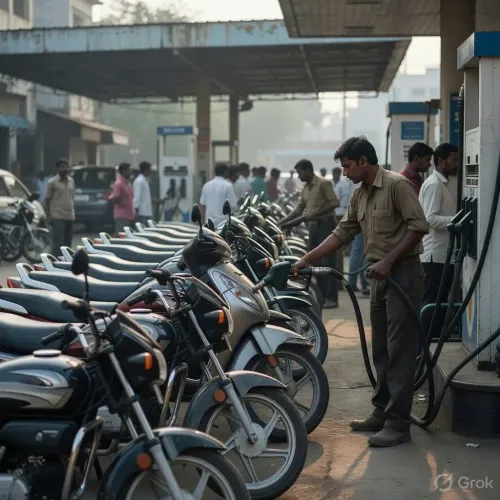
Petrol consumers and vehicle owners are at the centre of the debate. Higher ethanol blends can affect fuel efficiency in vehicles not optimised for E20, potentially raising effective per-kilometre costs for millions of two-wheeler and car owners. Oil marketing companies have had to invest in pump infrastructure upgrades to handle the higher blend.
On the supply side, ethanol production in India draws primarily from sugarcane and surplus foodgrains, meaning the economics of the programme are sensitive to agricultural output, sugar prices, and grain availability — variables that can themselves affect import requirements and domestic food costs.
Kejriwal's framing — 'huge costs and harassment to ordinary people' — points to consumer-level friction, though specific verified figures on the scale of such costs are not yet available from official sources.
What's Next
The political salience of this critique is likely to grow as the government's own data on E20 rollout outcomes becomes available and as parliamentary committees examine the programme's net economic impact. Any official accounting that disaggregates forex savings from feedstock import costs, infrastructure spending, and vehicle efficiency losses will be closely watched by both the opposition and independent economists.
With AAP positioning itself as a watchdog on economic policy, Kejriwal's intervention signals that the ethanol blending programme will face sustained scrutiny in the months ahead — particularly if consumer-facing costs remain visible at the pump.
Point of View
Infrastructure spending, and vehicle efficiency losses. If credible independent data eventually supports the forex-outflow argument, it could significantly undermine a policy that has been central to the government's energy transition story. The intervention also reflects AAP's broader strategy of occupying economic-watchdog space ahead of future electoral cycles.
NationPress
8 Oct 2026
Frequently Asked Questions
What is the E20 ethanol blending policy in India?
The E20 policy mandates blending up to 20 per cent ethanol with petrol at fuel pumps across India. It is part of the National Policy on Biofuels 2018 and was originally targeted for 2030, but the deadline was advanced to 2025 in 2021 to accelerate energy security goals.
Why did Kejriwal criticise the E20 ethanol policy?
Kejriwal argued that the government's claim that ethanol blending saves foreign exchange is incorrect. He stated that the E20 decision is actually causing more forex outflow while imposing costs and harassment on ordinary consumers, with no offsetting benefit.
Does ethanol blending save forex for India?
The government's stated rationale is that domestically produced ethanol displaces imported crude oil, reducing forex outflow. However, critics including Kejriwal contend that when feedstock import costs and infrastructure spending are factored in, the net forex impact may be negative. Official disaggregated data on this is yet to be widely released.
How does E20 affect ordinary petrol consumers in India?
Higher ethanol blends can reduce fuel efficiency in vehicles not optimised for E20, potentially raising effective per-kilometre costs. Consumers may also face compatibility issues with older vehicles. Kejriwal has described this as 'huge costs and harassment to ordinary people.'
What is AAP's position on the central government's biofuel policy?
AAP, led by Arvind Kejriwal, has taken an opposition stance against the E20 mandate, questioning its economic rationale and consumer impact. The party is calling for greater scrutiny of the programme's net costs versus the forex savings the government claims.