Kejriwal Hails PK's Bankipur Win, Calls It BJP's Ground Shift
Synopsis
AAP convenor Arvind Kejriwal congratulated Prashant Kishor on winning Bankipur, calling the result proof that the BJP's ground has 'completely shifted' and citing public anger over funding controversies, exam paper leaks, and the E20 fuel policy as drivers of anti-incumbency.
Key Takeaways
Prashant Kishor and his Jan Suraaj Party won the Bankipur assembly seat in Patna, Bihar , according to Kejriwal's post on 3 August 2026 .
Kejriwal framed the loss as the BJP conceding 'even its national president's seat', amplifying the symbolic stakes.
He cited three specific public grievances: alleged funding irregularities ('Chanda Chori'), competitive-exam paper leaks, and the E20 ethanol-blending policy .
Jan Suraaj Party was founded by Prashant Kishor in October 2024 specifically to contest Bihar elections.
Kejriwal concluded that 'the people of the country have sent a signal for change', framing a state result as a national referendum on the Modi government .
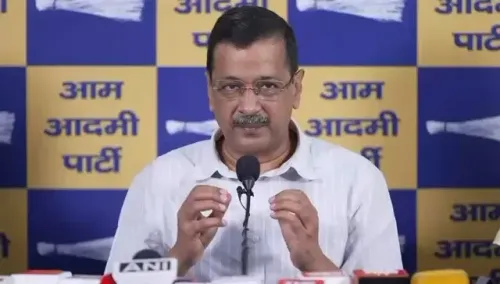
A constituency long considered safe ground for the Bharatiya Janata Party has delivered a jolt — and AAP national convenor Arvind Kejriwal was among the first opposition voices to frame what it means. On Monday, 3 August 2026, Kejriwal posted on X congratulating Prashant Kishor on his victory from Bankipur, a seat in Patna district, Bihar, and used the result to argue that the BJP's electoral footing across the country is crumbling.
Kejriwal wrote: 'BJP apne rashtriya adhyaksh ki seat hi haar gayi' — 'The BJP has lost even its national president's seat.' He congratulated Kishor 'with great warmth' on winning Bankipur by a large margin and added that 'the BJP's ground has completely shifted.' The post went on to list what he called the drivers of public anger: funding controversies ('Chanda Chori'), repeated exam paper leaks, and the Centre's E20 ethanol-blending fuel policy — before concluding that 'the people of the country have sent a signal for change.'
Prashant Kishor's Bankipur Gamble Pays Off
Prashant Kishor, the political strategist who spent years engineering other parties' victories before launching his own outfit, founded the Jan Suraaj Party in October 2024 with the explicit goal of contesting elections in Bihar. Bankipur — a high-profile urban constituency inside Patna — was among his chosen battlegrounds. A win there, particularly if the margin is substantial as Kejriwal claims, would mark a significant early validation of Kishor's direct-politics experiment.
The seat's symbolic weight is considerable. Kejriwal's framing — that it belonged to the BJP's national president — amplifies the political signal, though the research background flags that the exact margin and the precise status of the seat's incumbent cannot be independently confirmed from available data at the time of writing.
Three Grievances Kejriwal Wants Voters to Remember
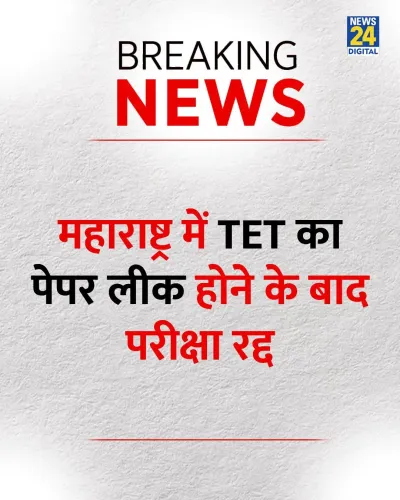
Beyond the Bankipur result, Kejriwal's post reads as a broader indictment of the Modi government. He invokes three specific pressure points: alleged financial irregularities in party funding ('Chanda Chori'), the recurring crisis of competitive-exam paper leaks that has cost lakhs of aspirants their opportunities, and the E20 ethanol-blending programme — a Centre-backed fuel policy that critics argue has pushed up prices and hurt consumers in states like Bihar.
Opposition parties in Bihar have consistently woven these threads together ahead of every electoral cycle, arguing they represent a pattern of governance failure rather than isolated incidents. Kejriwal's post follows that playbook — but the Bankipur result, if it holds as described, gives the argument a fresh, concrete anchor.
What the Bihar Signal Could Mean Beyond the State
Bihar has long been a bellwether for coalition arithmetic at the national level. A new party — Jan Suraaj — drawing votes from a seat the BJP considered its own suggests that anti-incumbency in the state is fragmenting in unpredictable directions, not simply consolidating behind established opposition formations. For Kejriwal and the AAP, which has its own ambitions of expanding into Hindi-heartland states, the Bankipur outcome is a data point worth amplifying.
The BJP has not yet publicly responded to Kejriwal's post. Watch for the party's official line on the Bankipur result and whether Jan Suraaj's Kishor uses the win to accelerate his Bihar-wide organisation-building — that next move will tell us whether this is a one-seat story or the opening chapter of something larger.
Point of View
As framed by Kejriwal, hands the opposition a rare concrete exhibit in its anti-incumbency argument — a high-profile urban seat in Bihar falling to a brand-new party, not a legacy rival. Kejriwal's decision to list E20, paper leaks, and funding controversies alongside the result is deliberate: it converts a local outcome into a national narrative of governance failure. For the BJP, the challenge is not just the seat loss but the coalition optics — Bihar is a linchpin of the NDA alliance, and any erosion there reverberates in New Delhi's arithmetic. Whether Jan Suraaj can translate a single-seat breakthrough into a durable Bihar presence will determine whether Kejriwal's 'signal for change' reads as prophecy or overreach.
NationPress
3 Aug 2026
Frequently Asked Questions
Who is Prashant Kishor and what is Jan Suraaj Party?
Prashant Kishor is a political strategist who founded the Jan Suraaj Party in October 2024 to directly contest elections in Bihar, moving from behind-the-scenes campaign management to frontline politics.
What is the Bankipur constituency?
Bankipur is an assembly constituency in Patna district, Bihar, considered a prominent urban seat and one of the battlegrounds Jan Suraaj Party targeted in the 2026 Bihar elections.
Why did Kejriwal mention E20 in the context of Bihar elections?
The E20 ethanol-blending fuel policy, promoted by the Centre, has drawn criticism from opposition parties who argue it has contributed to higher fuel costs; Kejriwal cited it as one of several grievances fuelling anti-incumbency against the Modi government.
What is 'Chanda Chori' that Kejriwal referred to?
Kejriwal used the term 'Chanda Chori' — roughly translated as 'donation theft' or 'funding fraud' — to allege financial irregularities in BJP's party funding, a charge the BJP has denied and which the research background flags as unverified.
What does the Bankipur result mean for Bihar politics?
A win for Jan Suraaj in Bankipur would suggest that anti-incumbency in Bihar is fragmenting beyond traditional opposition parties, with a new entrant capable of capturing votes in urban, high-profile seats — a development that could reshape Bihar's coalition calculations.