Kejriwal Reclaims 'Dimagi Naxal' Label, Calls It Patriotism
Synopsis
AAP convenor Arvind Kejriwal on 17 August 2026 reclaimed the pejorative 'dimagi naxal' in a three-line X post, declaring he wears the label proudly because he is a patriot — a sharp rhetorical inversion of a charge used to brand critics as anti-national.
Key Takeaways
Kejriwal's post on 17 August 2026 owned the slur 'dimagi naxal' and reframed it as a mark of patriotism.
The term 'dimagi naxal' is used in Indian political discourse to brand dissenters as ideological enemies of the state.
The post named no specific opponent, letting the rhetorical inversion stand on its own.
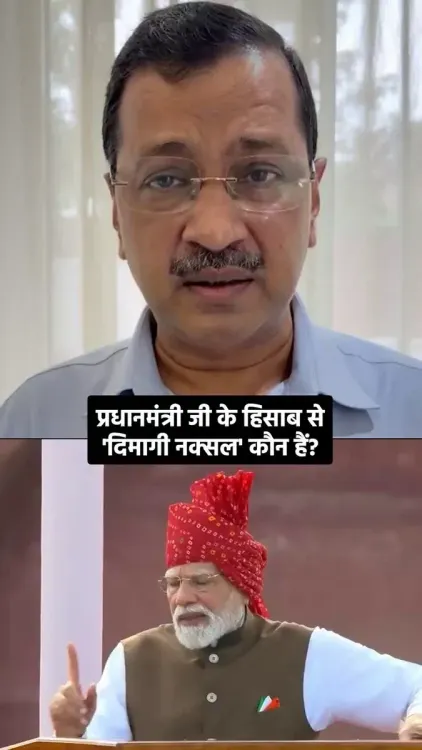
A video was attached to the post, suggesting a fuller message beyond the three-line text.
The statement aligns with AAP's long-standing positioning as a movement of thinking, honest citizens against an entrenched establishment.
A slur thrown to wound became a badge worn with defiance. On Monday, 17 August 2026, AAP convenor Arvind Kejriwal posted a sharp, three-line rejoinder on X that stopped political Delhi mid-scroll — owning the term 'dimagi naxal' and reframing it as proof of patriotism.
In Hindi, Kejriwal wrote: 'Haan. Main dimagi naxal hoon. Kyunki main deshbhakt hoon. Aur mujhe is par garv hai.' — translated: 'Yes. I am a dimagi naxal. Because I am a patriot. And I am proud of it.'
What 'Dimagi Naxal' Means — and Why It Stings
The phrase 'dimagi naxal' (literally, 'intellectual Naxal' or 'Naxal of the mind') has circulated in Indian political discourse as a pejorative for activists, academics, or opposition figures accused of harbouring ideologically subversive views without engaging in armed struggle. It implies that the target is an enemy of the state dressed in civilian clothes — a charge designed to delegitimise dissent by association with Maoist violence.
Reclaiming a slur is a well-worn political manoeuvre globally, but it carries particular voltage in India's current climate, where sedition-adjacent rhetoric has been used to frame criticism of the government as anti-national. Kejriwal's three-line post inverts the logic entirely: if being a 'dimagi naxal' is what patriots are called, he argues, then he wears it proudly.
The Defiance Playbook — and Its Audience
The post contains no context, no named opponent, no specific trigger — which is itself a rhetorical choice. The absence of a target forces the label to stand alone, stripped of whoever hurled it. Kejriwal lets the accusation hang in the air and answers it with three blunt sentences. The video attached to the post — details of which were not available — likely amplifies the message.
For AAP's core urban, educated, middle-class base, the framing lands on familiar ground: the party has long positioned itself as a movement of honest, thinking citizens up against a corrupt establishment. Calling that constituency 'dimagi naxals' and then celebrating it is a direct mobilisation signal.
Point of View
He denies opponents the power the label was meant to carry. The move also signals that AAP intends to contest the 'nationalist' frame head-on rather than cede it to rivals — a strategic pivot worth watching as the party rebuilds after its 2025 Delhi setback. Whether the gambit expands AAP's base or simply energises its existing loyalists is the central question it leaves unanswered.
NationPress
1 Oct 2026
Frequently Asked Questions
What does 'dimagi naxal' mean in Indian politics?
'Dimagi naxal' translates to 'intellectual Naxal' and is used as a pejorative to accuse critics or activists of holding ideologically subversive views, implying they are enemies of the state without engaging in actual armed conflict.
What did Kejriwal say in his 17 August 2026 X post?
Kejriwal wrote in Hindi: 'Yes. I am a dimagi naxal. Because I am a patriot. And I am proud of it.' — a three-line statement reclaiming the label as a badge of honour.
Who called Kejriwal a 'dimagi naxal'?
The post does not name a specific person or party. Kejriwal responded to the label without identifying its source.
Why is reclaiming a political slur significant?
Reclaiming a slur strips it of its intended power and turns it against those who deployed it, signalling confidence and reframing the political narrative on the target's own terms.
What is AAP's political position after the 2025 Delhi elections?
AAP lost power in Delhi in the February 2025 assembly elections after a decade in government, and the party has been in a phase of political rebuilding and repositioning under Kejriwal's leadership.