Kejriwal Questions Delhi's Condition as National Capital
Synopsis
AAP convenor Arvind Kejriwal posted a pointed Hindi lament on 24 May 2026, questioning who could have imagined the national capital Delhi falling to its present condition. The post, accompanied by an image, reignites the long-running debate over Delhi's governance, civic challenges, and the contested power-sharing arrangement between the elected government and the centrally appointed Lieutenant Governor.
Key Takeaways
Arvind Kejriwal posted on X on 24 May 2026 lamenting the state of Delhi as the national capital.
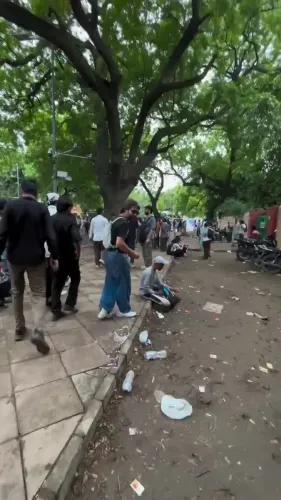
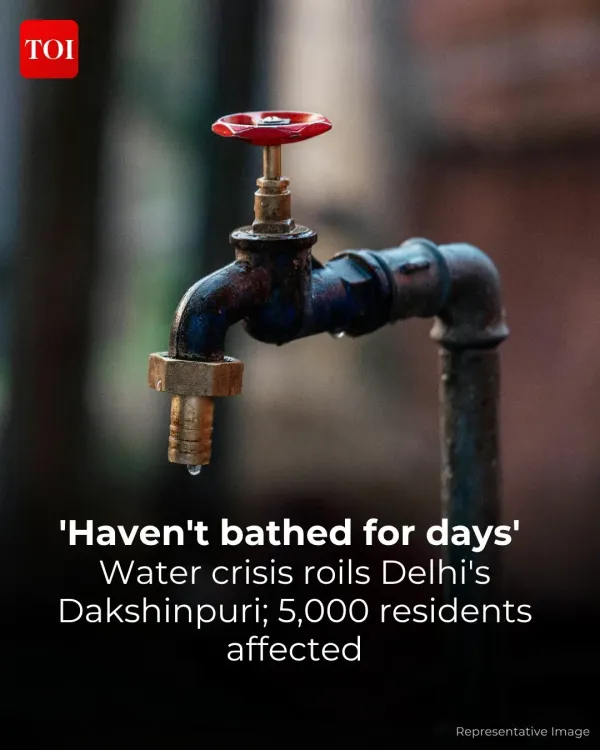
The Hindi post translates as: 'Who would have thought that one day the national capital would come to this condition.' The post was accompanied by 1 image , reinforcing the critique visually.
Delhi's governance has been shaped by the GNCTD Amendment Act, 2021 , which expanded the Lieutenant Governor's powers at the expense of the elected government.
AAP governed Delhi from 2015 , winning 67 seats in its first full-term election on promises of anti-corruption and welfare delivery.
Jurisdictional disputes between AAP and the Union government over administrative control have been a recurring feature of Delhi's politics since 2015 .
AAP convenor Arvind Kejriwal posted a sharp critique on X on Sunday, 24 May 2026, lamenting the state of Delhi, India's national capital, with a rhetorical question that implicitly indicts the city's current governance. The post was accompanied by an image and was directed at a broad public audience.
Context
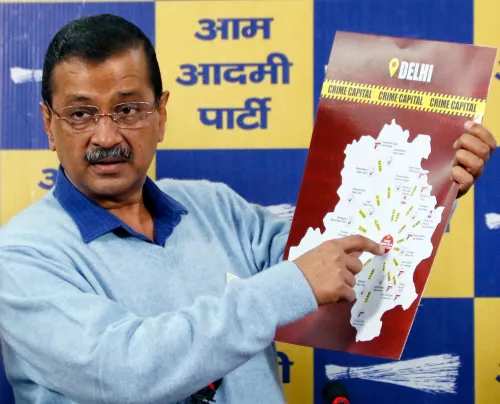
Kejriwal's post, written in Hindi, reads: 'Kis ne socha tha ki ek din desh ki rajdhani ka ye haal hoga' — 'Who would have thought that one day the national capital would come to this condition.' The statement is framed as a lament, invoking a sense of disbelief at the deterioration of Delhi's civic and administrative standing. The accompanying image, while not described in detail, appears to reinforce the criticism visually.
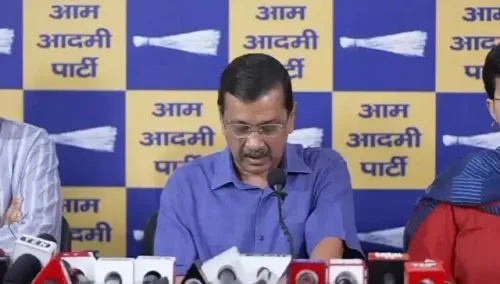
The post comes at a time when Delhi's governance remains a contested political space. Kejriwal, who served as Chief Minister of Delhi and led the Aam Aadmi Party (AAP) to landmark victories in 2015 and 2020, now operates from outside the government after the party lost ground in subsequent electoral contests. His commentary on the capital's condition carries the weight of someone who governed the city for nearly a decade.
Policy Backdrop
Delhi operates under a unique constitutional arrangement in which an elected assembly coexists with a centrally appointed Lieutenant Governor (LG). The Government of National Capital Territory of Delhi (Amendment) Act, 2021 significantly expanded the LG's powers over the elected government, shifting administrative authority in several key domains away from the elected executive. This has been a persistent source of tension between AAP and the Union government.
Since 2015, jurisdictional disputes between the AAP administration and central authorities have shaped the capital's governance landscape. Critics of the arrangement argue that divided authority has hampered effective delivery of public services, including water supply, air quality management, and urban infrastructure — challenges that Delhi residents routinely flag as pressing concerns.
Stakeholders and Impact
Delhi's approximately 2 crore residents are the primary stakeholders in any debate about the capital's condition. Civic challenges — from seasonal air pollution to water scarcity — directly affect daily life. Opposition voices, including AAP, have consistently argued that the Centre's administrative interventions have diluted the elected government's ability to respond to these challenges effectively.
For AAP as a party, such posts serve to keep the governance accountability narrative alive in the public discourse. Kejriwal's framing positions the party as a watchdog of the capital's welfare even while out of power, appealing to a voter base that supported the party on promises of improved public services and anti-corruption governance.
What's Next
Any formal response from the Lieutenant Governor's office or relevant central ministries would be significant in shaping the next phase of this political exchange. With Delhi's assembly election cycle a constant backdrop to such statements, the political temperature around the capital's governance is unlikely to cool. Kejriwal's continued public commentary signals that AAP intends to keep Delhi's civic condition at the centre of its political messaging in the months ahead.
Point of View
Rather than a policy demand, is deliberate: it is emotive, shareable, and difficult to factually rebut. This fits a broader pattern in which AAP has consistently framed Delhi's civic challenges as a product of central interference rather than local administrative failure. As the next Delhi assembly election cycle draws closer, such messaging is likely to intensify, with the capital's condition serving as the central battleground.
NationPress
9 Oct 2026
Frequently Asked Questions
What did Arvind Kejriwal post about Delhi on 24 May 2026?
Kejriwal posted a Hindi message on X saying 'Who would have thought that one day the national capital would come to this condition,' accompanied by an image, criticising Delhi's current state.
Why is Delhi's governance a political issue between AAP and the Centre?
Delhi operates under a unique arrangement where a centrally appointed Lieutenant Governor shares power with the elected assembly. The GNCTD Amendment Act of 2021 expanded the LG's authority, creating persistent disputes between the AAP government and the Union government over administrative control.
What is Arvind Kejriwal's current political position?
Arvind Kejriwal is the national convenor of the Aam Aadmi Party and a former Chief Minister of Delhi, having led the party to victories in the 2015 and 2020 Delhi assembly elections.
What are the main civic problems faced by Delhi residents?
Delhi residents routinely face challenges including severe air pollution, water supply shortages, and urban infrastructure gaps, all of which have been points of political contention between AAP and the Union government.
What is AAP's political strategy regarding Delhi's condition?
AAP has consistently argued that the Centre's administrative interventions have hampered effective governance in Delhi, positioning itself as a watchdog of the capital's welfare and using civic challenges as a key electoral issue.