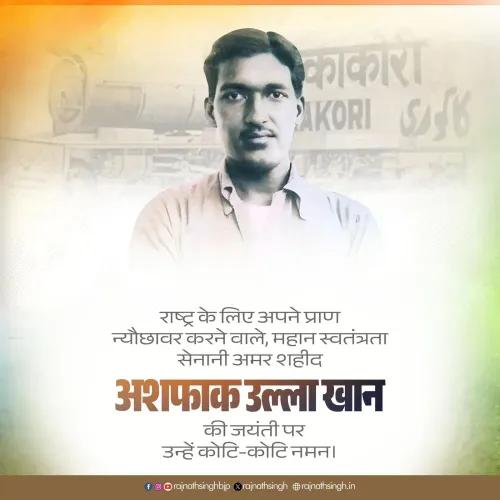
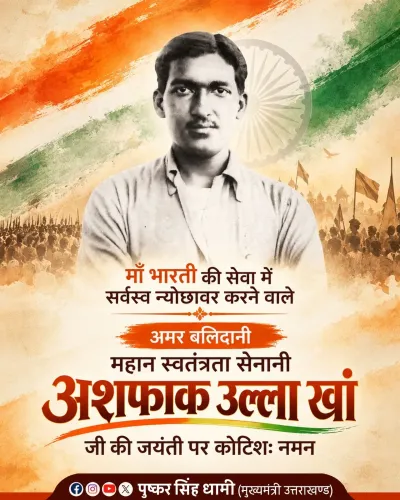
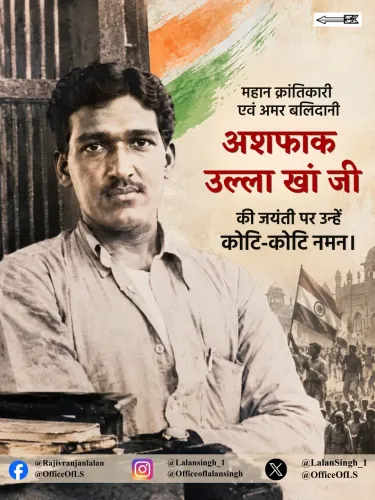
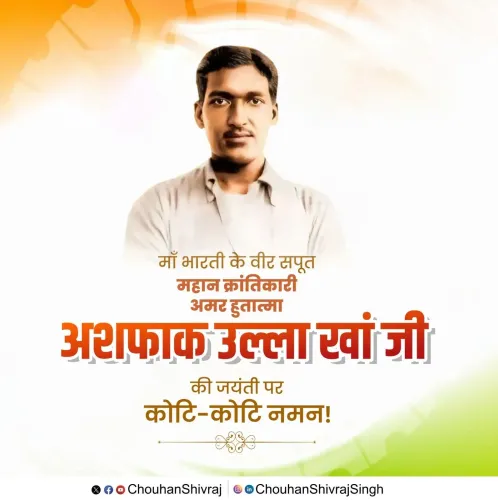
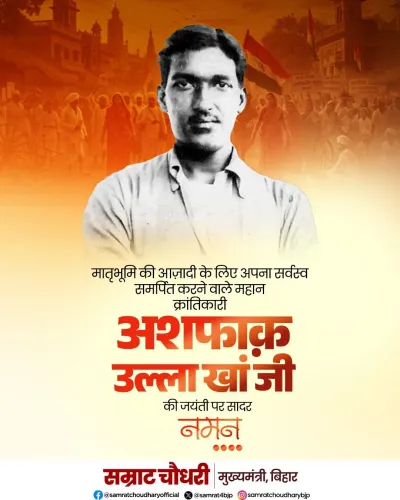
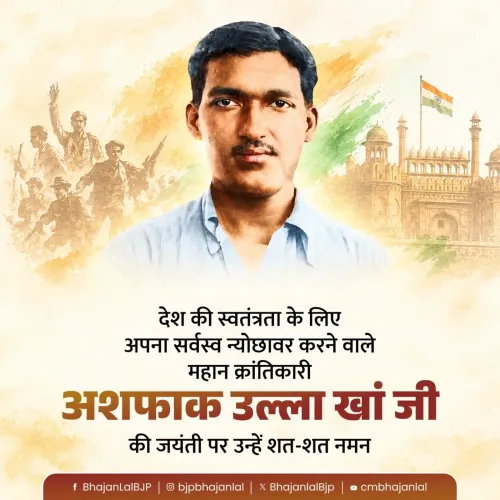
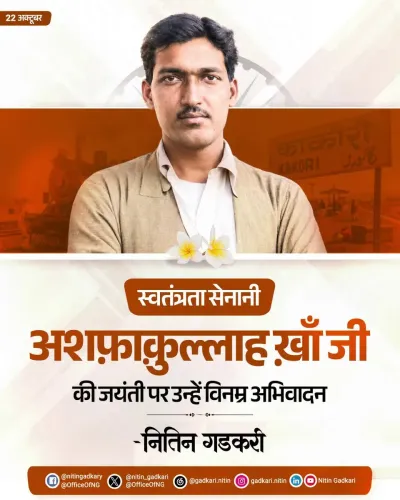
Kejriwal pays tribute to martyr Ashfaqulla Khan on birth anniversary
Synopsis
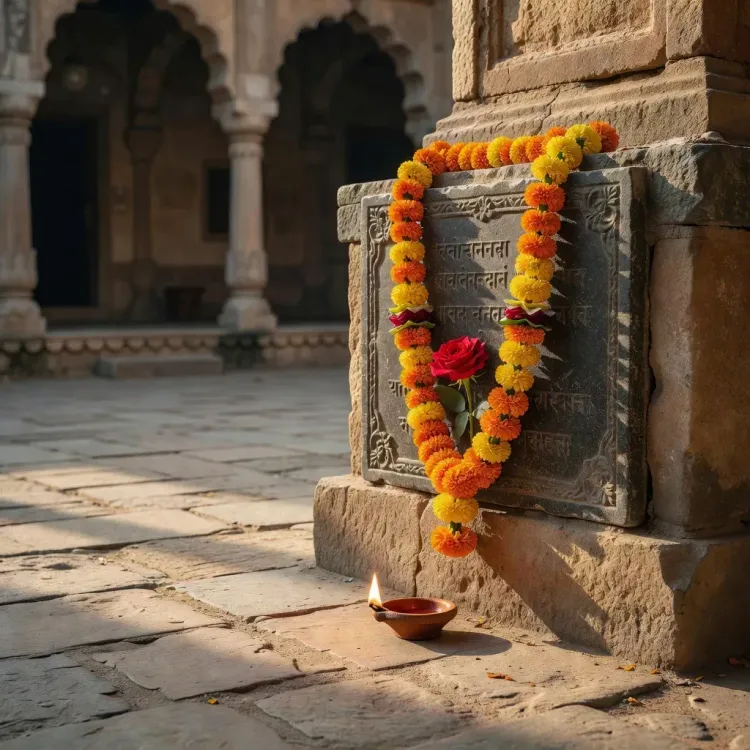
AAP convenor Arvind Kejriwal marked the 126th birth anniversary of revolutionary martyr Ashfaqulla Khan on 22 October 2026, honouring the Kakori conspiracy hero's sacrifice and calling his love for the motherland an enduring example for future generations.
Key Takeaways
Arvind Kejriwal paid tribute to martyr Ashfaqulla Khan on his birth anniversary, 22 October 2026 .
Ashfaqulla Khan was born on 22 October 1900 in Shahjahanpur, Uttar Pradesh .
He was a member of the Hindustan Republican Association and a key figure in the Kakori train robbery of 1925 .
He was executed on 19 December 1925 at the age of 25 .
Kejriwal described Khan's love for the motherland as an 'unbreakable example' that will inspire coming generations.
A freedom fighter who gave his life at 25 continues to inspire Indian leaders more than a century later. On Thursday, 22 October 2026, AAP convenor Arvind Kejriwal paid tribute to revolutionary martyr Ashfaqulla Khan on his birth anniversary, saluting his unwavering love for the motherland.
Kejriwal wrote in Hindi: 'मातृभूमि के प्रति उनका अटूट प्रेम आज भी मिसाल है' — 'His unbreakable love for the motherland remains an example even today.' He added that Khan's struggle 'will continue to inspire generations to come to dedicate their lives to the country.'
Who was Ashfaqulla Khan — and why he still matters
Ashfaqulla Khan was born on 22 October 1900 in Shahjahanpur, Uttar Pradesh. A key member of the Hindustan Republican Association, he is best remembered for his role in the Kakori train robbery of 1925 — a daring act of revolutionary defiance against British colonial rule. Arrested in the aftermath, he was executed on 19 December 1925, aged just 25. His close friendship with fellow revolutionary Ram Prasad Bismil — a bond that crossed religious lines — has made him an enduring symbol of composite Indian nationalism.
A ritual of remembrance across the political spectrum
Kejriwal's tribute follows a well-established pattern in Indian public life: leaders from virtually every party mark the birth and martyrdom anniversaries of independence-era revolutionaries with formal statements, linking the sacrifices of that generation to present-day values of patriotism. On a date like 22 October — Khan's birth anniversary — such commemorations ripple across the political landscape simultaneously.
The gesture carries particular resonance in Uttar Pradesh, Khan's home state, where his memory is deeply woven into local history and school curricula. Invoking him is as much about acknowledging regional pride as it is about national identity.
More than a hundred years after the Kakori operation, a 25-year-old who chose a noose over silence still has the power to move a nation — and its politicians know it.
Point of View
Functioning as low-risk, high-visibility moments of nationalist signalling that cut across ideological lines. For Kejriwal, invoking Ashfaqulla Khan — a figure who embodies both revolutionary sacrifice and Hindu-Muslim solidarity — carries a specific resonance at a time when questions of communal identity remain politically charged. The choice to emphasise Khan's 'unbreakable love for the motherland' rather than any sectarian identity is itself a framing decision. Such tributes, while ceremonial, quietly contest the narrative space around who owns the legacy of India's freedom struggle.
NationPress
22 Oct 2026
Frequently Asked Questions
Who was Ashfaqulla Khan?
Ashfaqulla Khan was an Indian revolutionary born on 22 October 1900 in Shahjahanpur, Uttar Pradesh . He was a member of the Hindustan Republican Association and participated in the Kakori train robbery of 1925. He was executed by British authorities on 19 December 1925 .
What was the Kakori train robbery?
The Kakori train robbery took place in 1925 , when members of the Hindustan Republican Association looted a British train carrying government funds near Kakori in Uttar Pradesh. It was one of the most prominent acts of armed resistance against British colonial rule.
Why did Kejriwal pay tribute to Ashfaqulla Khan?
Arvind Kejriwal paid tribute on 22 October 2026 , which marks the birth anniversary of Ashfaqulla Khan . Indian political leaders across parties routinely honour independence-era martyrs on their birth and martyrdom anniversaries.
When is Ashfaqulla Khan's birth anniversary?
Ashfaqulla Khan 's birth anniversary falls on 22 October . He was born on 22 October 1900 in Shahjahanpur, Uttar Pradesh.
What did Kejriwal say about Ashfaqulla Khan?
Kejriwal said Khan's love for the motherland 'remains an example even today' and that his struggle 'will continue to inspire generations to come to dedicate their lives to the country.'