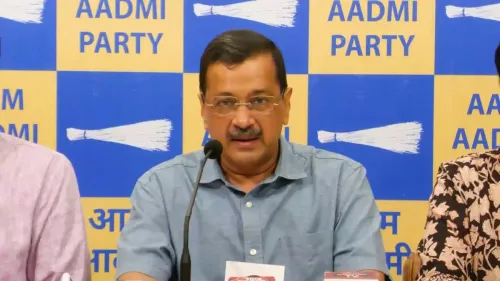
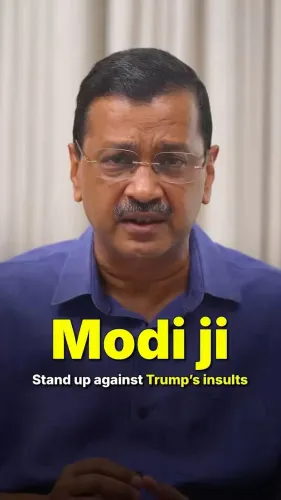
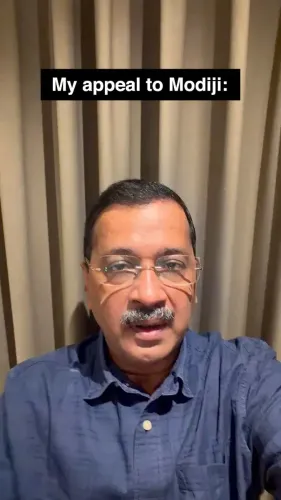
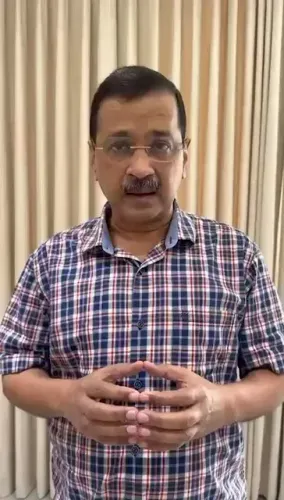
Kejriwal questions if Trump is running Modi govt
Synopsis
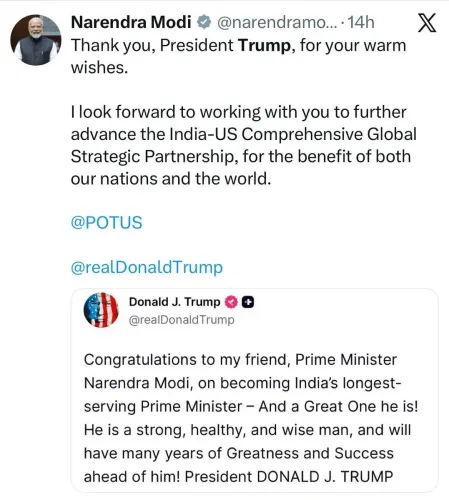
AAP national convenor Arvind Kejriwal accused the Modi government on 7 August 2026 of operating under Donald Trump's pressure, asking pointedly whether Trump is 'running' India's government — reigniting a long-standing opposition critique over India's sovereign foreign policy posture.
Key Takeaways
Arvind Kejriwal posted on 7 August 2026 accusing the Modi government of acting under Donald Trump's 'not so hidden pressure.' He asked directly: 'Is Trump running Modi govt?' — a sharp sovereignty-versus-subservience framing.
The critique echoes a broader opposition argument that India has been excessively deferential to US priorities on trade, immigration and multilateral positions.
Historical flashpoints include the 2019 US tariffs on Indian steel and aluminium and the 'Howdy Modi' rally in Houston that showcased personal bonhomie amid trade friction.
No specific recent government decision is named in the post, and no official response from the BJP or PMO had been issued at the time of publication.
A pointed question — just nine words — landed on Indian political discourse on Friday, 7 August 2026, when AAP national convenor and former Delhi Chief Minister Arvind Kejriwal posted on X asking whether US President Donald Trump is effectively running the Modi government, claiming Trump's 'not so hidden pressure' is visible in every decision coming out of New Delhi.
The charge: Washington's shadow over Raisina Hill
Kejriwal's post, brief but barbed, frames India's foreign and domestic policy choices as reactive to American pressure rather than driven by sovereign national interest. The accusation is not new in Indian opposition politics, but the directness of the framing — naming Trump personally and using the word 'running' — sharpens the rhetorical edge considerably. It is a combative framing designed to force a response.
The broader critique that Kejriwal is tapping into has a documented history. When the Trump administration imposed tariffs on Indian steel and aluminium in 2019, India retaliated with countermeasures before eventually entering protracted trade negotiations. Critics at the time argued New Delhi blinked first. The same year's 'Howdy Modi' event in Houston — a stadium rally co-headlined by Modi and Trump — put the personal warmth of the two leaders on spectacular public display, even as trade friction simmered behind the scenes.
A familiar opposition playbook, sharpened for 2026
Indian opposition parties have repeatedly accused the BJP-led government of excessive deference to US priorities — whether on trade concessions, immigration enforcement cooperation, or positions taken in multilateral forums. The critique tends to resurface whenever a significant India-US announcement is made or perceived concessions emerge. Kejriwal's post suggests a specific recent trigger, though the exact decision or announcement he references is not spelled out in the post itself.
What makes this moment distinct is who is making the charge. Kejriwal leads the Aam Aadmi Party, a national force with a governance record in Delhi and Punjab, giving the accusation a platform beyond pure parliamentary opposition. His framing — sovereignty-versus-subservience — is calculated to resonate with voters who see national pride as a live political issue.
No official response yet
As of publication, neither the Prime Minister's Office nor the BJP has issued a formal response to Kejriwal's post. India-US ties have deepened across multiple administrations through defence pacts, technology-sharing agreements, and diaspora engagement, and the government has consistently maintained that the relationship is one of equals pursuing shared strategic interests.
Whether this post is a prelude to a larger opposition campaign — or a standalone provocation — will become clear in the coming days of parliamentary and public debate.
The question Kejriwal has put on the table is simple. The answer, and who is forced to give it, is what politics will now decide.
Point of View
Unanswerable without sounding defensive, and designed to set an opposition narrative frame before any government rebuttal can land. The 'who is really in charge' attack has historically been potent in Indian politics, where national pride and strategic autonomy carry deep electoral weight. By naming Trump personally rather than 'the United States,' Kejriwal makes the charge visceral and personalised, harder for the BJP to deflect onto abstract geopolitics. Whether the attack gains traction will depend on whether a concrete, verifiable policy decision emerges to anchor it — without that, it risks remaining a rhetorical jab rather than a sustained campaign.
NationPress
7 Aug 2026
Frequently Asked Questions
What did Arvind Kejriwal say about Trump and Modi?
Kejriwal posted on X on 7 August 2026 asking 'Is Trump running Modi govt?' and claimed that Donald Trump's 'not so hidden pressure' is visible in every decision of the Modi government.
Why is Kejriwal criticising Modi's foreign policy?
Kejriwal is invoking a long-standing opposition argument that the BJP-led government has been excessively deferential to US priorities — on trade, immigration cooperation and multilateral forums — at the cost of India's sovereign interests.
What is the history of India-US trade tensions under Trump?
In 2019, the Trump administration imposed tariffs on Indian steel and aluminium; India retaliated with countermeasures before entering trade negotiations. The same period saw the 'Howdy Modi' rally in Houston, which highlighted personal ties even as trade friction continued.
Has the Modi government responded to Kejriwal's post?
As of publication on 7 August 2026, neither the Prime Minister's Office nor the BJP had issued a formal response to Kejriwal's accusation.
What specific Modi government decision is Kejriwal referring to?
Kejriwal's post does not name a specific decision. The post is a broad accusation that Trump's pressure shapes the Modi government's choices across the board, without citing a particular policy or announcement.