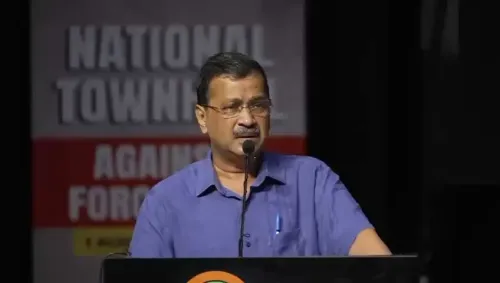
Kejriwal Accuses Modi Govt of Forcing E20 Under US Pressure
Synopsis
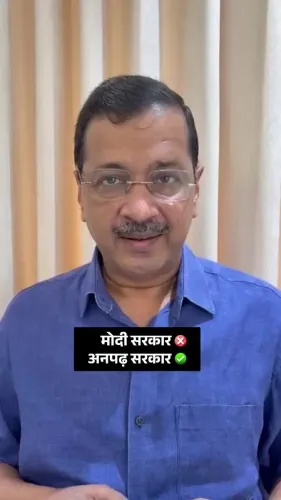
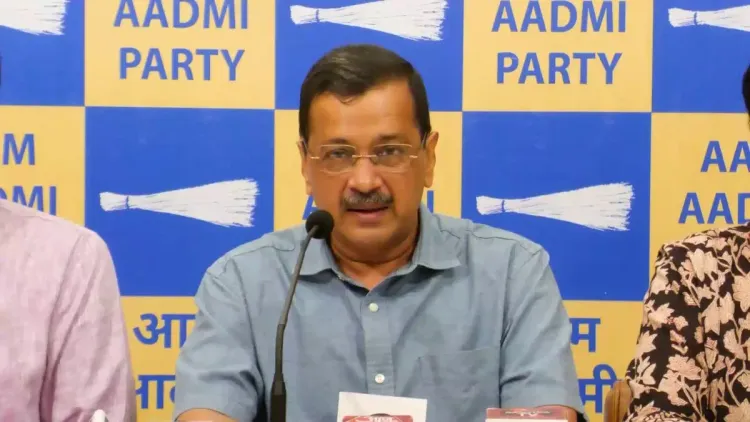
AAP convenor Arvind Kejriwal on 7 August 2026 accused the Modi government of forcing E20 ethanol blending on Indians to absorb surplus US ethanol imports under Trump's pressure, citing infrastructure gaps and zero consumer benefit from the mandate.
Key Takeaways
AAP convenor Arvind Kejriwal on 7 August 2026 alleged the E20 ethanol-blending mandate is being driven by large-scale ethanol imports from the USA under pressure from President Trump .
Kejriwal cited India's lack of adequate storage and transport infrastructure for ethanol-blended petrol as a foundational problem with the rollout.
India's Ethanol Blended Petrol programme began in 2003 ; the 20% blending target was originally set for 2030 but was advanced to 2025 around 2021.
The National Policy on Biofuels 2018 explicitly prioritised domestic feedstock — primarily sugarcane — not imports.
The specific claim of large-scale US ethanol imports linked to diplomatic pressure cannot be independently verified from available public records.
The government has not yet responded to Kejriwal's allegations as of publication.
A pointed political charge landed on Friday afternoon: AAP convenor Arvind Kejriwal accused the Narendra Modi government of pushing the E20 ethanol-blending mandate not for India's energy benefit, but to absorb surplus ethanol imported from the United States under pressure from President Donald Trump. The allegation, posted on 7 August 2026, cuts straight at one of the government's flagship energy-transition programmes.
The Charge: Infrastructure Gaps and an Import Angle
Kejriwal's core argument is two-pronged. First, he contends that India simply does not have the storage and transport infrastructure to handle ethanol-blended petrol at scale. Second, and more explosively, he claims the Modi government is importing large quantities of ethanol from the USA and rolling out E20 domestically to manufacture a demand for that imported surplus. 'People are unhappy, and yet the govt is forcing E20 on the country,' he wrote, framing the policy as a trade concession dressed up as an energy initiative.
What India's Ethanol Programme Actually Says
India's Ethanol Blended Petrol (EBP) programme dates to 2003, conceived to reduce crude oil import bills and find an outlet for agricultural surpluses — primarily sugarcane. The National Policy on Biofuels 2018 set a 20% blending target by 2030, with domestic feedstock as the stated priority. Around 2021, the government accelerated that deadline to 2025, signalling urgency. The programme's stated beneficiaries are sugarcane farmers, vehicle owners who would pay less for imported crude indirectly, and oil marketing companies managing the blend.
Infrastructure constraints — blending depots, specialised storage tanks, dedicated pipelines — have been a documented pressure point since the EBP's early phases. That part of Kejriwal's critique echoes concerns that have been raised within the sector for years.
The US Ethanol Import Claim: What Can and Cannot Be Said
The more incendiary element — that large-scale ethanol imports from the USA are being driven by diplomatic pressure from the Trump administration — cannot be independently verified from available public records. The United States is a major global producer of corn-based ethanol and has held biofuel trade discussions with India, but no confirmed import agreement of the scale Kejriwal describes has been established in the public domain. NationPress is reporting the allegation as made, not as established fact.
What the claim does is reframe E20 from a domestic energy-security story into a geopolitical one — positioning Indian consumers as the end-point of a US-India trade arrangement. That framing, if it gains traction, could complicate the government's narrative around energy self-reliance at a sensitive moment in India-US trade relations.
Why This Accusation Has Political Timing
Kejriwal has consistently positioned AAP as a watchdog on fuel prices and energy costs, issues that resonate acutely with urban middle-class voters — the party's core base. Attacking E20 on both a consumer-welfare angle ('no benefit, people are unhappy') and a sovereignty angle ('Trump's pressure') lets him occupy two registers at once. The government has not yet responded to the specific allegations.
Watchpoints now: whether the Ministry of Petroleum and Natural Gas releases any clarification on ethanol import volumes, and whether opposition parties pick up the US-import angle ahead of any parliamentary session.
Point of View
As gaps in blending and storage have been a known constraint since the EBP's inception. The US-import allegation, however unverified, is the more disruptive element: if it gains any documentary support, it would directly undercut the government's 'energy self-reliance' framing of the biofuel programme. The timing also signals that fuel and trade policy may become a live battleground in the next parliamentary cycle.
NationPress
22 Sept 2026
Frequently Asked Questions
What is the E20 ethanol blending programme in India?
E20 refers to petrol blended with 20% ethanol , part of India's Ethanol Blended Petrol programme that began in 2003. The government advanced its 20% blending target from 2030 to 2025 to cut crude oil imports and utilise agricultural surpluses like sugarcane.
What exactly did Kejriwal allege about E20 and the USA?
Arvind Kejriwal alleged on 7 August 2026 that the Modi government is importing large quantities of ethanol from the United States under pressure from President Trump , and is forcing the E20 mandate domestically to create demand for that imported surplus.
Is India actually importing ethanol from the United States?
The United States is a major global ethanol producer and has held biofuel trade discussions with India. However, the specific claim of large-scale imports linked to political pressure from the Trump administration cannot be verified from available public records as of publication.
What are the infrastructure problems with ethanol-blended petrol in India?
Gaps in blending depots, specialised storage tanks, and dedicated pipelines have been a documented constraint in India's ethanol programme since its early phases. These logistical bottlenecks have slowed consistent rollout of blended fuel across the country.
Has the Modi government responded to Kejriwal's E20 allegations?
As of 7 August 2026 , the government has not issued a public response to Kejriwal's specific allegations about US ethanol imports or the infrastructure readiness of the E20 programme.