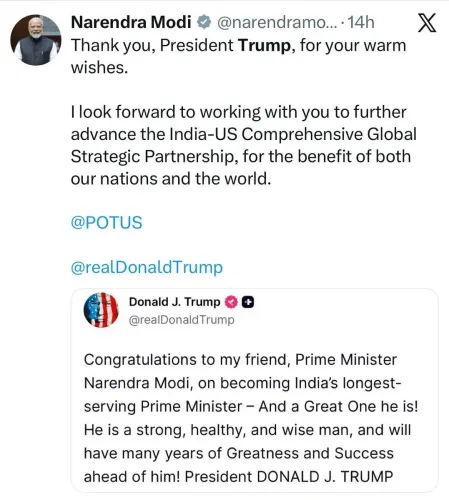
Kejriwal questions PM Modi over fresh 'surrender' to Trump
Synopsis
AAP convenor Arvind Kejriwal fired a sharp rhetorical broadside at PM Modi on 7 August 2026, asking whether India had made 'another surrender' to Donald Trump — reigniting opposition criticism over the government's handling of India-US bilateral negotiations.
Key Takeaways
AAP convenor Arvind Kejriwal posted 'Another surrender by PM before Trump?' on 7 August 2026 , targeting PM Modi's US policy.
The word 'another' frames the alleged concession as part of a recurring pattern, not an isolated event.
Opposition criticism of the Modi government's India-US stance dates back to at least 2019 , when the US revoked India's GSP trade status under the first Trump term.
The specific policy trigger for the August 2026 post has not been officially confirmed.
The post reflects a broader domestic political contest over who defines India's foreign policy wins and losses.
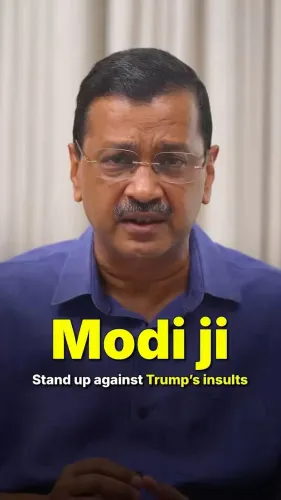
A pointed two-word question from AAP convenor Arvind Kejriwal on 7 August 2026 cut through the morning news cycle — 'Another surrender by PM before Trump?' — framing India's latest dealings with Washington as a pattern of capitulation rather than diplomacy.
The charge and what sits behind it
Kejriwal's post carries no elaboration, but its political grammar is deliberate. The word 'another' is doing the heavy lifting — it presupposes a prior episode of surrender, inviting the reader to supply the evidence from memory. It is a classic opposition move: a rhetorical question that functions as an indictment.
The backdrop is a years-long pattern of AAP and other opposition parties accusing Prime Minister Narendra Modi's government of yielding ground to Washington on trade, technology exports, and immigration policy. That criticism first gained traction when the United States terminated India's Generalized System of Preferences (GSP) status in 2019 under the first Trump administration — a move that cost Indian exporters duty-free access to one of their largest markets. The Modi government's measured, non-retaliatory response drew fire from the opposition at the time.
Why 'Trump' still lands as a political weapon in 2026
Donald Trump's return to the White House has revived the same fault lines. India-US trade and technology negotiations have again become a domestic political flashpoint, with opposition leaders watching every bilateral dialogue for signs of Indian concessions. Kejriwal's post plugs directly into that live wire.
The specific policy action or statement that triggered the August 2026 post has not been confirmed, but the political intent is unmistakable: to define the Modi government's foreign policy posture as weakness dressed up as partnership. Whether that framing sticks will depend on what details emerge from the next round of India-US trade or technology talks — and whether the government chooses to respond.
For now, the question hangs in the air, unanswered — which, for an opposition politician, is often answer enough.
Point of View
He forces the government to either deny something unspecified or stay silent and let the charge settle. This tactic has a long lineage in Indian politics: framing bilateral diplomacy as national humiliation is far easier when details are scarce and nationalist sentiment is high. The real test is whether a concrete policy concession emerges to give the charge substance — without that, the post risks being remembered as noise rather than signal.
NationPress
7 Aug 2026
Frequently Asked Questions
What did Arvind Kejriwal say about PM Modi and Trump?
On 7 August 2026 , Kejriwal posted 'Another surrender by PM before Trump?' on X, implying that Prime Minister Modi had again made concessions to the United States under Donald Trump.
What is the GSP and why does it matter to India-US relations?
The Generalized System of Preferences (GSP) was a US trade programme that gave Indian exporters duty-free access to American markets. The US revoked India's GSP status in 2019 under Trump's first term, sparking trade tensions that opposition parties used to criticise the Modi government's response as too soft.
Has Kejriwal criticised Modi's foreign policy before?
Yes. AAP and Kejriwal have periodically attacked the Modi government's handling of India-US relations, particularly on trade tariffs and technology export controls, accusing the government of prioritising optics over Indian interests.
What specific policy triggered Kejriwal's August 2026 post?
The specific government action or bilateral agreement that prompted the post has not been officially confirmed. Kejriwal's post itself provides no details beyond the rhetorical question.
How has the BJP responded to such criticism on India-US ties?
The BJP has historically defended the Modi government's engagement with Washington as 'strategic partnership' that advances Indian interests, dismissing opposition criticism as politically motivated and uninformed on diplomatic nuance.