Kejriwal Questions SIT Mandate on Land Scam Probe
Synopsis
AAP convenor Arvind Kejriwal has questioned the mandate and intent of an SIT probing an alleged land scam, after MP Sanjay Singh was told the body was not examining land irregularities. Kejriwal predicted the probe would yield nothing, citing a similar outcome from a previous SIT.
Key Takeaways
AAP MP Sanjay Singh approached the SIT with documents on an alleged land scam and was told the body was not probing land irregularities.
Arvind Kejriwal publicly questioned what the SIT is actually investigating, given this reported exclusion.
Kejriwal referenced a previous SIT on a similar matter that he said produced no results, predicting the same outcome this time.
The statement was made on 2 July 2026 and fits a broader AAP strategy of highlighting perceived inaction by investigative bodies.
The SIT's exact mandate and the government that constituted it have not been officially clarified in response to the AAP's claims.
AAP is expected to pursue the matter in Parliament and potentially in court to seek expansion or replacement of the current probe.
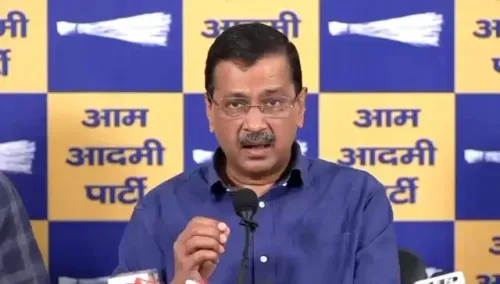
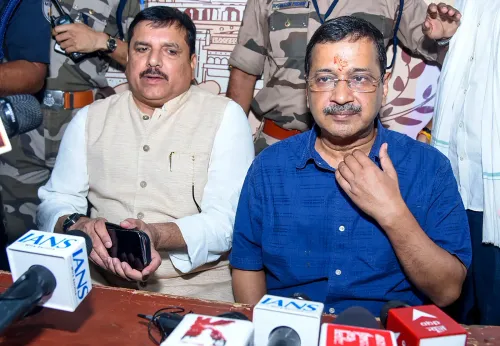
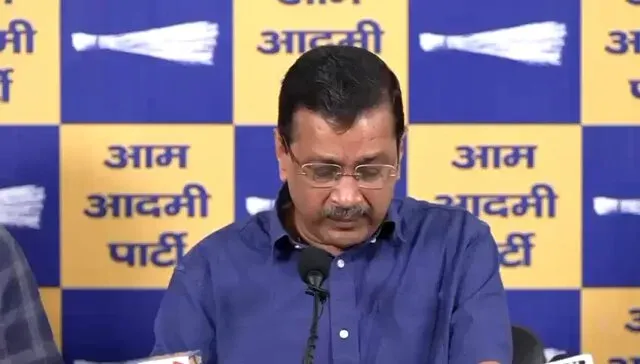
AAP convenor Arvind Kejriwal on Thursday, 2 July 2026, publicly questioned the scope and intent of a Special Investigation Team (SIT) probing an alleged land scam, after party MP Sanjay Singh reportedly approached the body with documentary evidence and was told the SIT was not examining land-related irregularities.
Posting in Hindi on X, Kejriwal said: 'हमारे सांसद संजय सिंह जी जब ज़मीनों के घोटाले के कागज़ लेकर SIT के सामने गए, तो SIT ने कहा कि हम ज़मीनों के घोटाले की जांच ही नहीं कर रहे।' ('When our MP Sanjay Singh went before the SIT with documents related to the land scam, the SIT said it was not investigating land scams at all.')
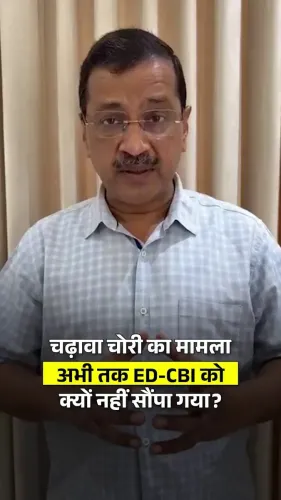
Kejriwal then posed a pointed question: 'Then what is the SIT doing?' He added that a previous SIT had also been constituted and yielded nothing, predicting the current one would similarly produce no results.
Context
Sanjay Singh is an AAP Rajya Sabha MP known for raising corruption-related allegations in Parliament and in the public domain. His appearance before the SIT with what the party describes as documentary proof of land irregularities marks an escalation in AAP's push to have the alleged scam formally investigated.
The SIT's reported response — that land scams fall outside its current mandate — is the immediate trigger for Kejriwal's statement. The AAP is using this episode to argue that the investigative body is either deliberately limited in scope or structurally incapable of delivering accountability.
Policy Backdrop
Special Investigation Teams in India are constituted either by courts or by governments to probe specific, often high-profile, allegations of wrongdoing. Their mandate is defined at the time of constitution and can be narrow or broad depending on the terms of reference.
Opposition parties across the political spectrum have, over successive governments, raised questions about the scope and independence of SITs and analogous bodies such as the Central Bureau of Investigation (CBI). The charge of 'mandate limitation' — that an investigative body is deliberately kept from examining the most damaging allegations — is a recurring theme in Indian political discourse.
Kejriwal's reference to a 'previous SIT' that also produced no outcome suggests AAP views the current body as part of a pattern rather than an isolated instance. However, the specific details of that earlier SIT and the current one's terms of reference could not be independently confirmed at the time of publication.
Stakeholders and Impact
For AAP, the statement serves a dual purpose: keeping the land scam allegation in public focus and simultaneously framing the SIT as an instrument of inaction rather than accountability. Sanjay Singh's direct engagement with the SIT lends the claim an institutional dimension beyond a press conference.
The SIT and the government that constituted it now face public pressure to clarify the exact scope of the probe. If the SIT's mandate genuinely excludes land transactions, that definition will likely be contested in court or in Parliament. Affected landowners, civil society groups, and legal observers will be watching whether the mandate is revised or challenged.
What's Next
AAP is expected to raise the issue in Parliament and may seek judicial intervention to either expand the SIT's mandate or demand a fresh, court-monitored probe. Any formal response from the SIT or the government will be critical in determining whether the controversy remains a political exchange or escalates into a legal battle.
Court hearings related to the land scam, if any are already scheduled, could provide the next concrete milestone. Kejriwal's framing — that 'nothing will happen this time either' — sets up a political accountability test: if the SIT concludes without addressing land irregularities, AAP will cite this post as an early, on-record prediction of institutional failure.
Point of View
But as structurally incapable of addressing the core allegation — a more damaging charge than simple delay. By citing a prior SIT that also failed to deliver, he is building a narrative of systemic, repeated impunity rather than a one-off lapse. The invocation of Sanjay Singh's direct, documented engagement with the body gives the claim procedural weight that a press conference alone would lack. If the SIT does not publicly clarify its mandate, the political cost of silence will accumulate on the side of the government that constituted it.
NationPress
2 Jul 2026
Frequently Asked Questions
What did Arvind Kejriwal say about the SIT and land scam?
Kejriwal said that when AAP MP Sanjay Singh presented documents on an alleged land scam to the SIT, the body told him it was not investigating land scams. He questioned what the SIT was actually doing and predicted it would produce no results, as a previous SIT had also failed to act.
Who is Sanjay Singh and what did he do before the SIT?
Sanjay Singh is an AAP Rajya Sabha MP known for raising corruption allegations. He appeared before the SIT with documents related to an alleged land scam, but was reportedly told the probe did not cover land irregularities.
What is an SIT in India?
A Special Investigation Team (SIT) in India is a body constituted by a court or government to investigate specific allegations. Its mandate is defined at the time of formation and can be broad or narrow in scope.
Has an SIT probed this land scam before?
Kejriwal stated that a previous SIT was also formed for a similar purpose and produced no outcome. The specific details of that earlier SIT could not be independently verified at the time of publication.
What action could AAP take next on the SIT land scam issue?
AAP is likely to raise the matter in Parliament and may seek judicial intervention to expand the SIT's mandate or demand a fresh court-monitored probe into the alleged land irregularities.