Kejriwal slams Modi over crackdown on student protesters
Synopsis
AAP convenor Arvind Kejriwal on 20 July 2026 condemned the reported use of lathi charges and tear gas against student protesters, accusing PM Modi of attacking India's youth rather than reforming the examination system. The statement escalates opposition pressure over NEET and JEE integrity concerns.
Key Takeaways
Arvind Kejriwal on 20 July 2026 accused the Modi government of using lathi charges and tear gas against student protesters.
Kejriwal said PM Modi had 'directly attacked the country's youth' instead of fixing the education and examination system.
He warned that young Indians would 'not tolerate Modi's arrogance at all.' The statement follows recurring allegations of paper leaks in centralised exams such as NEET and JEE , which have triggered student demonstrations across multiple states.
The National Education Policy 2020 and its implementation remain a contested political issue between the BJP-led Centre and opposition parties.
The specific protest incident referenced on 20 July 2026 has not been independently verified as of publication.
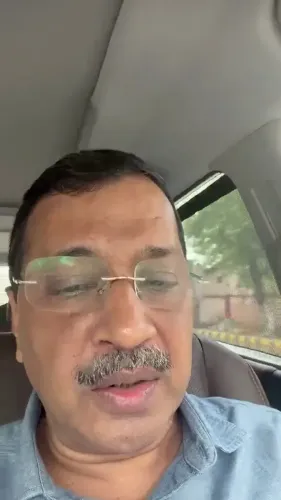
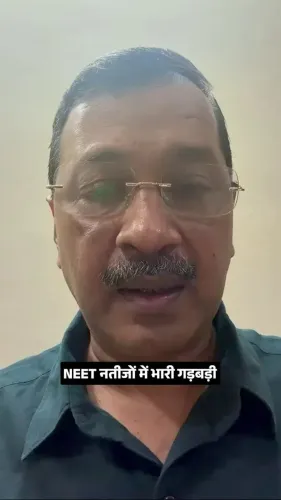
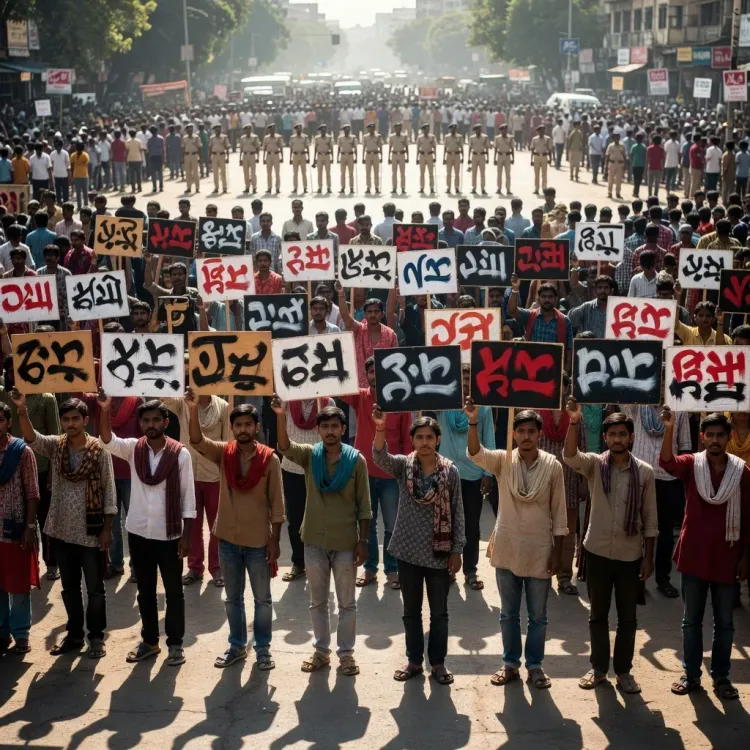
AAP convenor Arvind Kejriwal on Monday, 20 July 2026, sharply condemned the reported use of lathi charges and tear gas against student demonstrators, accusing the Modi government of attacking the country's youth instead of fixing the examination system.
In a post on X, Kejriwal wrote: 'हमारे बच्चों पर लाठी चार्ज कर रहे हैं, आँसू गैस के गोले छोड़े जा रहे हैं।' ('Lathi charges are being carried out on our children, tear-gas shells are being fired.') He added that Prime Minister Narendra Modi appeared to have 'directly attacked the country's youth' rather than reforming the education and examination system, and warned that young Indians would 'not tolerate Modi's arrogance at all.'
Context
The post comes amid a broader wave of student unrest across India linked to concerns over examination integrity, particularly around centralised entrance tests. Opposition leaders, including those from the Aam Aadmi Party, have accused the central government of responding to student grievances with police force rather than systemic reform. The research background flags that the specific lathi-charge and tear-gas incident referenced on 20 July 2026 is yet to be independently confirmed.
Kejriwal, a former Chief Minister of Delhi who built his political identity around public education reform, has consistently positioned AAP as the party of students and teachers. His intervention on this issue follows a pattern of AAP challenging the BJP-led central government on education governance.
Policy Backdrop
The National Education Policy (NEP) 2020, approved by the Union Cabinet in July 2020, replaced the 1986 education policy and introduced sweeping changes including a four-year undergraduate programme and restructured school curricula. Critics have argued that implementation has been uneven and that the policy's rollout has coincided with growing student anxiety over competitive examinations.
Centralised entrance examinations such as NEET and JEE have faced repeated allegations of paper leaks in recent years, triggering demonstrations in multiple states. Opposition parties have used these incidents to argue that the government's priorities lie with administrative expansion rather than ensuring a fair and transparent examination process for millions of aspirants.
Stakeholders and Impact
The primary stakeholders are crores of exam aspirants — students preparing for NEET, JEE, and other centralised tests — whose futures depend on the integrity and smooth functioning of the national examination framework. Their families, coaching institutions, and state governments managing law and order around protest sites are all directly affected.
Kejriwal's statement is also directed at a political constituency: young, first-time voters and urban middle-class families who have historically been responsive to AAP's education-focused messaging. By framing the government's response as one of 'arrogance' rather than accountability, he is seeking to consolidate opposition sentiment ahead of any upcoming electoral cycle.
What's Next
Attention will now turn to the Ministry of Education for any official response to the protests and whether new examination reform measures will be announced. The next session of Parliament is expected to see opposition pressure on education-related legislation, with AAP and other parties likely to raise the issue on the floor. How the government chooses to respond — through dialogue with students or continued law-and-order measures — will shape the political narrative around youth and education in the months ahead.
Point of View
He shifts the debate from the specifics of any one protest to a broader indictment of the government's relationship with young India. This follows a well-established opposition playbook: linking examination failures, paper leaks, and student unrest into a single narrative of governance collapse at the Centre. The political salience of this issue is high given that exam aspirants and their families constitute a large, motivated, and electorally significant demographic.
NationPress
21 Jul 2026
Frequently Asked Questions
Why is Kejriwal criticising Modi over student protests?
Kejriwal accused PM Modi of using lathi charges and tear gas against student protesters instead of fixing examination irregularities in centralised tests like NEET and JEE, calling it a direct attack on India's youth.
What is the NEET controversy in India?
NEET, the National Eligibility cum Entrance Test for medical admissions, has faced repeated allegations of paper leaks and irregularities, triggering student protests across multiple Indian states and drawing opposition criticism of the central government.
What is the National Education Policy 2020?
The National Education Policy 2020 was approved by the Union Cabinet in July 2020 to replace the 1986 education policy. It introduced a four-year undergraduate programme and restructured school curricula, but its implementation has been contested by opposition parties and student groups.
What did Kejriwal say about Modi and students on 20 July 2026?
Kejriwal posted on X that lathi charges and tear-gas shells were being used on students, and that Modi had chosen to 'directly attack the country's youth' rather than reform the education and examination system. He warned that youth would not tolerate this 'arrogance.'
Has AAP spoken about education reforms before?
Yes. AAP has consistently positioned itself as a party focused on education reform, citing improvements to government schools in Delhi during Kejriwal's tenure as Chief Minister. The party has repeatedly criticised the Centre's handling of NEET and JEE examinations.