Kejriwal Slams NHRC Over Punjab Pilgrimage Bus Checks
Synopsis
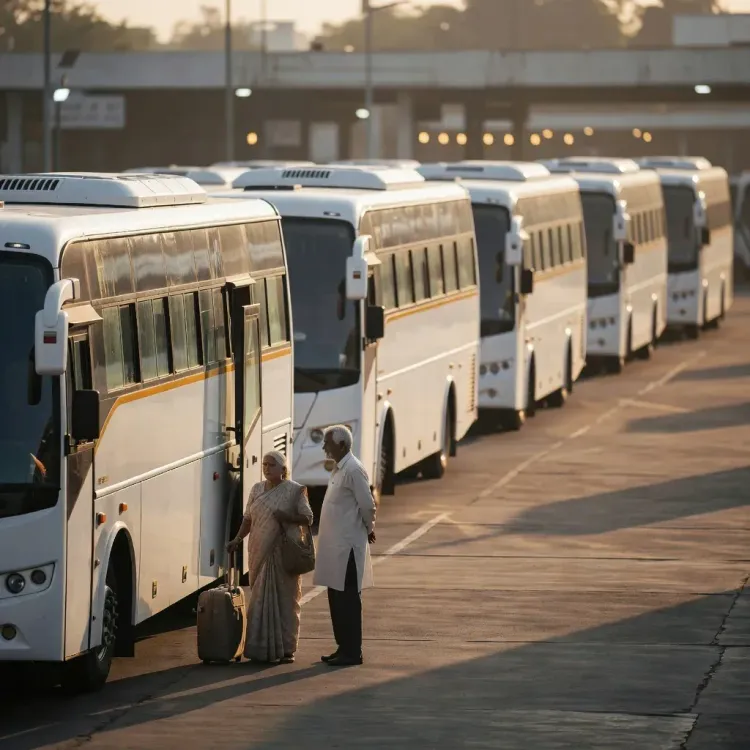
AAP convenor Arvind Kejriwal accused the NHRC of conducting its first-ever bus inspection exclusively on Punjab's elderly pilgrimage coaches while ignoring UP Roadways and other state fleets, calling it a politically motivated attempt to disrupt the AAP government's free pilgrimage scheme.
Key Takeaways
Kejriwal alleges the NHRC inspected only Punjab's super-deluxe pilgrimage buses, calling it selective and unprecedented.
The NHRC is India's statutory apex human rights body established under the Protection of Human Rights Act, 1993 .
Inspection objections reportedly included standard features like the driver-passenger partition in long-distance coaches.
Kejriwal directly addressed PM Modi , accusing him of trying to stop elderly citizens' religious travel.
UP Roadways and other state bus fleets were, according to Kejriwal, not subjected to similar checks.
The NHRC had not issued a public clarification on the scope of its inspection as of the post date.
India's apex human rights body singled out Punjab's free elderly pilgrimage buses for inspection — and AAP convenor Arvind Kejriwal wants the country to know it. On Saturday, 24 October 2026, Kejriwal posted a sharp political charge on X, alleging that the National Human Rights Commission (NHRC) conducted what he called its first-ever bus inspection — and trained it exclusively on the super-deluxe coaches ferrying elderly pilgrims across Punjab, while leaving the fleets of other states, including Uttar Pradesh Roadways, entirely untouched.
In his post, Kejriwal catalogued the questions he says no one in New Delhi is answering: 'क्या NHRC ने यूपी रोडवेज की बसों की जाँच की? नहीं।' ('Did NHRC inspect UP Roadways buses? No.') The inspection, he claimed, flagged issues as minor as the partition between drivers and passengers — a standard safety feature in long-distance coaches. His conclusion was blunt: the action is aimed not at road safety but at disrupting the AAP Punjab government's flagship free pilgrimage scheme for the elderly.
What NHRC Inspected — and What It Skipped
The NHRC, constituted under the Protection of Human Rights Act, 1993, is empowered to inquire into violations of human rights and can suo motu examine public welfare grievances. Kejriwal's allegation is that the commission deployed that power in a narrowly targeted way — scrutinising only the super-deluxe buses Punjab uses for its state-funded elderly pilgrimage programme, and raising objections to features that would ordinarily be considered routine on intercity coaches.
He did not stop at the institutional critique. Addressing Prime Minister Narendra Modi directly, he wrote: 'मोदी जी, क्यों बुजुर्गों की तीर्थयात्रा रोकने पे लगे हो?' ('Modi ji, why are you bent on stopping the pilgrimage of the elderly?') The post closed with a warning that Punjab's seniors — and Punjabis broadly — would remember the interference, invoking religious and moral weight against the Centre.
Selective Federalism or Legitimate Oversight?
The allegation fits a pattern Indian opposition parties have pressed repeatedly in recent years: that central statutory bodies are deployed with greater intensity against states governed by rival parties. AAP, which controls Punjab, has been at the centre of several such disputes since winning the state in 2022. Whether the NHRC acted on a specific complaint or initiated a suo motu inquiry — and whether comparable inspections have been conducted in other states — remains publicly unconfirmed.
What is clear is the political arithmetic Kejriwal is running. Punjab has a large Sikh population with deep attachments to pilgrimage traditions, and any perception that the Central government is obstructing access to religious travel for elderly citizens carries real emotional and electoral charge. The free pilgrimage scheme is one of AAP's most visible welfare offerings in the state.
The NHRC has not issued a public statement in response. If the commission releases the scope and findings of its inspection, the facts will either validate Kejriwal's charge of selective targeting — or provide the institutional reasoning he says is missing. Until then, the political fire he has lit will keep burning.
Point of View
He moves the debate from regulatory compliance to moral injury, a terrain where the BJP's central machinery is structurally difficult to defend. The broader pattern of AAP-versus-Centre friction over institutional scrutiny has recurred across Delhi and Punjab, and each episode reinforces AAP's core narrative of victimhood-as-governance. Whether or not the NHRC acted selectively, the political damage from the perception of interference with religious travel could outlast any formal clarification.
NationPress
24 Oct 2026
Frequently Asked Questions
What did Kejriwal accuse the NHRC of doing to Punjab buses?
Kejriwal alleged that the NHRC conducted its first-ever bus inspection exclusively on Punjab's super-deluxe pilgrimage coaches used for the state's free elderly pilgrimage scheme, while skipping UP Roadways and other state bus fleets entirely.
What is the NHRC and can it inspect state buses?
The National Human Rights Commission is India's statutory apex body for human rights protection, established under the Protection of Human Rights Act, 1993. It is empowered to inquire into human rights violations and can examine public welfare grievances suo motu, which could include public transport safety.
What is Punjab's free pilgrimage scheme for the elderly?
The AAP-led Punjab government runs a scheme that provides free pilgrimage travel for elderly citizens using super-deluxe buses. It is one of AAP's flagship welfare programmes in the state and is deeply significant given Punjab's large Sikh population and religious travel traditions.
Why did Kejriwal target PM Modi over the NHRC inspection?
Kejriwal directly accused PM Modi of trying to stop elderly citizens' religious travel, framing the NHRC's action as politically motivated interference by the Centre against an AAP-governed state rather than a genuine road-safety exercise.
Has the NHRC responded to Kejriwal's allegations?
As of Kejriwal's post on 24 October 2026, the NHRC had not issued a public statement clarifying the scope of its bus inspections or whether similar checks were conducted in other states.