Kejriwal Extends Delhi School Model to Punjab's Poor

Synopsis
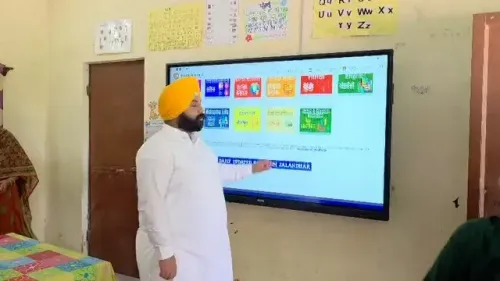
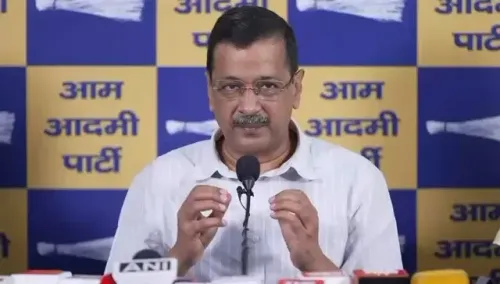
AAP convenor Arvind Kejriwal on 22 July 2026 shared a video on X highlighting quality education being provided to poor children in Punjab, positioning it as an extension of Delhi's acclaimed government school reforms under AAP rule since 2015.
Key Takeaways
Arvind Kejriwal posted on 22 July 2026 about quality education now being provided to poor children in Punjab , sharing a video of the initiative.
Kejriwal directly linked quality public education to national development, framing it as essential for a 'developed and prosperous' India.
AAP began upgrading Delhi government schools from 2015 , covering infrastructure, libraries, teacher training and monitoring systems.
After winning the 2022 Punjab assembly elections , AAP announced it would replicate Delhi's school-reform model in the state.
The Punjab rollout faces a larger challenge than Delhi given the state's extensive rural geography and bigger school network.
Official learning-outcome surveys and teacher recruitment data from Punjab will be the key indicators of whether the model is succeeding at scale.
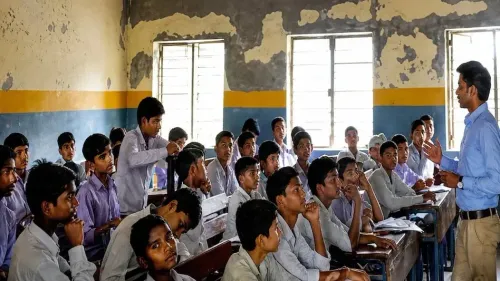
AAP convenor Arvind Kejriwal on Wednesday, 22 July 2026, shared a video on X highlighting the rollout of quality education for children from low-income families in Punjab, drawing a direct line from the school-reform model his party first implemented in Delhi. The post signals that the Aam Aadmi Party is actively exporting its flagship education agenda from the national capital to its second state government.
In the post, Kejriwal wrote — 'अगर हमें अपने देश को विकसित और समृद्ध बनाना है तो सभी बच्चों को अच्छी शिक्षा देना ज़रूरी है' ('If we want to make our country developed and prosperous, it is essential to give all children a good education'). He added that after Delhi, Punjab has now begun providing 'excellent education' to children of the poor, and invited followers to watch the video, saying it would 'make your heart happy.'
Context
The post arrives more than four years after AAP swept the 2022 Punjab assembly elections, forming the state's first non-Congress, non-Akali government in decades. One of the party's early commitments in Punjab was to replicate the school-transformation playbook that earned it national attention during its tenure in Delhi from 2015 onward. Kejriwal's framing — linking education quality directly to national prosperity — is consistent with the party's long-standing public messaging on governance.
The reference to a video, while the specific content cannot be independently verified, suggests the party is now at a stage where it is showcasing visible, on-ground results of those Punjab education initiatives to a national audience.
Policy Backdrop
From 2015, the Delhi AAP government undertook systematic upgrades to government schools: structural repairs, new libraries, teacher recruitment and training drives, and monitoring systems aimed at improving accountability. The improvements were widely cited in public discourse as a model for state-led education reform without reliance on privatisation.
After winning Punjab in 2022, the AAP administration announced it would adapt these Delhi-tested measures — including school infrastructure upgrades and administrative monitoring frameworks — to Punjab's larger and more agrarian school system. The scale of Punjab's challenge differs from Delhi's, given the state's sprawling rural geography compared to the compact urban territory of the national capital.
Stakeholders and Impact
The primary beneficiaries, as framed by Kejriwal, are children from poor families enrolled in government schools across Punjab. For this demographic, access to quality public education has historically been limited by inadequate infrastructure, teacher shortages, and low learning outcomes in state-run institutions.
Politically, the push also matters for AAP's national ambitions: demonstrating that the Delhi education model is replicable in a diverse, larger state strengthens the party's claim to a governance-first identity ahead of future electoral cycles. Teachers' unions, parent communities, and civil society groups monitoring learning outcomes are all key stakeholders watching the Punjab rollout.
What's Next
Attention will now turn to official learning-outcome surveys and infrastructure completion reports from Punjab districts, which would provide measurable evidence to support or qualify the claims being made. Teacher recruitment drives and the pace of school infrastructure projects in rural Punjab are the metrics most likely to define whether the Delhi model translates at scale.
If Punjab's government school results improve in standardised assessments, AAP is likely to position education as a central plank in whichever states it contests next — making the Punjab experiment a potential template for the party's broader national strategy.
Point of View
AAP is trying to demonstrate that its Delhi education model is not a one-city anomaly but a transferable system. This matters because Punjab is the party's only other state government, making it the sole laboratory available to test that claim at scale. The timing — well into AAP's Punjab tenure — suggests the party believes it now has enough visible results to invite public scrutiny rather than deflect it. If Punjab's learning outcomes improve measurably, it could reframe AAP's national identity from a protest movement to a credible governance party, a shift with significant implications for Indian opposition politics.
NationPress
21 Oct 2026
Frequently Asked Questions
What did Arvind Kejriwal say about education in Punjab?
On 22 July 2026, Kejriwal posted on X that after Delhi, AAP has now begun providing excellent education to children of the poor in Punjab as well, sharing a video of the initiative and saying it would 'make your heart happy.'
How did AAP improve government schools in Delhi?
From 2015, the AAP government in Delhi undertook large-scale upgrades to government schools including building repairs, new libraries, teacher recruitment drives and monitoring systems to improve accountability and learning outcomes.
Is AAP replicating Delhi's school model in Punjab?
Yes. After winning the 2022 Punjab assembly elections, the AAP government announced plans to adapt Delhi's school infrastructure and administrative monitoring measures to Punjab's government school system.
Who benefits from AAP's education reforms in Punjab?
The primary beneficiaries are children from low-income families enrolled in Punjab government schools, who previously had limited access to quality public education due to infrastructure gaps and teacher shortages.
What should we watch for next in Punjab's education reform?
Key indicators to watch include official learning-outcome surveys from Punjab districts, the pace of school infrastructure projects, and teacher recruitment drives — all of which will show whether the Delhi model scales in a larger, more rural state.