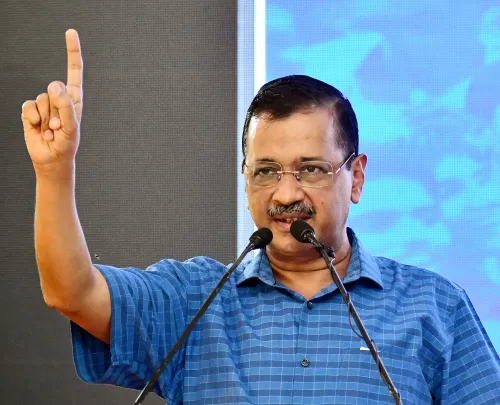
Kejriwal contrasts BJP's Nasha Mukt Yatra with AAP's Ludhiana pledge drive
Synopsis
AAP convenor Arvind Kejriwal on 29 September 2026 used Bhagat Singh's birth anniversary to contrast a media report on BJP's Nasha Mukt Yatra in Punjab with images of lakhs taking an anti-drug oath in Ludhiana, sharpening AAP's anti-drug narrative against the BJP.
Key Takeaways
Kejriwal posted on 29 September 2026 , Bhagat Singh's birth anniversary, contrasting BJP's Nasha Mukt Yatra with a mass AAP-linked anti-drug event in Ludhiana .
The first image cited a Dainik Bhaskar report questioning the state of BJP's Punjab drug campaign; the second showed a large crowd taking an oath against drugs.
Drug abuse has been a central political issue in Punjab since the 2017 assembly elections , with every major party promising eradication.
AAP has governed Punjab since 2022 , making anti-drug policy a key plank of its state record.
The BJP Punjab unit had not issued a public response at the time of publication.
State government data on drug seizures and de-addiction performance — the most concrete measure of either campaign — remains to be released publicly.
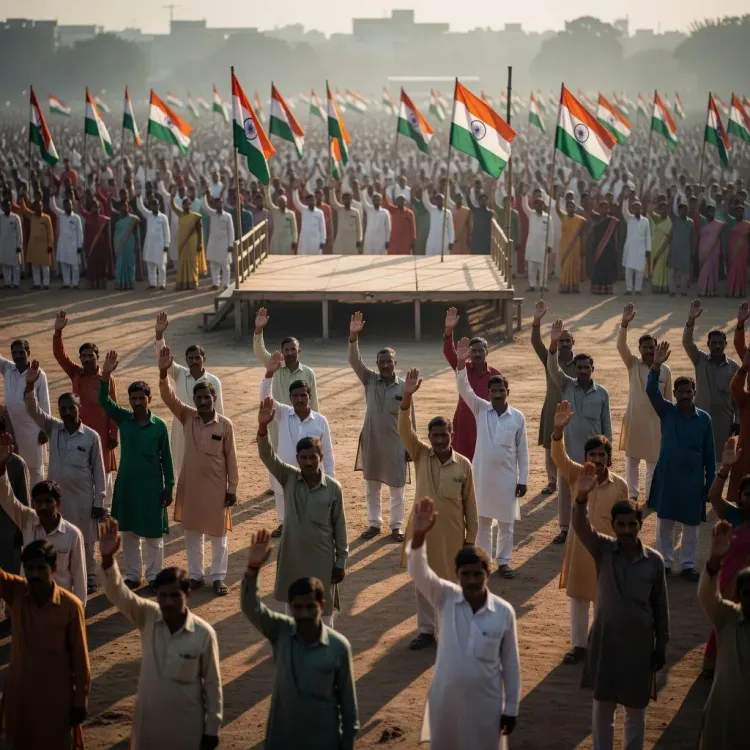
On Bhagat Singh's birth anniversary, a city of millions took an oath against drugs — and AAP convenor Arvind Kejriwal made sure the contrast with the rival BJP's anti-drug campaign was impossible to miss. On Tuesday, 29 September 2026, Kejriwal posted two images on X: one from a Hindi daily's report on the state of BJP's Nasha Mukt Yatra in Punjab, and one showing a massive crowd gathered in Ludhiana pledging to fight drug abuse on the occasion of the revolutionary freedom fighter's birthday.
In his post, Kejriwal wrote — 'Pehli tasveer — Dainik Bhaskar ki report. Jo dikhati hai ki Punjab mein BJP ki Nasha Mukt Yatra ka kya haal hai. Doosri tasveer — Ludhiana mein Shaheed Bhagat Singh ke janamdin ke avsar par laakhon ki sankhya mein ekatra log nashe ke khilaf shapath lete hue.' ('First image — a Hindi daily's report, which shows the state of BJP's Nasha Mukt Yatra in Punjab. Second image — lakhs of people gathered in Ludhiana on the occasion of Martyr Bhagat Singh's birthday, taking an oath against drugs.')
Bhagat Singh's birthday as a political flashpoint in Punjab
Bhagat Singh, born on 28 September 1907 in Punjab, remains one of independent India's most invoked revolutionary icons — and his birth anniversary has long been a mobilisation moment for parties across the spectrum. The choice of his birthday for a mass anti-drug oath-taking in Ludhiana, Punjab's largest city, carries deliberate symbolic weight: a martyr who gave his life for the nation's freedom, deployed as moral authority against a crisis that has claimed the freedom of a generation of Punjab's youth.
Drug abuse has shadowed Punjab's politics since at least the 2017 assembly elections, when every major party promised eradication as a flagship commitment. AAP swept to power in the state in 2022 with drug-free Punjab as a central plank, and since then the issue has become a persistent site of partisan contestation between the ruling AAP and the BJP, which has run its own Nasha Mukt Yatra campaign across the state.
BJP's Nasha Mukt Yatra under scrutiny
Kejriwal's first image — drawn from a report by Dainik Bhaskar, a widely read Hindi daily — is framed as evidence that BJP's campaign has fallen short. The specific content of that report cannot be independently verified from available data, but the strategic logic is clear: by placing a media report critical of the BJP campaign alongside images of a large AAP-affiliated public gathering, Kejriwal is drawing a direct 'optics vs. outcomes' contrast ahead of what remains a politically charged environment in Punjab.
Anti-drug campaigns in India's states have a pattern of becoming as much about political credit as public health. When a rival party's programme can be shown — through press coverage — to be struggling, it becomes ammunition. When your own party can show lakhs gathered in a single city on a nationally resonant date, it becomes a counter-narrative.
What the Ludhiana gathering signals
Mass public oath-taking events on social issues are a well-established feature of Indian political communication — they generate imagery, they claim scale, and they tie a party's record to a community's aspiration. Holding one on Bhagat Singh's birth anniversary in Ludhiana — a city central to Punjab's industrial and cultural identity — amplifies all three effects simultaneously for AAP.
The BJP Punjab unit has not yet issued a public response to Kejriwal's post. State government data on drug seizures and de-addiction centre performance, which would offer a more granular measure of either campaign's real-world impact, also remains to be released in the public domain.
Punjab's drug crisis is too real and too deep to be resolved by any single campaign or oath-taking event — but in the theatre of Indian state politics, the battle over who is seen to be fighting it hardest is already well underway.
Point of View
Amplified through press coverage, to elevate one's own party's visible action. By anchoring the Ludhiana gathering to Bhagat Singh's birth anniversary, AAP layers moral authority onto what is essentially a political event, making it harder for critics to dismiss without appearing to dismiss the icon himself. The move fits a broader AAP pattern since 2022: governing Punjab while simultaneously using Delhi's national platform to frame the state's challenges as BJP failures rather than inherited governance problems. With no official BJP rebuttal yet and no hard state data in the public domain, the narrative window remains open — and Kejriwal has moved first to fill it.
NationPress
29 Sept 2026
Frequently Asked Questions
What is BJP's Nasha Mukt Yatra in Punjab?
Nasha Mukt Yatra is an anti-drug awareness campaign run by the BJP in Punjab, aimed at mobilising communities against drug abuse. Kejriwal's post cited a Hindi daily's report questioning the campaign's effectiveness.
Why was an anti-drug oath taken in Ludhiana on 28-29 September?
The event was held on the occasion of revolutionary freedom fighter Bhagat Singh's birth anniversary on 28 September . His legacy is frequently invoked in Punjab for public mobilisation on social issues.
Is drug abuse really a big problem in Punjab?
Yes. Drug abuse, particularly among youth, has been a documented and politically significant crisis in Punjab for over a decade, featuring as a major issue in the 2017 and 2022 assembly elections.
What has AAP done about drugs in Punjab since coming to power in 2022?
AAP made a drug-free Punjab a central 2022 election promise and has cited public awareness drives and de-addiction initiatives as part of its record, though independent data on outcomes remains limited in the public domain.
Has BJP responded to Kejriwal's post about the Nasha Mukt Yatra?
As of the time of publication, the BJP Punjab unit had not issued a public response to Kejriwal's 29 September 2026 post on X.