Kejriwal Targets 'Donation Thieves', Calls for Govt Change
Synopsis
AAP convenor Arvind Kejriwal on 1 July 2026 invoked Lord Ram to condemn alleged 'donation thieves', accused the current government of shielding them, and called on citizens to boycott the accused while demanding a change of government for real accountability.
Key Takeaways
AAP convenor Arvind Kejriwal posted on X on 1 July 2026 targeting individuals he called chanda chor (donation thieves).
He warned that Lord Ram would punish those who misuse religious donations, framing the issue in both spiritual and legal terms.
Kejriwal accused the current government of complicity, saying 'they are all in it together' and it would never act against the accused.
He called for a public boycott of the alleged donation thieves and their associates as a form of social accountability.
He explicitly linked accountability to electoral change, saying: 'If you want to punish the donation thieves, first change the government.' The post follows years of controversy over religious and political funding transparency, including the Supreme Court striking down the electoral bonds scheme in 2024 .
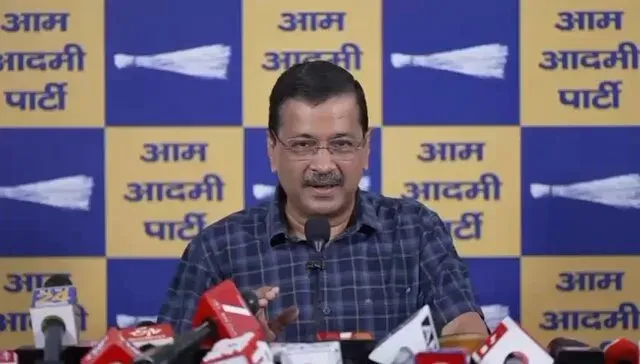
AAP convenor Arvind Kejriwal on Wednesday, 1 July 2026, launched a sharp attack on what he termed chanda chor (donation thieves), invoking the name of Lord Ram and demanding that the public boycott those who misappropriate religious donations — while asserting that only a change of government can deliver real accountability.
Context
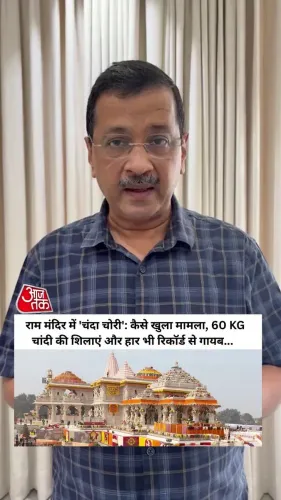
In a post on X, Kejriwal wrote: 'जिन चंदा चोरों को लगता है कि भगवान राम पत्थर की मूर्ति हैं, उन्हें भगवान राम की शक्ति का अंदाजा नहीं है।' — translated: 'Those donation thieves who think Lord Ram is merely a stone idol do not understand the power of Lord Ram.' He added that Lord Ram would surely punish them, and that the law too should act, but the current government never would because, in his words, 'they are all in it together' (sab mile hue hain).
Kejriwal closed with a direct political call: 'If you want to punish the donation thieves, first change the government. Society as a whole must also punish them by boycotting these donation thieves and their associates.'
Policy Backdrop
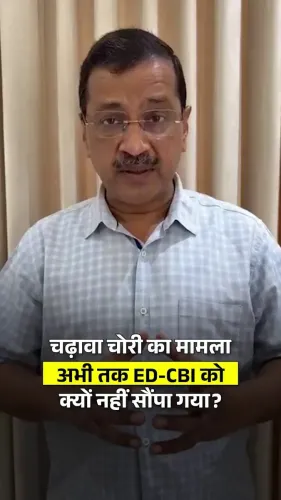
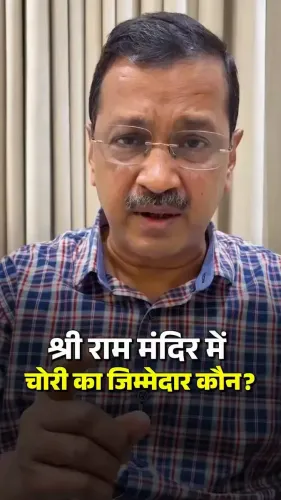
The post arrives against the backdrop of sustained political controversy over the funding of religious institutions in India. The Ram Mandir in Ayodhya — inaugurated in January 2024 following the Supreme Court's landmark 2019 verdict — drew massive public donations, and questions around the transparency of those funds have circulated in opposition circles since.
More broadly, political funding transparency has been a live issue since the electoral bonds scheme, introduced in 2018, was struck down by the Supreme Court in 2024 for lack of transparency. Opposition parties, including the Aam Aadmi Party, have consistently used funding accountability as a political wedge against the BJP-led central government headed by Prime Minister Narendra Modi.
Stakeholders and Impact
Kejriwal's remarks are directed at multiple audiences simultaneously: devotees who donated to religious causes and feel a sense of betrayal, civil society voices demanding institutional accountability, and voters ahead of future electoral cycles. By framing alleged financial wrongdoing in religious terms, he seeks to unite sentiment around both faith and governance.
The AAP, founded on an anti-corruption platform, has historically drawn support from urban voters who respond to accountability-based messaging. Calling for a public boycott of alleged wrongdoers and their associates escalates the rhetoric beyond parliamentary debate into a social-pressure campaign.
What's Next
The post is likely to intensify demands from opposition benches for a parliamentary or judicial inquiry into the management of religious donation funds. Any formal complaint or PIL referencing such allegations could draw the matter into legal territory. Whether civil society or religious bodies respond to Kejriwal's call for a social boycott will determine how far the issue travels beyond social media.
With no state or general election immediately on the calendar, the remarks appear designed to sustain long-term pressure on the ruling dispensation — keeping the corruption narrative alive as AAP rebuilds its political standing after setbacks in recent Delhi assembly polls.
Point of View
He attempts to convert a funding controversy into a binary electoral choice, consistent with AAP's foundational identity as a clean-governance alternative. The call for a social boycott, rather than purely legal or parliamentary redress, signals an intent to mobilise public pressure outside institutional channels — a tactic that carries both energy and risk in a polarised environment. The broader pattern here reflects how Indian opposition politics increasingly uses cultural symbols to frame accountability demands, blurring the line between religious grievance and partisan mobilisation.
NationPress
1 Jul 2026
Frequently Asked Questions
What did Kejriwal say about 'chanda chor' on 1 July 2026?
Kejriwal posted on X accusing individuals he called 'chanda chor' (donation thieves) of misusing religious funds, warned that Lord Ram would punish them, accused the current government of complicity, and called on citizens to boycott the accused and change the government.
Who are the 'chanda chor' Kejriwal is referring to?
Kejriwal did not name specific individuals in his post. He used the term 'chanda chor' (donation thieves) generically to refer to those he alleges have misappropriated religious donations, and accused the ruling government of protecting them.
What is the connection between Kejriwal's post and the Ram Mandir?
The Ram Mandir in Ayodhya, inaugurated in January 2024, received large public donations that have been the subject of political controversy. Kejriwal's reference to Lord Ram and donation theft is widely read in this context, though he did not name the temple explicitly.
What action is Kejriwal demanding?
Kejriwal is demanding two things: a change of government to ensure legal accountability for alleged donation thieves, and a social boycott of those accused individuals and their associates by the wider public.
How does this fit into AAP's broader political strategy?
AAP was founded on an anti-corruption platform and has consistently used financial accountability as a political issue against the BJP-led government. Framing religious donation misuse in this way is consistent with the party's long-standing effort to position itself as a clean-governance alternative ahead of future elections.