Kejriwal alleges education mafia controls India's schools
Synopsis
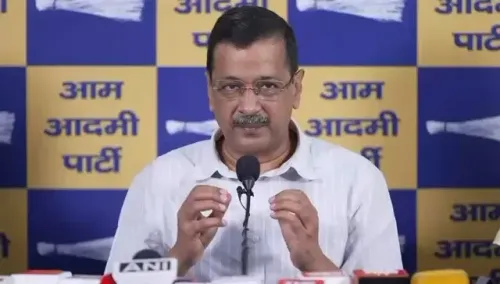
AAP convenor Arvind Kejriwal has alleged that an education mafia has completely seized India's schooling system, with two unnamed top figures providing cover, and called on citizens to act to secure their own futures.
Key Takeaways
AAP convenor Arvind Kejriwal posted on 26 May 2026 alleging a mafia has fully captured India's education system .
He claimed the futures of crores of children and youth are being 'traded away' under this capture.
Kejriwal alleged two unnamed individuals at the top are shielding the education mafia.
He issued a direct appeal to citizens, saying 'if you want your future to be secure, you yourself will have to do something.' The post was accompanied by a video ; no specific names, institutions, or evidence were cited in the text.
AAP has historically positioned Delhi's public education reforms as a counter-model to central government education policy.
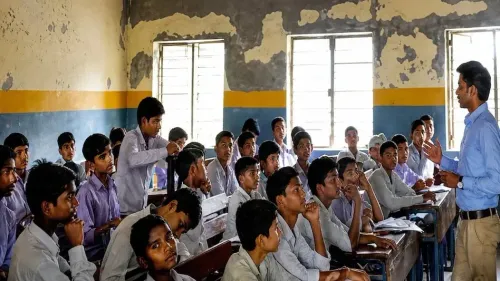
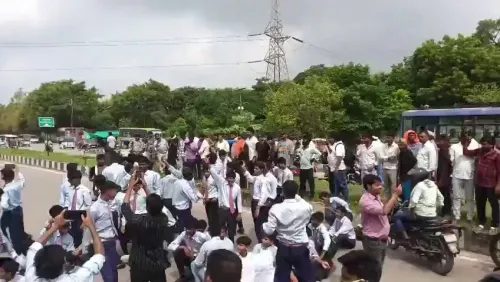
AAP convenor Arvind Kejriwal on Tuesday, 26 May 2026, launched a sharp attack on what he called an 'education mafia' that has seized complete control of the country's schooling system, warning that the futures of crores of children and youth are being traded away. He alleged that two unnamed individuals at the top are shielding the mafia and called on citizens to act for their own futures.
Context
In the post, Kejriwal wrote: 'पूरे देश की शिक्षा व्यवस्था पर माफिया ने पूरी तरह से क़ब्ज़ा कर लिया है' — 'The mafia has completely seized the entire education system of the country.' He added that the futures of crores of children and youth are being 'traded' and that the education mafia is 'flourishing' because of two people sitting at the top who are providing it cover. He closed with a direct appeal: 'If you want your future to be secure, you yourself will have to do something.'
The post was accompanied by a video, the contents of which were not independently verifiable at the time of publication. Kejriwal did not name the two individuals he alleged are shielding the mafia.
Policy backdrop
India's education sector has faced recurring scrutiny over irregularities in examinations, admissions, and institutional governance. The National Education Policy 2020, introduced by the central government, sought to overhaul school and higher education through new curriculum structures, multidisciplinary frameworks, and changes in regulatory governance — though its implementation has drawn mixed assessments from state governments and educators.
The Aam Aadmi Party, since coming to power in Delhi in 2015, has positioned public education as a flagship issue, investing in school infrastructure upgrades and teacher training. Kejriwal has consistently used the contrast between AAP's Delhi model and central education policy as a political and governance argument.
Stakeholders and impact
The charge, if substantiated, would affect millions of students and families who depend on government schools and public examination systems for upward mobility. Parents and students in states where examination irregularities or private coaching cartels have been reported are the most directly implicated audience for Kejriwal's appeal.
Opposition parties and civil society groups have previously raised concerns about the influence of private interests in public education, including coaching institutes and examination bodies. Kejriwal's framing of the issue as requiring citizen-led action signals an attempt to mobilise public pressure rather than rely solely on legislative channels.
What's next
Observers will watch for any formal follow-up from AAP — including parliamentary questions, press conferences naming specific individuals, or a structured campaign. A response from the Ministry of Education or ruling party spokespeople would be the next significant development. Given that Kejriwal has stopped short of naming the two alleged protectors, the post is likely the opening of a broader political communication sequence rather than a standalone charge.
With assembly and parliamentary cycles keeping education accountability in focus, the allegation is expected to intensify debate on regulatory oversight of examination bodies and private education interests across India.
Point of View
Without initially naming names. The tactic maximises public attention while preserving room to escalate with specifics. The direct call to citizen action — rather than a demand addressed to institutions — suggests this is calibrated as a mobilisation message, possibly ahead of a structured campaign or electoral cycle. Coming against the backdrop of recurring controversies around examination bodies and private coaching cartels, the charge lands in politically fertile ground even without supporting evidence in the post itself.
NationPress
10 Oct 2026
Frequently Asked Questions
What did Kejriwal say about the education mafia?
Kejriwal alleged on 26 May 2026 that a mafia has completely seized India's entire education system, that the futures of crores of children are being traded, and that two unnamed top figures are shielding those responsible.
Who are the two people Kejriwal said are protecting the education mafia?
Kejriwal did not name the two individuals in his post; he only said they are 'sitting at the top' and providing cover to the education mafia.
What is AAP's record on education?
The Aam Aadmi Party government in Delhi, since 2015, invested in school infrastructure, teacher training, and classroom upgrades, positioning public education as its flagship governance achievement.
What is the National Education Policy 2020?
The National Education Policy 2020 is the central government's framework replacing the 1986 policy, introducing multidisciplinary education, vocational training, and new regulatory structures across school and higher education in India.
What action is Kejriwal asking citizens to take?
Kejriwal called on citizens to take matters into their own hands, saying 'if you want your future to be secure, you yourself will have to do something,' though he did not specify what action he was urging.