Is the Cong-led UDF's move to convene the Assembly on Nov 1 a rule violation?
Synopsis
As Kerala gears up for its historic declaration of being 'free of extreme poverty', a procedural dispute has emerged in the Legislative Assembly. Leader of the Opposition, V.D. Satheesan, claims the planned session on November 1 violates established rules. This article delves into the implications of this controversy and its significance on Kerala's governance.
Key Takeaways
Kerala Legislative Assembly faces procedural scrutiny.
Leader of the Opposition challenges Rule 13(2) .
Significant session on November 1 for poverty declaration.
Historical context of Rule 13(2) is vital.
UDF party to strategize after the controversy.
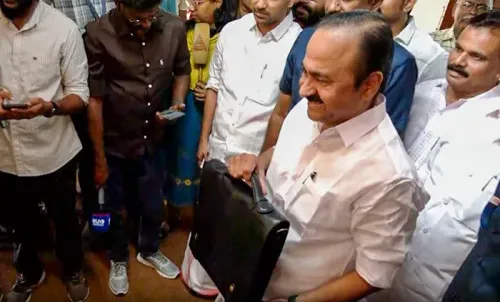
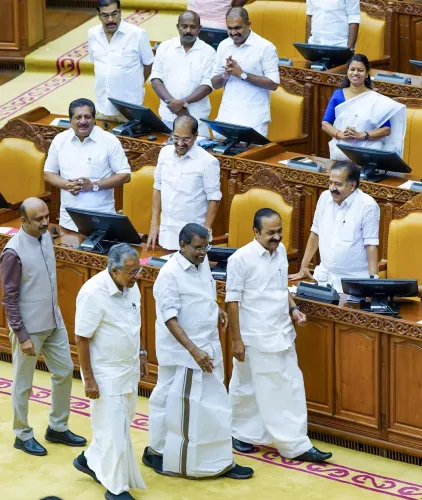
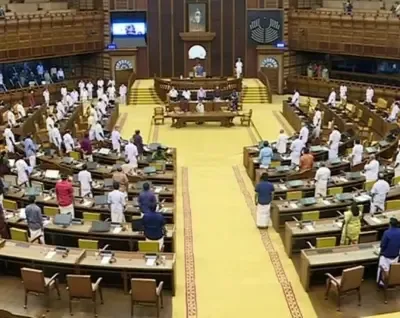
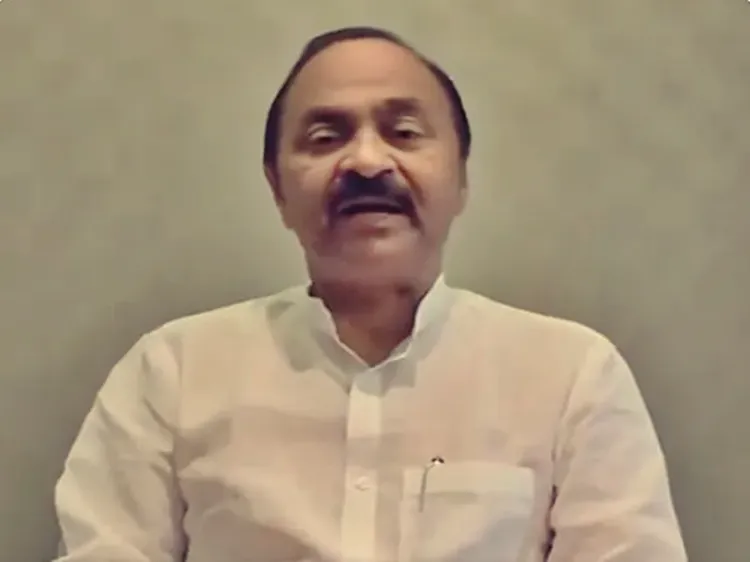
Thiruvananthapuram, Oct 31 (IANS) A procedural controversy has arisen in the Kerala Legislative Assembly as it prepares for its fifteenth session, scheduled for a one-day meeting on Saturday, November 1. The Leader of the Opposition, V.D. Satheesan, has raised objections, claiming that this action breaches Rule 13(2) of the Rules of Procedure and Conduct of Business.
This special one-day session aims to declare the state as being “free of extreme poverty,” marking a milestone as the first such declaration in the nation. This event coincides with Kerala Formation Day, commemorating the state's establishment on this date in 1956.
In a communication to Speaker A.N. Shamseer dated October 18, 2025, Congress Parliamentary Party leader A.P. Anil Kumar expressed that holding the Assembly on a Saturday contradicts established protocols, which necessitate prior approval from the House for weekend or holiday sittings.
The Speaker responded on October 23, referencing precedents from 1957, 1960, and 1987, indicating that the Assembly could convene on a Saturday by temporarily suspending Rule 13(2) at the session's onset.
However, the Opposition argued that this comparison is flawed, pointing out that Rule 13(2) was not applicable during the sessions of 1957 and 1960.
This rule was adopted on September 19, 1960, and has since been critical in managing session scheduling.
The Opposition highlighted two instances post-adoption—on August 9, 1975, when a special session was called for the ratification of the 40th Constitutional Amendment Bill, and from December 12-13, 1987, when the House extended its discussions into the weekend regarding the Kerala Public Servants (Inquiries and Investigations) Bill. In both cases, the Assembly had first secured approval under Rule 13(2).
“Since the implementation of this rule, the Assembly has never convened on a Saturday, Sunday, or public holiday without prior consent,” Anil Kumar stated in his letter dated October 31, 2025, urging the Speaker to adhere to parliamentary standards.
The letter requested a definitive ruling from the Speaker, stating that convening the session on November 1 without prior approval was “against both procedure and precedent.”
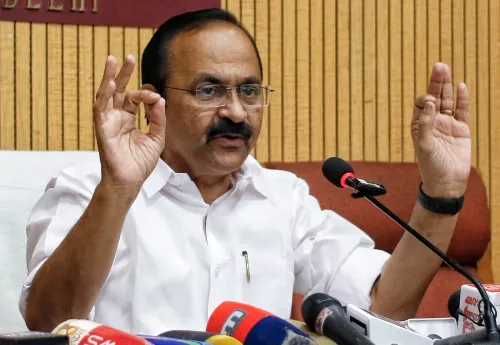
On Friday, Leader of Opposition V.D. Satheesan announced that the UDF parliamentary party would meet at 8 a.m. on Saturday to determine the next steps.
Point of View
This situation highlights the importance of procedural integrity in legislative processes. The ongoing debate serves as a reminder of the need for transparency and adherence to established rules. As the country watches, it's vital to uphold the principles of democracy and governance, ensuring that all actions taken are in accordance with the law.
NationPress
10 Oct 2026
Frequently Asked Questions
What is the reason behind the procedural dispute?
The procedural dispute arises from the Leader of the Opposition, V.D. Satheesan's claim that convening the Assembly on November 1 violates Rule 13(2) of the Rules of Procedure and Conduct of Business.
What does Rule 13(2) entail?
Rule 13(2) requires prior approval from the House before holding Assembly sittings on weekends or public holidays.
What is the significance of the upcoming Assembly session?
The session is significant as it marks Kerala's declaration of being 'free of extreme poverty', a pioneering achievement for the state.
When was Rule 13(2) adopted?
Rule 13(2) was adopted by the Assembly on September 19, 1960.
What actions did the Speaker take regarding the objections?
In response to the objections, the Speaker referenced precedents from past sessions, indicating that the Assembly could meet on a Saturday by temporarily suspending Rule 13(2).