Kerala hospitals to get Community Kitchens, ban party banners in food drives
Synopsis
Kerala's Health Minister is replacing party-branded food drives in government hospitals with a single Community Kitchen system — a move that could end the DYFI's 'Pothichoru' programme as it currently operates. The trigger: a public broadside from a former CPI(M) heavyweight now aligned with the Opposition, whose remarks exposed a politically charged ecosystem inside hospital premises.
Key Takeaways
Kerala Health Minister K.
Muraleedharan announced Community Kitchens in government hospitals on 18 July .
Party banners, flags, and branded food distribution will no longer be permitted on hospital premises.
The pilot will be launched at Alappuzha Medical College .
The announcement follows a Facebook post by former CPI(M) leader G.
Sudhakaran criticising food distribution practices at the college.
Sudhakaran demanded that donation accounts be placed before the Hospital Development Committee for transparency.
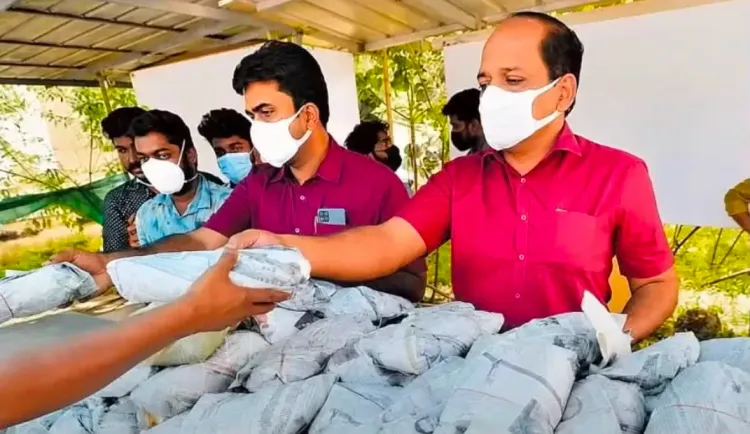
The move could directly affect the DYFI 's 'Pothichoru' initiative, which has operated under party branding inside hospital premises.
Kerala Health Minister K. Muraleedharan on Saturday, 18 July announced that Community Kitchens will be introduced in government hospitals across Kerala to institutionalise free meal distribution for patients and their attendants — and to strip political branding from what has long been a contested space. The pilot will launch at Alappuzha Medical College.
What the New Policy Entails
'Distribution of food packets under the banners or flags of political parties or organisations would no longer be permitted within hospital premises. Instead, all voluntary food distribution would be channelled through a unified Community Kitchen system,' Muraleedharan said in his announcement.
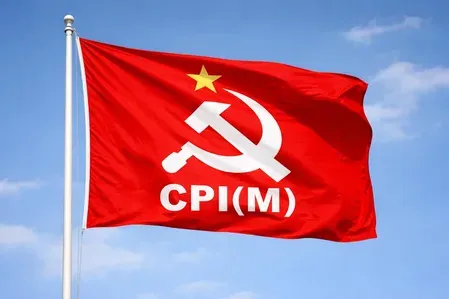
The move shifts responsibility for meal distribution from competing political and social organisations to a single, institutionally managed framework. Political observers note this could directly affect initiatives such as the Democratic Youth Federation of India (DYFI)'s widely recognised 'Pothichoru' programme — the youth wing of the Communist Party of India (Marxist) [CPI(M)] — which has operated under party branding inside hospital premises for years.
The Controversy That Triggered the Announcement
The announcement follows a pointed Facebook post by veteran former CPI(M) leader and former minister G. Sudhakaran, who publicly questioned the food distribution arrangements at Alappuzha Medical College. Notably, Sudhakaran had contested the most recent Assembly election as an Independent candidate backed by the Congress-led United Democratic Front (UDF) after parting ways with the CPI(M), lending his remarks an unmistakable political charge.
Clarifying his position, Sudhakaran said he had never opposed free meal distribution itself. His specific objection was that Alappuzha Medical College had uniquely permitted a shed to be constructed within the hospital compound for cooking and distributing food — a practice, he argued, not followed at any other government medical college in Kerala, where food is prepared off-campus and brought in.
Transparency and Accountability Demands
Sudhakaran also raised concerns about organisations soliciting public donations for these programmes without adequate oversight. He demanded that the accounts of all such collections be placed before the Hospital Development Committee to ensure full financial transparency.
Beyond the immediate controversy, he called on the government to consider reviving a formal, state-funded free meal scheme within hospitals — arguing that the responsibility should not rest entirely with voluntary organisations. 'Hospitals should not become venues for competition among organisations through the display of banners and flags,' he said.
He alleged that vested interests had deliberately distorted his remarks on social media to portray him as opposing charitable food distribution, maintaining that his intent was solely to fulfil his duty as a public representative.
Broader Implications for Hospital Politics
The Health Minister's announcement is widely seen as a direct response to the concerns Sudhakaran raised. If implemented uniformly, the Community Kitchen model would fundamentally restructure a long-standing ecosystem in which political and social organisations have used hospital food distribution as a visible platform for outreach and branding.
This comes amid broader scrutiny of how public health infrastructure in Kerala — often lauded as a national benchmark — intersects with organised political activity at the ground level. The rollout at Alappuzha Medical College will be closely watched as a test case for whether the policy can hold against institutional resistance.
Point of View
Which is sensible, but the admission embedded in it: that Kerala's celebrated public health model has quietly accommodated partisan branding inside hospital wards. The DYFI's 'Pothichoru' is popular and genuinely useful, but its visibility inside government premises has always blurred the line between civic service and political mobilisation. The real test is implementation — whether a pilot at one medical college translates into a uniform, enforceable standard, or quietly fades once the political moment passes.
NationPress
17 Oct 2026
Frequently Asked Questions
What is the Community Kitchen initiative announced for Kerala hospitals?
It is a unified, institutionally managed meal distribution system that Kerala Health Minister K. Muraleedharan announced on 18 July for government hospitals, starting with a pilot at Alappuzha Medical College. Under the new system, all voluntary food distribution must route through the Community Kitchen, and political party branding — banners, flags, or organisation names — will be banned from hospital premises.
Why did Kerala announce this policy change?
The announcement followed a Facebook post by former CPI(M) leader and former minister G. Sudhakaran, who raised concerns about food distribution practices at Alappuzha Medical College, including a cooking shed built inside the hospital compound and the lack of financial transparency in public donation collections. The Health Minister's move is widely seen as a response to those concerns.
Who is G. Sudhakaran and why do his remarks matter?
G. Sudhakaran is a veteran former CPI(M) leader and former Kerala minister who contested the most recent Assembly election as an Independent backed by the Congress-led UDF after falling out with the CPI(M). His criticism of food distribution at Alappuzha Medical College carried political weight precisely because it came from a figure with deep insider knowledge of the ruling party's grassroots operations.
Which organisations are affected by the ban on party-branded food distribution?
Any political party or social organisation distributing food under its own banner inside government hospital premises will be affected. Political observers specifically note the DYFI — the youth wing of the CPI(M) — whose 'Pothichoru' initiative has been one of the most prominent such programmes in Kerala hospitals.
What transparency measures has Sudhakaran demanded?
Sudhakaran has called for the accounts of all public donations collected for hospital food programmes to be placed before the Hospital Development Committee. He has also urged the government to consider reviving a formal, state-funded free meal scheme rather than leaving the responsibility entirely to voluntary organisations.